May 30, 2006

Poets Corner Exam Pathos


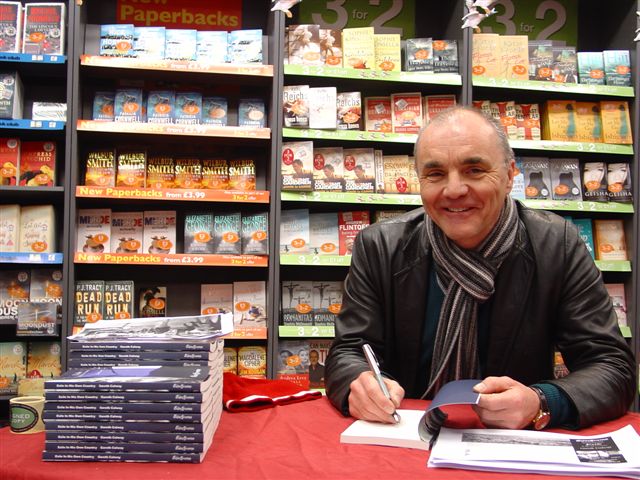
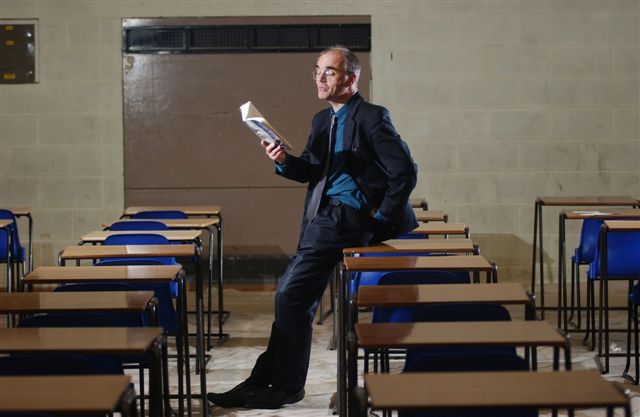
Photograph reproduced courtesy of Si Barbar


This article is reproduced courtesy of Warwick Mansell and The Times Educational Supplement and was published on Friday May 19, 2006

Warwick Mansell compares and contrasts two writers' verses on the season of GCSEs and A-levels

Examination papers blowing through doorways like seafront litter.
Pupils racking their brains for ideas "like a grim crowd at Norwich
City". Oh, and a pile of warm vomit.

Such is exam invigilation for poet Gareth Calway, an English teacher, brought to you in the week GCSE and A-levels began.

As hundreds of thousands of teenagers embark on weeks of hand-ache and, for some, heartache, the works of Mr Calway and Ian McMillan, the Barnsley bard, illustrate the potential pathos of the subject.

Mr McMillan, a regular television and radio guest, has penned a special poem for The TES this week (see box). More seriously, though, he said exams were a malign influence in classrooms and should be banned.

For Mr McMillan, host of BBC Radio 3's The Verb programme, which considers the spoken word around the world, and a regular on Newsnight Review, exams are a blot on the education landscape.

He has visited more than 1,000 primary and secondary schools, and said:

"Every school I go to is obsessed with exams."

He visits schools to read his poetry. But because his poems have been in GCSE and A-level syllabuses, he said he was often asked to give the "answers" to the meanings behind his words.

"Schools are teaching kids how to answer the exam questions, which seems to me to be amazing," said Mr McMillan. "I always had the idea that education should be about teaching someone to be a better human being, not to pass exams."

In his poems Mr Calway, who has taught at Smithdon high, Hunstanton, Norfolk, for 12 years, reminisces on tests in a new collection which also provides a sideways look at school inspections and parents' evenings.

In Mocks (see box below), he writes of teenagers "stoned on cold and boredom/ With fifty-two minutes still to go/ And nothing left to write about or remember".

Things have heated up for Exam Invigilation, based on his experiences of pupils struggling with their real GCSEs the following sweltering summer.

"Today in Norfolk, a boy has thrown up/ Over intermediate science paper 1 and the era/ Of caretakers with buckets arriving within the hour/ Is history."

The poem continues: "The June heat is on... it's beginning/ To cook the boy's dinner a second time./ Our caretakers -Godot and son plc -/ Send a memo to say they will arrive asap.

"Let's go." "We can't." "Why not?" "We're waiting for Godot."

Mr Calway seems to have a problem with janitors, to judge from On Being Locked Inside a Tiny Room by a Well-Meaning Caretaker, a cry for help from the poet as an appointment with a cover class looms.

In another poem, he writes wryly of an assembly on "healthy Norfolk" having to be cancelled "because both members of staff concerned are ill".

In Ofsted, our narrator finds himself being judged by an Inspector Clouseau lookalike. The school's inspection is two days old before his class is visited, he writes, with the result that he's "climbing the walls", yelling at his pupils for talking.

Parents' Evening offers a portrait of a world-weary mother challenging the teacher's view that her child's "Promise and beauty... has gone/ Even before it's in bloom."

But Mr Calway's vision of education is not entirely jaundiced. Star Teacher, which he said sets out his ideals, simply asks a child to "look at the sky... (and) reach".

warwick.mansell@tes.co.uk

More information on the poets from www.garethcalway.co.uk and
www.ian-mcmillan.co.uk

May 28, 2006

Exile: Tour Report


Photograph reproduced courtesy of Si Barbar

May 19 2006 Abersychan Comprehensive School, Torfaen.

Dad dropped me off in exactly the same way he had done in 1968 when I was 12. I walked down the same steeply-sloped playground feeling pretty much as nervous as I had then. What the hell was I doing, bringing Bristol City football poetry into a Welsh Rugby heartland? A polite kid opened the door and a couple of others greeted me, without being prompted, in the corridor. Then the Secretary greeted me wearing full Bristol City regalia. It was going to be ok! I found that I had been given the old gym for the whole day. Quite a coincidence. It was the actual setting for several of the poems – notably Welsh Rugby, with its description of Cobner’s beating of yours truly in 1969 – and it retained almost entirely the infrastructure of my youth. The vaulting horse brought before the public in my play "Getting On" and my comic novel "River Deep Mountain High" was as prominent in the actual room as it is in my writing. The lectern I was lectured from for six years by my old Headmaster and his deputy was also still there and I delivered my comic version of their assemblies later that day from it. (It is also now accompanying me on tour as a key piece of stage furniture). When I asked the Year 8 boys what football team they supported – ready with a quip about how few seemed to follow Bristol City – I was given the usual litany 'Man United', 'Arsenal', 'Tottenham Hotspurs' only in that same valley sing song that had first set my ears ringing in December 1968. Of course, the Rugby Only heartland idea is a myth: Rugby is the official school sport, yes, and rightly so, and the locals are very good at it: but just as we did, the kids play and follow the round-balled variety at every opportunity. All the same, when TES Cymru took photographs at the end of a long day , it still felt peculiarly evocative of the 'Exile in his own country' themes of my book, that these valley kids should be chanting Bristol City slogans in Bristol City shirts in a Welsh playground. Even more fittingly peculiar, when I performed a schooldays section to the whole of Year 9 in the afternoon, two of my own teachers from the 60s (and very briefly colleagues in 1980) came out of retirement and were watching me at the back. The Head of English gave me a tour of the old Main Block at the end of the day and promised to erect a blue plaque over the Victorian radiator in the form room where I had my First Real Kiss. The radiator that day was blisteringly hot but the girl was even hotter. I'm not sure what kind of plaque about us could be raised in the Old Geography Room next door, which like all this floor was now the English suite, making me feel even more like I was still there. The Old Head's office where I was regularly caned now houses voluntary SATs papers. The punishment goes on in different forms. Though (like me) everything in the old block was 35 years older, little had changed or grown less solid. It was just about half as big.

May 20 Congress Theatre, Cwmbran

Ah! The smell of the dressing room. I had a long mobile phone call with my old dramaturg David in the dressing room. He is the subject of the poem "Memorial"; in the book and he is younger and more foolish than me and he also rescued me from early middle age with theatre and a leather jacket in my mid thirties. I said I was very nervous. He said it was better than being bored. I wandered backstage with about fifteen minutes to go and saw Okker at the bar - I was at Abersychan with him and I'd forgotten how close we were 35 years ago. I'd not seen or heard him since I was 15. We exchanged a wondering smile. I recognised him before I even knew who he was. I went back up to the dressing room thinking how you can't bullshit people you've grown up with and what the hell was I doing putting on this 'show'!? What an arrogant act it all is really, charging people to come and see you tell your own story, especially when some of the audience are actually in it. There were in fact about six characters both in the show and in the audience this evening, in particular my parents, who were repeatedly featured in the poems and who were in the front row. Still, it kept me honest. There were 32 people in all and I was doing the show in the lounge with the audience seated around bar tables. So it felt pleasantly full and my little stage set of trellis downstage left and easy chair upstage right felt right - like an exile's home. When I bounded onstage to the clunking rock'n'roll of Bill Halley circa 1956 (the year of my birth) my mother was jiving in the corner of the performance space with another woman of similar age. How appropriate that my mother should be jiving at the edge of a poem I was presenting about my first memory. How ludicrous also. And how unique she is! (I’ve got to the age where I finally see her as a – genuine - character in her own right, though very glad she was my mother.) Anyway, I got on with it and got some laughs for my mime of infancy. I was doing some of the poems without the book and this was the very first time the show had appeared before the public so it was both thrilling and nerve-wracking at once. Another schooldays friend had said he might be bringing Chris Garland, the 1970s City, Cardiff City and Chelsea star and so I assumed the bloke next to him was my old hero. Later on, I thought he doesn’t seem to be enjoying the Bristol City stuff much. I found out afterwards he wasn't Chris Garland (though the old legend had sent me a signed programme and good luck wishes for the tour) and that he was deaf. In the interval, I listened to the Eurovision Song Contest on the radio and felt much better about the 'musical' opening of my second half. It's great coming on to a changed set – I’ve never done this before – and especially so when it’s that totemic microphone on a stand. Oh yes. The world jazz rap went down well and then my Beatle prose poem, complete with wig and guitar mime, was finally revealed. As so often, the riskier it feels, the better it goes. And as always, the magical love people still have for the Beatles made this the favourite section for several children of the sixties but also for some of the actual children they'd brought with them. (After all, theirs is a sort of fairy story.) If I'm not absolutely sure if I'm writing about Beatlemania or actually displaying its lifelong symptoms ("I need HELP") then at least I'm not basking in their reflected limelight while trying to shoot them out of it as is the case with so many Beatle-debunking 'exposés'. And it's a childhood fantasy come true getting applause as I do my deep Beatle bow at the end. The final section ushers in a third set – schooldays, including my old school lectern – and the comical reality of having to earn a living in ‘exile’ from my artistic vocation. My old French teacher from the late 60s queued up for a signed book at the end and his deadpan vocal delivery hadn't changed for 35 years. My younger sister (with whom I'd drunk too much the night before) said she'd wanted to applaud after every poem but wondered if you should. Anyone reading this, please note I (in common with I suspect most performers outside of the classical music circuit, if there) have no philosophical objection to applause between numbers! Outside the stage door I tried unsuccessfully to arrange an Indian meal out with some younger members of the audience before driving the set back to Pontypool, where I stopped off at Omar Simpson's to get a doner kebab and a 'small' portion fof chips for one person - ie enough for three hungry Weshmen - on my way home to a comfortable supper in with my parents. I have rarely felt so content.

May 25, 2006

Poet Who's On The Ball

POET WHO'S ON THE BALL

This article is reproduced courtesy of John Hudson, Western Daily Press

An avid Bristol City fan and a literary talent, Gareth Calway's seventh book has just been published. John Hudson reports

A FEW people in the West are sitting up and taking notice of Gareth Calway's literary credentials this spring.

Many round here know him only as Bristol City's official poet laureate, and he's happy to project himself in that role as a 50-year-old footie nut, an anorak who goes right back to the days of John Atyeo and Chrissie Garland.

But there's a great deal more to him than that, and a substantial collection of his best poems, spanning a quarter of a century or more, has just been published by Portishead's cutting-edge poetry imprint blue chrome.

Exile In His Own Country is his seventh book, and admirers say it sums up all the qualities the late poet laureate Ted Hughes once praised in his work - strength, wholesomeness and the best kind of simplicity.

It also positions Calway that little bit nearer to the literary mainstream, no easy task for a provincial poet without a comfortable university post to fall back on.

In fact he's head of English at a high school in Norfolk. And if you think that's where the "exile" bit in the book's title comes from, you haven't heard the half of it.

He feels as if he's never been anything but one.

His parents met on a train going to watch Bristol City, his dad was Bristolian born and bred, and his mum, Welsh, but living there.

A "Severn Beach honeymoon baby", he was born in Usk but spent his early childhood in Bristol before his family moved on to Frome and then the South Wales valleys, fromwhich he escaped back to Ashton Gate whenever he could. But his sense of living in exile goes beyond geographical boundaries.

Earlier on, there was the alienation from working-class roots imposed by grammar school and university, and now, while being deeply entrenched in the life and culture of East Anglia he still identifies closely with our part of the world, the land of his childhood

.He is known in Norfolk as "a bald head of English" and lively promoter of poetry, yet he will sit for hours in his car to enjoy or endure 90 minutes of what's on offer at Ashton Gate, roaring with the rest of the lads yet, in some ways, removed from them.

This, in part, seems to be a generation gap thing and, if so, it will only get worse.

He grumbles about the young men around him shouting stuff he would never dream of shouting and spotting things on the field that mean nothing to him:

Standing in my team red before a game, yelling the chants - in and out of sync, The main feeling is of being a complete fraud.

It's not that the team doesn't matter to me:
It matters enough to give me a heart attack.
It's just that, with only different memories of 2-3-5 to fall back on, I never really understand what's going on. . .

But then again, this is the kind of work many round here recognise in Gareth Calway.

What they will be less aware of is his sophistication as a writer who draws on everything from Eastern mysticism to myth, pre-Conquest English history and the East Anglia countryside to inform his poems.

That rather earnest list sells short the sheer sense of fun with which he makes serious points - and a rueful way of looking back, in which his childhood in Frome seems to fare particularly badly.

Of the school canteen, he recalls that:...

the smell Of boiled cabbage - as surely served in hell Would gas the stairwells, pied with potatoes Even pig swillers had sent back...

While his impression of Sunday school culture is summed up in a poem that ends:

Dear God, 'elp us to feel totally and completely useless, that human love is a sham that divine love is beyond us, 'elp us to deny every living moment of our actual experience, 'elp us to feel that we're better off dead...

Then there's the poet's first memory - of being attacked by a toucan at Bristol Zoo in 1958, which is recalled in infant Brizzle l ingo.

Gareth is at present in the midst of a spasmodic book tour that takes him to all the places that mean most to him - the West Country, South Wales and East Anglia.

The best day to catch him around here is July 22, when you can meet him (rather improbably) at Bristol Lord Mayor's Chapel on College Green in the afternoon (details tel 0117 929 4350) and at the Chepstow Festival's Drill Hall venue in the evening (01291 624836).

Gareth's Bristol City poetry, Sheer Paltry was recently published by the club at £5, with all profits going to Ashton Gate. Exile In His Own Country, just out through blue chrome, is a £7.99 paperback.

May Poem Of The Month

Exam Invigilation,
Dis-Next-the-Sea Comprehensive


Today in Norfolk, a boy has thrown up
Over Intermediate Science Paper 1 and the era
Of caretakers with buckets arriving within the hour
Is history. The June heat is on and, despite
Open doorways blowing papers like seafront litter
Between deckchair assembly desks, it's beginning
To cook the boy's dinner a second time. And the clock
-A candidate has just informed me - stopped on the hour
Ten minutes before I gave them their final time-check:
My shirt has melted from emerald green
To Monsoon purple.....

I haven't felt heat like this since Christmas
When, in response to parental complaints
About conditions unconducive to exam performance,
We hired four blast-heaters from a building site
To roar like rockets in the breezeblock corners
Of our neo-brutalist Sports-cum-Exam Barn
(Put out of commission shortly afterwards
By a Sixth Former trying to drive through it)
Which still failed to thaw its December heart of concrete.

Good to recall our cornered wellards though,
Microwaved to a turn, hair frazzle-permed at 100 degrees F,
Dysfunctional faces sedated for the first time in four years...

The rising smell of sick retunes me to the present.
Our caretakers - Godot and Son plc -
Send a memo to say they will arrive a.s.a.p.

-Let's go
-We can't.
-Why not?
-We're waiting for Godot.

It's like trying to make a silk purse out of a haystack

Like trying to tune a pitchfork in a sow's ear.


Very busy with the tour but just time to post this before May is out. It was featured in the TES on May 19, the day I went back to my old school to run a poetry workshop in the room I sat my O and A levels in. The TES photo pictures the room in my own Norfolk school where my pupils sit their exams and where all the events in this poem really did happen in the 90s. I wish everybody sitting exams over the next few weeks the best of luck and commend them to Warwick Mansell's TES article in which he gives two poets' views of the process. Any readers in Sheringham or Norwich, you can come and see me perform these and other poems from the book in your local theatre over the next two weeks. If first reactions are true, it's a lot more lively and exciting than expected!

May 24, 2006

Exile In His Own Country: TES Photo Shoot

EDP Article

Gareth Calway's poetic career spans being official poet for Bristol City FC through to being head of English at Smithdon High School in Hunstanton.

And he will be performing his work next weekend in a one-man show at Sheringham Little Theatre.

Calway, 50, has just launched his seventh collection of verse, Exile in his Own Country, which is described as "a harvest of his best work and an extensive selection of new poems".

His work uses his roots in the West Country and Wales as a foil to his adult life in East Anglia as a way of examining what 'home' really is.

In 2004 the EDP called his work "imaginative, evocative", saying "this sell-out show must be repeated", and now it is.

* Exile in his Own Country is published by bluechrome priced £7.99. Tickets for Saturday's show cost £7. Call Sheringham Little Theatre box office on 01263 822347.


This article is reproduced courtesy of Kieron Pim and the Eastern Daily Press

May 17, 2006

Exile On Tour: Press Release

Gareth Calway: Exile In his Own Country.

To mark his 50th year and seventh book, Gareth Calway will be playing truant from his job as a teacher in Norfolk to attend the school in Abersychan, South Wales that he attended as a pupil from 1968-1974 and which provides the setting and themes of a whole section of his book, Exile In His Own Country. It is his first visit there since he returned to teach in its last term as a Grammar School in 1980.

The book was launched at King’s Lynn Ottakar’s last month as the start of a long combination of shows, readings and school workshops exploring the central theme of Exile.

The first leg of his tour is to lead a number of writing workshops at Abersychan comprehensive school before performing extracts from the next day's show, Exile in his Own Country. This performance will take place in the very hall he attended school assembly for six years as a pupil of Abersychan Grammar Technical School.

The new book adds to the literature of the Eastern valley and is surely the first to combine a sequence under the title Torfaen Monologues, wry and bitter-sweet accounts of teenage valley life in the 70s.

The book also records his Somerset childhood and his lifelong attachment to Bristol City FC, whose official poet laureate he is. His parents met on their way to a Bristol City football match and later honeymooned at Severn Beach, roughly half way between the Welsh and West country places that have shaped his writing ever since.

After his old school‘homecoming’, and another homecoming in Bristol and Chepstow, Gareth will return for a summer long tour of Norfolk venues, beginning with Sheringham Little Theatre (May 27) and the Norwich Puppet Theatre (June 2) and ending with a National Poetry Day harvest at the Cley Little Festival of poetry in October and the River studios at West Acre in November.

The book includes poetic accounts of his life as a teacher in the very different setting of Norfolk and a celebration of the East Anglian countryside. The music of Sinatra and the Beatles and the search for fulfilment in family, fatherhood, work, history, heroes/heroines, poetry and mystical searching all take turns as the sections of the book unravel.

All of these themes and settings bear on the central concern of the book which is an examination of home and exile and the position of the artist in modern life.

At 150 pages, the book is a harvest of 50 years of 20th century living and - in the 'Harvest' section - of the best of Calway's previous six books, "City Zen", "Coming Home", "Britain's Dreaming,"The Merchant of Bristol", "The House on the River" and the Bristol City-published "Sheer Paltry."

So Gareth Calway returns to school at Abersychan secondary school on May 19 2006, 35 years late but with all his homework done.

The book will be reviewed in the Western Mail on 17 June and featured in TES and TES Cymru in the last weeks of May. Reviews in poetry magazines, The Western Daily Press and The Eastern Daily Press are also scheduled.

Contact/ reviews/ further details: 01485 571828
Reviews: www.bluechrome.co.uk (new releases)

May 10, 2006

Exile book launch in Lynn News


This article is published here courtesy of the Lynn News

-----

Discover yourself through poetry, says Gareth

A WEST Norfolk poet is on a mission to encourage people to discover themselves through poetry as he promotes his newly published collection.

Prolific poet and head of English at Smithdon High School, in Hunstanton, Gareth Calway (50), launched his seventh poetry collection, Exile In His Own Country, at Ottakar's book shop in Lynn's Norfolk Street last Tuesday (11).

And he will now be kept busy touring and giving readings of his poems, both in Bristol and Wales where he spent his early years and around his current home in Norfolk.

A mixture of new work, plus the best of his back catalogue, the collection covers everything from autobiographical poems about going to school and later becoming a teacher himself, to pieces about the Norfolk landscape.

Unusually it also features poems about football, including one on the 1966 World Cup final, drawing on Mr Calway's experience as the official poet laureate for Bristol City Football Club.

While poetry and football might seem an odd pairing Mr Calway said football chants were similar to poems and hoped by showing the link he could help make poetry less daunting.

"I think sometimes people are a bit frightened of poetry and I've spent most of my career trying to make it not so frightening.

"It's a great way of expressing what you feel and if you teach it properly almost without realising it students can get in touch with aspects of themselves they didn't know about.

"A lot of education today is about literacy rather than thought and feeling and I think poetry relocates that. Poetry should be a voyage of discovery. It should move you or make you laugh," he added.

Mr Calway will be holding a poetry workshop at Smithdon High School on Thursday, July 20, at at Wells' Granary Theatre the following Friday (28), before a reading at Westacre River Studios at a date to be set in November.

He is also hoping to encourage students at Lynn's King Edward VII High School - where he worked previously - to write more poetry by sponsoring the school's sixth form poetry prize.

Copies of Exile In His Own Country, priced £7.99, are on sale at the Lynn and Norwich branches of Ottakar's, or available by emailing Gareth via this website purchase page or via publisher, Blue Chrome's website at www.bluechrome.co.uk.

Copyright Lynn News, Friday April 28 2006

April 12, 2006

April Poem of the Month


Coming Home

This is God. On the highest of highs through the gulf of a tomb,
(This is God.) I’m on top of the worlds born of mind, spirit, womb.

I am not. Now the bubble has burst, there is nothing but sea:
This is God. I’m as drowned in his kiss as the bud in her bloom.

I’m in Love. All the pain in my heart’s disappeared like a dream:
This is God. I am dead to the worlds yet awake to my swoon.

I am him. Now the primal beloved and lover are one:
This is God. I’ve become who I journeyed towards and from whom.

Oh my love! He’s embraced me and brought me at last to himself:
This is God. Now I see there is only myself in the room.

I’m the soul. “There’s no dark where there’s light, no unknown where one knows.
This is God. Little mind has been razed with its search and its gloom.

O my Self! You’re beyond the beyond but you’re found on the Earth.
This is God, All in All, in the flesh: its perfection, and tomb.


(*I have followed the convention of the soul being female, the divine beloved being male, here, as in The Song of Songs.)


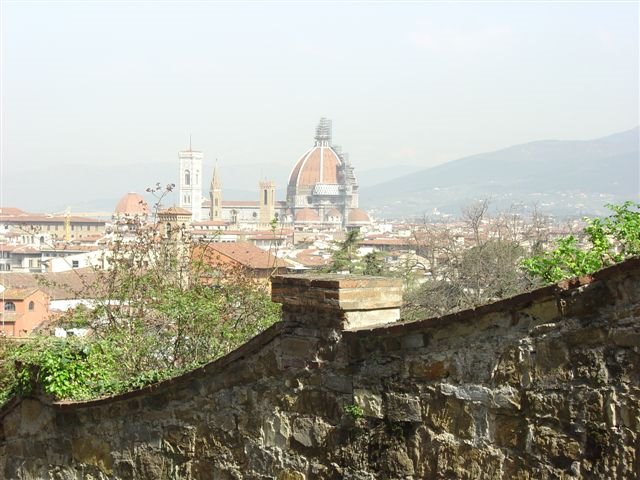
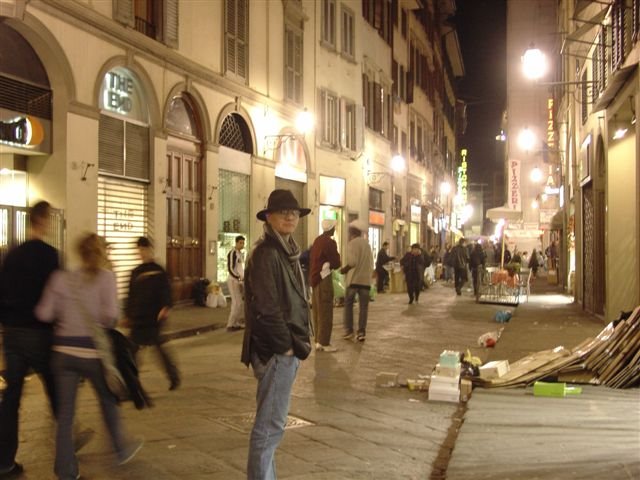
We've just got back from Florence, where they start spring in April. Apart from attempting to interest Fiorentina in having a poeta inglese as their modern Dante (no reply yet), I spent a lot of time gazing at the visions of heaven that Florentine artists have been attempting since Dante, Giotto, Fra Lippo Lippi, Michaelangelo, Learnardo et al. The trouble with organised Christiaintiy is that there are far too many meditations on hell, sin and guilt and far too few visions of heaven. In Florence, this is not the case. Some readers say that Dante's Inferno is a lot more gripping than his Paradiso and that his vision of God in the final cantos - as a tiny spot of brilliant white light - is much too small a pay off for all the hell and purgatory that's gone before. If that's true, it's certainly not true of his descriptions of Beatrice and the Virgin Mary (the white rose petals of that spot of white light) which are truly heavenly. Anyway, my own modest efforts in this direction in my 1991 book "Coming Home" - with its three love-driven steps to heaven: evolution/ ghosts/ involution - are revisited in the harvest section of my new book, Exile In His Own Country. "Coming Home" (one of the selections) is my attempt at a vision of heaven as guided by such spiritual writers as St John of the Cross, Bhau Kalchuri and Meher Baba as well as through a fairly headlong (and heartfelt) leap of my own imagination. I wanted above all to avoid a set piece that lacked creative tension, and so located the tension in the agony/ecstasy of the self's surrender to the All of love. "When the bubble is burst, there is nothing but sea." and "I'm as drowned in his kiss as the bud in her bloom" seemed to strike the requisite exquisite, ravished and ravishing, note and remain lines I'm very pleased with. The form of the poem is the Persian ghazal, a divine love-lyric, one of a dozen or so in my first two books and of three in the "Harvest" section of my new "Exile In His Own Country" collection. The two photos from Florence here are a playful attempt at suggesting il poeta Dante at the start of Inferno - "in the midway of this our mortal life" - about to enter hell on Good Friday - and then a vision of heaven from the terraced slopes of Purgatorio.

March 02, 2006

March Poem of the Month

Look, I have come through

I hear a moan - of the earth, but unearthly -
On the other side of the wall.
I creep round, girding my loins from some horror.
"A lamb's having birth!" pipes a child, beckoning.
I join the haggle,
Watch the quiet kindness of humans
As the lamb's bud-horns lock her
In the coffin of her mother's womb,

Watch them wrestling with spindly legs, dashing for aid,
While, irrelevant but insistent,
A turkey courts hens round our shins,
Feathers at full sail, twirling in absurd vanity,
Tattered, matted, red-sore raw and ugly beyond belief.

A man returns with a lifeline of coarse string.
A woman helps him coax birth
From the patiently groaning ewe.

The lamb is dead on the hay.
They lay it at the mother's mouth for her to lick.

"Is it all right?" asks someone, stupidly.
I knew it from the start.

....But the lamb stirs.
My heart shouts with the joy of it.
Life!
Stubborn, hopeless, quivering
Life!

(Gressenhall, March 1993)

Notes:

This poem will be published in my new book "Exile In His Own Country" at the end of the month - to coincide with my 50th birthday - and will doubtless feature in my Harvest tour (April - November 2006).

The poem recounts an actual event. The allusion to Lawrence's "Look We Have Come Through" in the title is deliberate. I was just coming out of a very dark period brought on by where I was working at the time. I thought the depression would never stop and it was a shock because my life since adolescence and marriage (and fatherhood) had more or less kept getting better until then and I thought that was the natural order of things. Then suddenly I was going into work like I was going to war, playing The Clash ear numbingly loud and on one occasion punching out my own windscreen. I'm not sure why things eased exactly - I probably forgave someone the appalling wrongs they were doing me after punishing them for it a hundred fold for a over year. Then the spring came, I got commissioned to write some poems and perform them at the King's Lynn Festival and I began to see some light at the end of my tunnel vision. We took our six year old to Gressenhall and it reminded me of how good my own education had been - especially the social history - and how good places like Gressenhall are. Then we watched the lamb being born and all the unsung genius and kindness of human beings apparently proving futile in the face of its agonising tiny newborn demise. Dead on the hay. I wanted to howl. And then it stirred. I'll never forget it.

January 19, 2006

Western Daily Press Article

The Western Daily Press published an article entitled "New Goals for Poet Laureate of Ashton Gate" in its 17 January 2006 edition.

You can read it here: Western Daily Press Article

December 01, 2005

December Poem of the Month

in the bleak midwinter

watched
by the rich guarded
silence

of cotswold
farms

and a blinding sun
through bare trees

and the jagged saw
of a dog at the gate

i wonder
what my pilgrimage
to an indian summer
a half world distant
taught me

about this track
of unchanging england

wrapped up in compliments,
temporary as tinsel,
a feast that goes cold,
a santa that never
really delivers

as i slide

down my frozen hill
of ignorance

on slight city shoes
made in ahmednagar

towards a painful
wisdom

cranham, glos. dec 24 1994


Like Mocks, this is coming out in my new book at the end of March 2006. I hope all my readers have a blissfully happy and contented Christmas but if not, take solace in this throughly typical Western materialistic money-rich time-poor post-Christian let down. Give me Hardy's The Oxen any time...

November 01, 2005

November Poem of the Month

Mocks

Huddled into football hats and scarves
In their desk terraces,
Stoned on cold and boredom
With fifty two minutes still to go

And nothing left to write about or remember,
Our examinees shuffle and stare
Like a grim crowd at Norwich City
Waiting for a goal that never comes.

In the roof of this breezeblock leisure dome
Propellors flap like aircraft that can't fly.
In one corner, two heaters nibble a glacier.
The floor - a parky one - is marked for badminton

But not for inter-desk ice hockey
As we clatter across it dispensing paper.
And this long siege itself mocks everything - Barbarossa,
Frozen Storage... everything except exams anyway.

January 5 1998


Mocks. The sad thing about this surrealistic caricature of a modern comprehensive is that not one word is fictional. You couldn't write it - but I have to work there!