June 29, 2014

The Clash Between Boudicca and Rome


May I introduce to you, Queen Victoria of Icenia?
The matriarchal Britons called her buddug, Boudicca, VICTORY.
The patriarchal Romans called her mad.
‘She was huge of frame, terrifying of aspect, with piercing eyes and a harsh voice, a great mass of red hair hanging down to below her waist’ – this is the very picture of the Medusa head of state, the Cleopatra dysfunctional woman in power.

In AD 60, on the death of her husband, King Prasutagas, (lash) Boudicca is dispossessed, flogged, her nobles enslaved, her women sold, her daughters... plucked and plundered...by Procurator Decianus Catus.
Provincial governor Suetonius Paulinus – later recalled to Rome for excessive bloodlust – quite a feat on the front line of empire - is absent in North Wales, slaughtering druids and desecrating the Oak Groves of Mona. Doing his bit for the environment.

OOOO ….OOOO
when suddenly, out of the blue, the sky falls in
and the forests erupt again through the nice tiled floors of Colchester.
Boudicca and her hazel-wattled people are in revolt.
The Eastern half of Britain rises with her.
Kick over the wall cuz governors can fall
How can you refuse it?
Let fury have the hour anger can be power
You know that you can use it


She ‘redeveloped’ the Rome Counties...
She burned down Colchester, a London left tactically undefended - on the Provincial Governor’s orders- and the old Catavellauni capital of St Albans. (spit)
Her army got larger with every victory.

Procurator Decianus Catus, flogging off the forests, garden-grabbing the graves, making a killing in the City (lash) finds himself staring at the end of civitas as he knew it. Norfolk, the guardsvan of Roman history, ploughing her fleet pony and wickerwork chariot through the heart of London.
There’s no future in your Roman dream
Your traffic lanes and your shopping schemes
Your soapless baths and your manly steam
The Iceni queen bee is making free
With your city

He flees to Gaul, his smacked Roman backside smarting with the humiliation.

Now,
as a summer dawn paints the ripening Iceni corn a battle-blood red,
She turns her attention to Provincial Governor Suetonius Paulinus….
(drum)
This seasoned professional soldier, marching hotfoot from his rout of Welsh tribes in the West, concentrates his army at a place never really identified but possibly near Fenny Stratford on Watling Street.
Despite Boudicca’s eloquent passion for annihilating every last Roman in Britain,
some of the tribes she had united beneath her now went home with their war loot, thinking enough had been done.
Tacitus, reporting her in the Latin of her conquerors 100 years later, gives her this speech.


‘We British are used to women commanders in war.
I speak to you not as an aristocrat but as a woman of the people.
A woman of yourselves.
Think how many of you there are, and why we are fighting.
Then you will win the battle, or die.
That is what I, a woman, plan to do – let the men live in slavery if they want.’

Suetonius chose a position in a narrow defile, protected from behind by forest
Sure that there would be no cover for ambushes.
Yah!
(pointing stick)
‘The enemy are here, here, here, here and here.
Our chaps are here.
Pay no attention to the noise and empty threats these savages make.
There are more women than soldiers in their ranks.
They are not warlike and they are badly armed.
The 'battle dress' is a birthday suit to be ready for death
Their modesty covered only by woad.
The famous lime-bleached blood-streaked hair... the juice of rowan berries!.
When they see the weapons and courage of troops,
They will turn and run.
Keep the ranks. Throw your javelins. Strike with your shield bosses.
Then drive on.
After the second javelin,
Close ranks for the testudo.’
TESTUDO!
A giant... sword-jabbing... tortoise... formation,
A 6 deep, 4 square human armoured vehicle
Defensive and offensive,
Tightly shielded on all sides.
The nearest the Romans could get to a tank.
And your ‘tactics’?

Heads and dugs will rock and roll…and Roman dudes will bleed

Your 'warriors', the customary male hordes swollen with raging women
Swarmed into the vice of the defile
And up towards that butcher’s yard of javelin volleys,
Every volley adding dead or javelin-struck Britons
To the labours of the lines behind
Maybe after they’d slithered through the first half dozen
Dead and writhing the passion for vengeance faded?
Then that Roman tank rolled forward and tin opened
The whole helpless throng of you against the wagon line.
The kids stopped watching Mam and Dad win the final dream victory
And became the meat in the sandwich of the final bloody screaming defeat.
All you had room left to do was chariot charge your own people….

'It was a glorious victory
Like those of the good old days.
Some estimate as many as 80,000 British dead.
There were four hundred Romans killed
And scarcely more wounded.'

Britannia 1 Roma 80.
But we only have the Roman match report.

She is history, not myth, but remember
History is written by the victor
And she neither wrote nor won
No freedom, no future, no fun.

Rome had to win or risk the Empire,
Britain had to win or simply expire,
And with it the Western horizon,
No freedom, no future, no fun.

Procurator Decianus Catus
Spoke down his nose, spoke down his anus,
"The Emperor claims the dead king's kingdom"
No freedom, no future, no fun.

"Our Roman matrons have a place too
In a civilised home: I could offer you
A place in mine: dresses, baths, decorum."
No freedom, no future, no fun.

She danced to the wardrums, warhooves, hornwhine,
Exhorting, as Romans were drilled into line,
Her race to fling back the squares of London
No freedom, no future, no fun.

Now her rebels hole up, where home is none,
On roots thin as hope and a dream of Britain
Hunted through nettles and thorns, their soles stung:
No freedom, no future, no fun.

Her hard core Iceni's last stand and fall
Is the longest, fiercest, stubbornest of all
But is crushed - like flint - in The Battle of Thornham.
No freedom, no future, no fun.

Death-and-glory queens, country dragons:
(Become) Whores of fashion in Camolodunum,
In Roman roses our own scent gone.
No freedom, no future, no fun.

‘My salts that I sowed in the Squareheads' wounds
Return in a wash that will sour our lands.
I loosen my tongue on its poison:
I loosen my tongue on its freedom’

Because they could not find her, bury her, kill her
chain her to their story
And drag her defeat through the streets of Rome.

That is why she can be our white goddess walking between Celtic daughters in Cardiff,

That is she can ride that moving, oak-gracious
There-and-not-there at the heart of Government,
Iron coach to nowhere the Victorians invented for her in Whitehall, getting every single detail wrong and the spirit absolutely right
The mother of Britain giving the mother of battles
to the frontier cowboys of Nero.

That is why, as well as a statue in Wales, which she probably never visited
And a statue in London, a city she burned down,
she must have a statue here
in the heart of Icenia


The maddened mother making a chariot stand
on the stolen innocence of her children,
The matriarch martyr dying for her people,
The great British rebel with a cause,
A Norfolk hero-tale, a wild, turning North Sea tide,

A woman
who
would
not
lie
down.


The Anarchy Tour

('And there's no future in England's dreaming....')


We’d gone down an absolute storm at Camolodunum
They were calling it Dun Camulus - the old British name - in her honour:

Never mind the Romans:
Here Comes Boudicca and the Banshees
Here Come the Stranglers. Here Come the Damned.
To town near you. Now.
And what a town!
Proto-Essex Man Colchester!
The model Roman Urb, the colony Camolodunum,
The sound of the suburbs
Rocked to its foundations, show homes stomped to a cinder,
Whooshed in the fire that flamed from her loins.
And there were some neat little gigs to come.
In no particular order...
The big farewell at the St Alban’s Empire.
And then – goodnight Verulamium.
Right now. Ha ha ha.
There’s no future in your Roman dream.
Your traffic lanes and your shopping scheme.
Your sopaless baths and your manly steam.
The I – ceni queen bee
Is making free.
With your city.
It’s the only way to be.
Some out of town ‘fortresses’ to ‘raise the roofs’ at.
Boudicca Boudicca Boudicca Boudicca
There is no safe European home,
This is no vestal vallium Rome.
Boudicca Boudicca Boudicca Boudicca
Knocking the Ninth Legion dead near Lincoln,
Heads and dugs will rock and roll …
And Roman dudes will bleed.
All of them
Except that plodding heavy metal joke they call a cavalry - the alae-
Who scarpered. ...

Now we're on the road again - the Roman road, straight as a sword
To little old Londinos on the Father of Rivers,
Londinos, the ancient British god of harvest and light,
Londinos, the Britain the Britons have lost
In monumental vitae imperium
Nil futurus Nil liberatus tedius librium Londinium.
Never Mind the Pansy's People and Pseudo-Greeko dreaming
Disguising the Roman bankers and the new-rich salemen scheming,
Never mind the fat cats in their new-rich concrete flats
Never mind the Roman tick-accountants and marts
Never mind the admin blocks with power-skirted guards
Never mind the humdrumming Boredom Now
Here Comes The Pogo with Death and Co.
Here Comes Blood Spitting Anger Joe
HERE COMES BOUDICCA!

Lincoln's burning! St Albans is burning!
LONDON'S BURNING!!!!!

Fenny Stratford isn't burning.


Britain's Dreaming

Crowded House are singing
"Julius Caesar
and the Roman Empire
couldn't conquer
the blue sky"
and I think of you, Boudicca,
with that same sense
of singing triumph
even though your glory days
were under grey skies
and short-lived
and weren't innocent
or cornflower-pretty
as some Celtic blue summer
and had more to do
with this Norfolk flint
and stubborn soil
than an air of heaven
and even though
Suetonius Paulinus
and the Roman Empire
seized the sunrise
of your three easy wins
as if seizing the flames
of your famous red hair,
and even though
Suetonius Paulinus
and the Roman Empire
crushed your country
if not your body
in his square Roman fist
sowed harvests of hunger
rubbed decades of salt
in your people's wounds

the old word
buddug
still sings in my Welsh blood,
in the Norfolk winds
off this unresting sea

buddug:
buddig:

victory


Anarchy


I want to sing about Boudicca because
I love her woad-caked brythonic majesty.
(Strict stuffy Latin master Julius Caesar
Named the Britons thus: Pretanni: Painted folk
While Boudicca played truant in the art room
With blue clays and her bra off. Who
Would you rather spend the afternoon with?)
I love her fecundity, (The fact
That she wouldn't hide the power
Of earth-words in a Latin fudge like "fecundity").
I love her ferocity. Hell had no fury
Like a matriarch scorned and three
Roman colonies caught it, the barracks
Of those ramrod rapists burning down
Over their heads, a riot of hooves
IN THE CITIES OF THE DEAD.... - I love that
Because it's what ought to happen
When any mother's back is flogged by a prick
Like Decianus Catus, any mother's daughter
Plucked and plundered: She ought to be a revenge
Archetype, a maternity myth:
Perhaps she was once. Now she doesn't fit.
She's the round Earth goddess the Romans buried
Under straight roads and patriarchal order,
The fascist composure of the fasces, the drilled
Decimation, the retarded skeletons
In Iceni burial grounds....
She lacked these civilised virtues.
But I still feel the hysteria rising
In her veins, the menstrual flow that crashed
Like the North sea, that stormed her victory
Against the ironskirts, still feel it freeze,
Her chief bard wince, as they flayed her back,
Forced garrison lust on her daughters
Still see that bloody mane came up
In dark knowledge, "They shouldn't have done that."
Then fly for the throat - like a wild voodoo warsong
Strung on a bard's harp -
And tear it to shreds. Right
Now .....
Ha ha ha ha ha.... I love
The fact that she went all the way.]


Elegy for the Iceni

"The retarded development and modest character of Romano-British remains in Norfolk suggest the severity with which the Iceni were crushed' (Encyclopaedia Britannica)


We're the restless ghosts in the winds and rains,
Funneling the valleys, sweeping the plains,
Inlets and warrens that run underground,
Unbridled pathways, unquiet streams,
Haunted hidden corners of rootless sound,
Hives of Iceni, dead and unqueened,
By bronzebreasted redcrests violently weaned
We're the baby who wails for her dead mother's breast.

We are dead keening women, whispering grass,
The breath in the lilac and bluebells, the blast
Through the pale yellow oak leaves, hawthorns
And nettles. And that shout, queen of warriors,
From your victory chariot with your triumphant
Horsemen around you! And that salt chill of a winter's
Reprisals that blighted twice twenty summers.
We're the mother who wails for her new baby's death.

We are the cries in the corn, the harrowings hooted
Under moons of hunger, in the squeals of the hunted,
The creaking of geese through night-forest fears,
Ha ha ha ha ha ha ha ha!
The unresting dunes and the moaning wave-break,
We're the memory that's cankered two thousand years
Of Celtic blood with an unhealing ache,
We're the oracles lost in the noise diggers make.
We're the dead daughters wailing for the end of the world.


The Ballad of Boudicca

She is history, not myth, but remember
History is written by the victor
And she neither wrote nor won.
No freedom, no future, no fun.

She is history, not myth, but remember
History is written by the vicar
To whom alma mater means nun.
No freedom, no future, no fun.

Rome had to win or lose an Empire,
Britain had to win or simply expire,
And with it the Western horizon,
No freedom, no future, no fun.

Procurator Decianus Catus
Spoke down his nose, spoke down his anus,
"The Emperor claims the dead king's kingdom"
No freedom, no future, no fun.

"Our Roman matrons have a place too
In a civilised home: I could offer you
A place in mine: dresses, baths, decorum."
No freedom, no future, no fun.

The Mother of Britain in Whitehall stands
On the stolen innocence of her children
Chariot-riding a North sea tide,
The Woman Who Would Not Lie Down...


She danced to the wardrums, warhooves, hornwhine
Exhorting, as Romans were drilled into line,
Her race to fling back the squares of London
No freedom, no future, no fun.

Now her rebels hole up, where home is none,
On roots thin as hope and a dream of Britain
Hunted through nettles and thorns, their soles stung:
No freedom, no future, no fun.

Her hard core Iceni's last stand and fall
Is the longest, fiercest, stubbornest of all
But is crushed - like flint - in The Battle of Thornham.
No freedom, no future, no fun.

Death-and-glory queens, country dragons:
Whores of fashion in Camolodunum,
In Roman roses their own scent gone.
No freedom, no future, no fun.

Her salts that she sowed in the Squareheads' wounds
Return in a wash that will poison our lands.
But she loosens her tongue on a freedom
Undragged through the streets of Rome

The Mother of Britain in Whitehall stands
On the stolen innocence of her children
Chariot-riding a North sea tide,
The Woman Who Would Not Lie Down.


Cover feature Saturday Dec 7, 2013.

The EDP doesn't put its features online, so with permission I reprint it below.

I’ve done a lot of Boudicca storytelling around Norfolk and beyond since I wrote my verse tragedy ‘Boudicca; Britain’s Dreaming’ in 1996. (The nod to punk dissidence continues in the 2013 version, called The Clash Between Boudicca and Rome.) There is a lot of interest in Norfolk’s ancient queen out there, and it’s growing, though basic knowledge, even on her home-ground, is patchy.
That’s not surprising. She is not a required part of the school history curriculum, not even in Norfolk. Eminent archaeologists will tell you ‘we know so little about her.’ Historians that ‘history is written by the victor and Boudicca neither wrote nor won.’
Historiographers - and critics of her magnificent but ahistorical statues in London and Cardiff - say she has become ‘a figure of myth’ and romance, her real story and personality ‘lost in the method of her portrayal, associated with folklore and legends.’
All true. But even legends have to start somewhere. And unlike that Celtic-Norman/pagan-Christian myth ‘King’ Arthur or even his downmarket rival as national hero – the relatively historicised thirteenth century-ish anti-Norman post-Saxon outlaw Robin Hood – there is a real time, place and date for Boudicca. Iron Age Icenia (modern Norfolk, Suffolk and parts of Cambridgeshire) AD 60-61.
And a narrative. The Roman incorporation of the wealthy client kingdom of Icenia into the Roman province of Britain in AD 60; the queen’s flogging; the rape of her daughters; the enslaving of her nobles; the theft of her cattle; the putting of matriarchal women in their place.
Boudicca’s subsequent rebellion united the tribes of Eastern Britain seething under this sort of thing and came close to driving the Romans out. It shook the Empire.
Yes, the narrative is based mostly in secondary sources – the Roman accounts of the sympathetic Tacitus and the lurid Dio, imbibed ever since as part of our 2000 year Roman heritage.
But this has been increasingly seasoned with the story written in the earth itself. The evidence of slaughtered Britons with ballista bolts in their backs; of punitive salt sowed into rich Iceni lands, the marks left by distinctly unsavoury Procurator Decianus Catus acting for Emperor Nero - and of Suetonius Paulinus, a Provincial General recalled and reprimanded ‘for excessive bloodlust’ (quite a feat on the front line of Empire.)
And for the Iceni the brutality continued. As Encyclopaedia Britannica puts it ‘the retarded development and modest character of Romano-British remains in Norfolk suggest the severity with the Iceni were crushed.’
Telling this story in drama and poetry against the grain of our still very Roman civilisation can be like banging your head against Hadrian’s Wall.
All through the Middle Ages, Latin cautionary tales warning against ‘hysterical’ women as heads of State persisted in monks’ Latin tales and patriarchal Christianity.
The fact that the name ‘Boadicea’ (and all the corruptions of this that followed – Voada, Voadicia, Bonduca, Bunduca, Bonduica, Boadicia) entered the monastery annals in the twelfth century and that this monk’s spelling mistake was still being taught in the 1960s suggests a lack for reverence for a figure who united the British in arms for the first time and who, but for the enduring propaganda of the victors, might have been called the mother of a nation.
What’s in a name? ‘Boadicea’ has a romantic sound perfect for the Thornyecroft statue in Whitehall, if not in proper history, and my audiences often cling to it. But it’s wrong.
Perhaps it’s easier to get it right in Wales. The ancient British word ‘Buddug’ preserved in modern Welsh, the name engraved on her statue in Cardiff town hall, means ‘Victory.’ It’s intriguing that our Norfolk ‘Victoria’s fame grew and her statue appeared in London during the reign of that other Queen Victoria, and became a symbol of ‘British courage in adversity’ and of the ‘mother of a nation.’ Until then Boudicca had been a footnote in Roman history or at best a walk-on part in her own drama.
But why does Boudicca the ancient queen of Norfolk have a statue in Whitehall, at the heart of government, in a London she razed to the ground and another in a Wales she probably never visited - but nothing in Norwich?
That’s a rhetorical question. But it gets answered. 1. History is written by the victor. Unlike Nelson and Churchill, she lost.
But what is history but the telling of stories that embody what we believe?
2. She is a Celt, venerated in a museum of Welsh heroes in Cardiff.
But so was King Arthur. And this Celt was as Norfolk as the centuries of Iceni buried in our soil.
3. She is a woman. And unlike the ancient Celts, we are unused to women commanders in war and more forgiving of righteous violence committed by male heroes.
But any mother will understand her outrage.
Norwich museum has a Roman exhibition coming soon and is rightly proud to be getting it. Rome remains one of the pillars of Western civilisation, the guardian of Greek classicism and (after a grim start persecuting it) of Christianity and certainly of law and order. Its feats of engineering and building were advanced beyond the native British imagination, arguably until the Industrial revolution. Its literature and art remain beacons. It has lasted beyond its own millennium.
But the squaddies and robber-bankers of its wild west frontier in AD 60 in Icenia were a disgrace, both to the later Rome and to humanity at any time. To spare the feelings of our listeners, the fact that Boudicca’s violated daughters were children is glossed over, though this of course then skews our understanding of the reprisals, and slants the story implacably in favour of the Romans.
These were Romans worthy of Nero. Beasts disguised by Roman culture, not representative of it. And a British queen challenged them.
She was ultimately outwitted by a futuristic military machine beyond her and her people, yes, but she achieved glorious successes against them on behalf of a very British spirit of defiance against the odds. Her war-painted amateur warriors – fighting for their lives and way of life, death-day naked except for woad and hair dyed with rowan berries – the men’s hair bleached with lime - defeated a fearsomely armed, professional Roman legion outside Lincoln, out-horsing the Roman cavalry with native horsemanship. And while the bladed wheels are a myth, the light holly-wood chariots are as exciting now as they were to my ten year old self.
Norfolk is certainly Nelson’s county and I love seeing that on the county signs as I come home. But let me try this on you: Icenia– Boudicca’s region. Let’s have that on the region’s signs. A reminder of that irrepressible moment when Norfolk, Suffolk and parts of Cambridgeshire ‘did different’ for all the right reasons.
And let’s have a statue to her in Norwich rooted in her real history and her own soil, a statue that ‘does different.’ With ‘Boudicca’ engraved on its plinth.
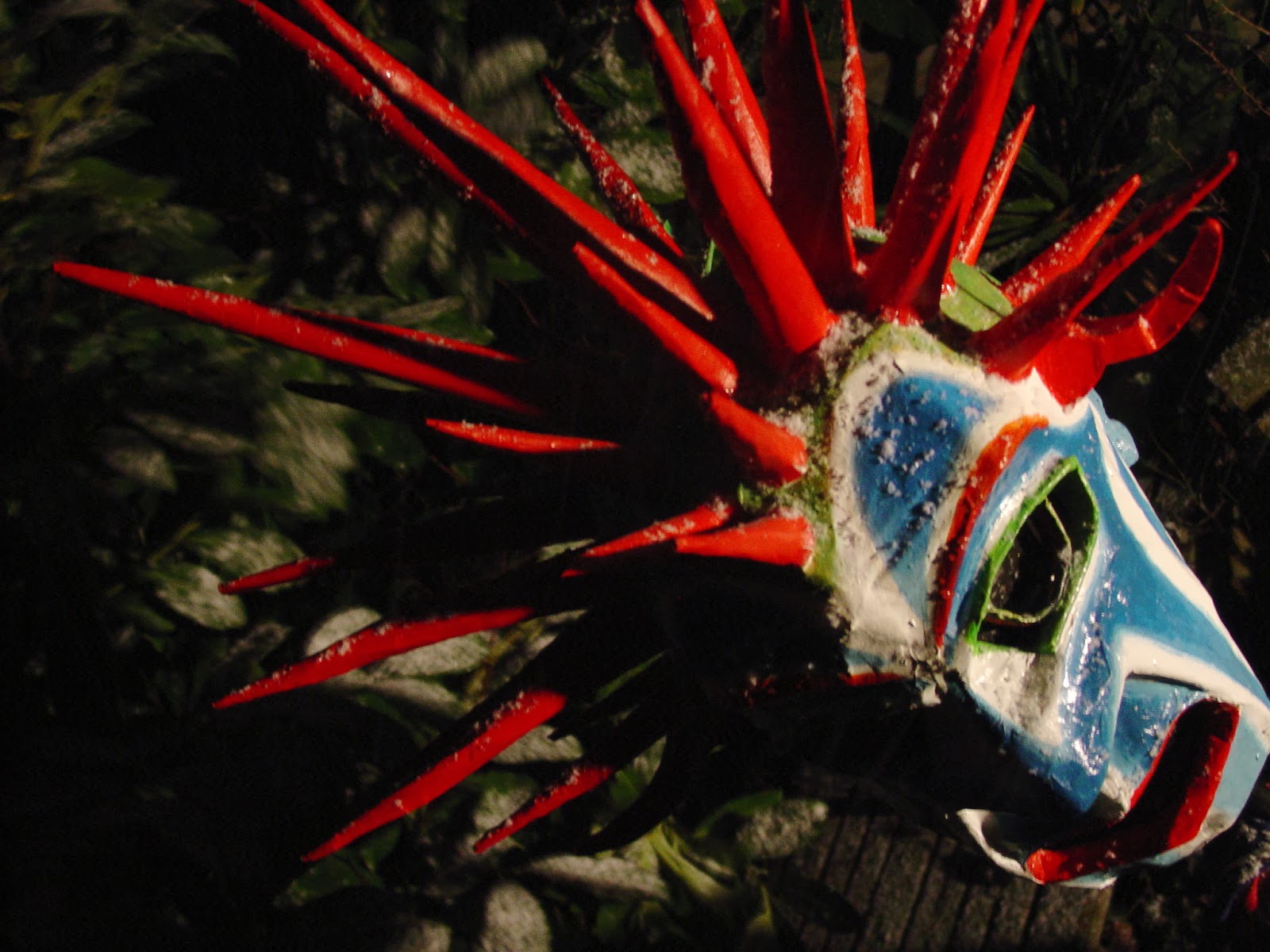
If my audiences are anything to go by – especially women and those of a ‘folk’ persuasion (and the Bank Holiday drinker at Flitcham last May demanding a march on County Hall for a Boudicca statue now) it’s time. Meanwhile I’ll keep staging my tale with the help of my woad-faced, spikily red-haired, corn/pony-tailed Boudicca created for me by a Norfolk art teacher nearly 20 years ago.

Further reading? Check out 'Boudica: Her Life, Times and Legacy' by Dr John Davies and Bruce Robinson (Poppyland £9.95) and - more generally -'The Land of Boudica' Dr John Davies Norfolk Museums and Archaeology Service.
My book of poems 'Britain's Dreaming' (Frontier publishing, 1998) devotes one of its three sections to Boudicca.
June 26, 2014

The Brilliant Burneys of King's Lynn - EDP Weekend Feature Saturday July 12


‘I offered some few words in favour of my poor abused town the land of my nativity - of the world’s happiness – we discoursed a little time and Hetty suddenly cried out ‘Hush hush, Mama’s in the next room. If she hears us we two will be whipt. And Fanny will have a sugar plumb’ ‘Aye cried Maria tis her defending Lynn which makes Mama (Fanny’s stepmother, Mrs Allen, Lynn born and bred) so fond.’  

'I remember well that, when I was preparing....I had such an idea I should undergo an examination and I was fearful of some wry question that might discountenance me, that I learnt nearly the whole common prayer book by heart! - Besides reading the Bible quite through three times! I was so indefatigable, I rose to nothing else; and never went to rest while I could procure light for my labours. … (and) after all this hard work - the fat clumsy stumpy worthy Bishop of Norwich clapt his hand upon my head, and off it, as fast as he possibly could, and never made a single interrogatory, nor uttered a single doubt or demur upon my fitness or unfitness for his blessing.' …

                                                         Fanny Burney’s diary


Celebrating the woman from Norfolk who inspired Jane Austen (EDP feature)

Saturday 19 July marks the 200th anniversary of Dr Charles Burney, internationally-famous musician of his day. But his Norfolk-born daughter would go on to even greater fame - and inspire one of the best-loved writers of all time. GARETH CALWAY and TREVOR HEATON tell the story of the ‘Brilliant Burneys’.

Take a look at this quotation: "if to PRIDE and PREJUDICE you owe your miseries, so wonderfully is good and evil balanced, that to PRIDE and PREJUDICE you will also owe their termination."

Remind you of anything? And those capitals have not been added here, but by the original writer - ‘Fanny’ (Frances) Burney, King’s Lynn’s own literary superstar, in the last chapter of her novel Cecilia.

They would have certainly impressed her readers, including a young lady who went on to subscribe to her novel Camilla - a certain Miss J Austen of Hampshire.

And yet the talented Frances and her once equally-famous father have now largely slipped below our cultural radar - something which organisers of the 64th King’s Lynn Festival, which begins tomorrow, are determined to put right.

Frances was the daughter of musician and composer Dr Charles Burney, the 200th anniversary of whose death is being marked by a special ‘Charles Burney Day’ next Saturday.

Charles was treated as a popstar of the day when he lived and worked in Lynn in the 18th century but his influence continues to underline the town’s position on the cultural map.

As historian Dr Paul Richards explains, Burney’s star status made him an instant hit with the town’s well-to-do. "Because of his celebrity status, Lynn merchants wanted Burney to teach their daughters to play the harpsichord and further attention was drawn to Lynn when he commissioned the Snetzler organ at St Margaret’s," he said. "His first concert playing it was reported in the London papers."

Peter Sabor, a world authority on Charles who is professor of English at McGill University, Montreal, will give an illustrated lecture on Burney and, in particular, his friendship with Samuel Johnson, at St George’s Guildhall.

Then at at 7pm in the Minster (St Margaret’s Church) that evening The English Concert, recognised as one of the finest chamber orchestras in the world, will perform music which traces Burney’s travels around Europe while he was gathering material for his book, ‘The General History of Music’, which brought him international fame.

And at 9.30pm renowned organist John Butt will give an organ recital on the Snetzler organ. The programme will include music by Burney.

Meanwhile Lynn’s beautiful Custom House - a building Charles and his young daughter Frances would have known and admired as townsfolk still do today - is hosting a little gem of an exhibition of all things Burney organised by enthusiast Alison Gifford.

Burney, already a distinguished young London organist, brought his family to the cleaner air of Lynn after a bout of ill-health in 1751.

He was soon appointed as organist at St Margaret’s Church, now Lynn Minster, and much sought after as an elite music tutor by the town’s great merchant families. But it is his roles as music historian and composer, which were more important to him, that have secured him his place in cultural history.

He had a profound influence in Lynn at a time when music, dancing, books and picture collecting became the vogue.

Georgian Lynn was a large and prosperous port. Its elite merchant class lived in the town houses that still dominate King Street, Tuesday Market Place and Queen Street.

The Trinity Guildhall was extended to make an Assembly Room and Card Room; open pasture was landscaped to provide elegant Walks for the fashionable to stroll in and St George’s Guildhall was adapted as a theatre.

In the words of Nikolaus Pevsner, "The sequence of streets… is one of the most satisfying Georgian promenades in England." Sir John Betjeman was another devotee of its elegance.

Soon after Frances’ birth in 1752, the Burneys moved to the modish des res of 84 High Street (now identified by a green plaque). Large fashionable shops were rebuilt in this street by a wide range of tradesmen and patronised by town merchants and country gentry.

Big barrel-shaped windows of many panes fronted spacious interiors full of merchandise: carpets, glass, teas, sugar, coffee, chocolates, hats – and of course tickets for theatre, stagecoach and the latest Burney concert.

Saturday Market Place is dominated by Lynn Minster as it was in the Burneys’ day. The loss of its landmark spire in a gale ten years before Burney’s arrival in the town would no doubt still have been a topic of conversation.

A new Georgian nave was finished in 1747 and commented on by Burney on his arrival in the town: he thought the organ appalling, along with the ignorance of music among his patrons (views he presumably kept to himself). He persuaded the Lynn Corporation to commission a new organ in 1754 - at the enormous sum of £700 - and it was placed against the great west window (it is now in the east end nave).

Soon after their arrival, Charles and his first wife Esther were busily mingling with the upper crust in and around Lynn, including the great merchant family the Hogges who lived on Tuesday Market Place.

Burney tells us: "My wife, though herself no card player, never failed to be equally invited; for she had a most delightful turn in conversation, seasoned with agreeable wit, and pleasing manners."

Burney had egalitarian leanings, however, and sought out street musicians on his travels as well as elite performers. He moved to a ‘pretty and convenient’ house in Chapel Street – now the site of the council offices - in 1751. It cost him £12 a year in rent and Esther followed him in 1752, bringing their three children Hetty, Charles and James to a new house in High Street.

Charles sadly perished here as an infant and is buried in St Nicholas’ Chapel, but Frances was born in Lynn in the same eventful year. There followed Susannah, Charles and Charlotte and another child, George, who died.

Growing up in Lynn and seeing the interplay between the merchant families, their rivalries and airs-and-graces, their fallings-out and fallings-in of friendship, must have given her ample material to tuck away to call upon for her later satirical barbs.

She was comically aware at an early age of the discrepancy between what people said and what they did. This account of her Confirmation by the Bishop of Norwich is a good example: ‘When I was preparing... I had such an idea I should undergo an examination and I was fearful of some wry question that might discountenance me, that I learnt nearly the whole common prayer book by heart! - Besides reading the Bible quite through three times!... (and) after all this hard work - the fat clumsy stumpy worthy Bishop of Norwich clapt his hand upon my head, and off it, as fast as he possibly could, and never made a single interrogatory, nor uttered a single doubt or demur upon my fitness or unfitness for his blessing.’

On another time she wrote about seeing the ships moored along the Ouse and hearing the ‘oaths & ribaldry’ of the sailors and porters... until she fled back in the house, blushing. Or watching a wedding party arrive, and leave, St Margaret’s Church within 15 minutes - ‘O heavens! How short a time does it take to put an end to a Woman’s liberty!’.

Frances and her family stayed on in Lynn until she was 18. For some years they had partly lived in London, and took the final decision to move back to the capital for good in 1770.

Family friend Samuel Johnson told her affectionately that he was never taken in by her ladylike self-effacement. ‘Your shyness, and slyness, and pretending to know nothing, never took me in. I always knew you for a toadling’ (ie a little toad that looks harmless but carries poison in its tail.) The painter Sir Joshua Reynolds professed a healthy dread of ‘little’ Fanny’s satirical eye, of her ruthless exposure of affectation - and selfishness.

‘Evelina, or A Young Lady’s Entrance into the World’ was written in secret and published anonymously in 1778 and taken as the work of a man - Dr Johnson was even suggested as the author - until delighted readers found her out and celebrated her achievement.

The 1780-2 follow-up ‘Cecilia’ confirmed her reputation, and for her third novel Camilla she received the unhitherto unprecedented sum of £1,000 for the copyright in 1796, proof of her pulling power as a novelist.

One of those who eagerly read the book was the young Jane Austen. She was to begin her most famous novel, originally called ‘First Impressions’, only a few months after reading Camilla. First Impressions would have made a memorable title - but not as memorable as the one she eventually came up with: Pride and Prejudice.

One of Burney’s biographers, Clair Harman, observes: "Austen was a devoted fan of Burney, and seems to have particularly admired Camilla."

Scholars have spotted parallels in plots, situations - even jokes - between the two writers. Like Jane Austen, Frances employed comedy, irony and satire; focused on female heroines, and wrote about the ‘domestic’ topics of love, marriage, money, and manners. Austen so admired her that she even joked to her sister Cassandra in an 1813 letter that she might marry Frances’ son Alex (Austen was 38, he was 20 at the time).

Austen admiringly alludes to two of Burney’s books in Northanger Abbey: "It is only Cecilia, or Camilla, or Belinda; or, in short, only some work in which the greatest powers of the mind are displayed, in which the most thorough knowledge of human nature, the happiest delineation of its varieties, the liveliest effusions of wit and humour, are conveyed to the world in the best-chosen language."

Frances - who became Madame D’Arblay on her 1793 marriage to a French general who had fled the Revolution - lived on until 1840, her lively diaries eventually becoming more famous than her novels. Jane Austen, her great protege, had died in 1817, three years after Frances’ father.

The writer had spent five years at Queen Charlotte’s court, satirising its paralysing etiquette and tormenting lack of independence to the delight of her readers.

But her diaries are kinder about Lynn, as this disagreement with her sisters shows: "I offered some few words in favour of my poor abused town, the land of my nativity - of the world’s happiness – we discoursed a little time and Hetty suddenly cried out ‘Hush hush, Mama’s in the next room. If she hears us we two will be whipt. And Fanny will have a sugar plumb’ ‘Aye,’ cried Maria, ‘tis her defending Lynn which makes Mama [Fanny’s stepmother, Mrs Allen, Lynn born and bred] so fond’.

Let’s not forget it was ‘poor abused’ Lynn which helped to shape a writer, who in turn helped inspire an even greater literary name. Virginia Woolf wrote tellingly, if a little hazily regarding the relative dates of their deaths, that "Jane Austen should have laid a wreath upon the grave of Fanny Burney".

So perhaps walking somewhere in the elegant drawing rooms frequented by Jane Austen’s characters lurks the echoes of the ghosts of those long-forgotten merchants of Georgian Lynn.

For more information about Charles Buirney day events, visit www.kingslynnfestival.org.uk, call the box office 01553 764864 or the Festival office on 01553 767557. The exhibition ‘Georgian Lynn and the brilliant Burney family’ continues at the Custom House, Purfleet Street, until October 31, admission £1.

Fanny Burney: A Biography, by Clair Harman, is published by HarperCollins.


The Festival Press Release:

"Musician and composer Dr Charles Burney was treated as a “pop idol” of the day when he lived and worked in King’s Lynn in the 18th century but his influence continues to underline the town’s position on the cultural map.

The 200th anniversary of Burney’s death is being marked by a special Charles Burney Day on July 19 during next month’s King’s Lynn Festival.

Lynn historian Dr Paul Richards, who is leading special Burney-themed walks around the town centre, is very aware of the many visitors attracted to Lynn to learn more about Burney’s nine years in the town during which he was organist at St Margaret’s Church.

“Burney’s celebrity status draws attention to the town and this year’s anniversary is attracting visitors from all over the region and further afield,” Dr Richards said.

“Because of his celebrity status Lynn merchants wanted Burney to teach their daughters to play the harpsichord and further attention was drawn to Lynn when he commissioned the Snetzler organ at St Margaret’s. His first concert playing it was reported in the London papers,” he said.

This history related to visitors against the background of Lynn’s Georgian streets continues to intrigue tourists and two Festival concerts and a talk will celebrate a personality who has a significant place in Lynn’s rich history.

Peter Sabor, a world authority on Burney who is professor of English at McGill University, Montreal, will give an illustrated lecture on Burney and, in particular, his friendship with Dr Johnson. The talk will be given at St George’s Guildhall on Saturday July 19.

At 7pm in the Minster (St Margaret’s Church) that evening The English Concert, recognised as one of the finest chamber orchestras in the world, will perform music which traces Burney’s travels around Europe while he was gathering material for his book, The General History of Music, which brought him international fame.

And at 9.30pm renowned organist John Butt will give an organ recital on the Snetzler organ. The programme will include music by Burney.

The Festival is also supporting an exhibition about the “Brilliant Burney family” in the Custom House.

For more information visit www.kingslynnfestival.org.uk, call the box office on 01553-764864 or call the Festival office on 01553-767557."


opening of the ballad (as published in Doin different - new ballads from the East of England by Gareth Calway published by Poppyland publishing 2015. Ballad number 23.)

Of Halls and harpies, haprsichords,

Society and Sin,
She wrote her sugar-plumbing words,
Sweet Fanny B of Lynn.

Up-laddering Queen Charlotte’s robes
And blood-Blue Stocking works,
The glittering Balls of Johnstons, Garricks,
Montagus and Burkes.


The snake, the cad, the ingénue,
Bad-manners and bad hearts,
She clocked them with a lady lash,
A tongue to make them smart...


May 20, 2014

Anne Boleyn at Blickling Hall: EDP Feature 19 May


Ghostly Legacy of a Queen

I stole to the door of Blickling Hall
On the nineteenth night of a moonlit May
And saw the ghost of Anne Boleyn
Shining bright as day…

When I asked Norwich composer Tom Conway to set these lines from my Ballad of Anne Boleyn and the Burglar it seemed to strike a chord with our audiences. Actress Joanna Swan – Tom’s musical partner in the Familiars folk duo– made it one of the highlights of our ‘spooky folk’ tour of Norfolk.


Blickling Hall is certainly a good place to set a ghost story. It was voted the most haunted house in Britain in a National Trust survey in October 2007.

Tonight is the 478th anniversary of Anne Boleyn’s execution and her spirit has good cause to be restless. Her failure to provide a male heir for the Tudor dynasty convinced Henry VIII his marriage was cursed by God.

Her miscarriages, defective births, alleged extra finger and a prominent neck mole didn’t help, encouraging the myth that she was a 'she-devil'. The famous sexual magnetism of her then-unfashionable dark looks and small frame contributed further to her occult mystique. Less famously, but more significantly, her advanced and well-read Protestantism fanned the flames of anathema.

She could not be placed at any of the scenes of the ‘crime’ with any of the six ‘adulterers’ accused, including her brother Lord Rochford and the famous poet Sir Thomas Wyatt (the only one released.) But the witch-hunter’s accusations that she could materialise anywhere, anytime, rather hampered her defence!

At her trial for treason, presided over by her uncle, the Duke of Norfolk, she was accused of acting the 'libertine' before her marriage to Henry, and of being a disciple of Satan who had 'bewitched' (seduced) Henry with sorcery.

During her imprisonment at the Tower in May 1536 - in the very state rooms she had spent her happy coronation – this ‘witch’ enquired anxiously about her father, also her 'sweet broder' and lamented that her mother would die of 'sorrow' for her.

The Boleyn family was living a nightmare, their fairy castle of achieved ambition swept away in one spring-tide of trauma.
It had taken Anne’s father Sir Thomas Boleyn a lifetime to build.

Well established as a diplomat and linguist at the Royal Court before Henry became King in 1509, his calculated marriage to the well-connected royally-descended Howards, Catholic dukes of Norfolk, aided his upward drive.

Thomas’s three children, George, Mary and Anne, were all well-educated and part of his grand plan to attain ever greater power and status.

The girls spent their teenage years in France as ladies-in-waiting to Henry's sister the French Queen, then consecutively joined Queen Katherine of Aragon’s household, as maids of honour. Both caught the King’s eye.

Anne played harder to get and her family benefited from her perceived ‘consort in waiting’ status. Thomas was created Earl of Wiltshire and her brother Lord George Rochford appointed to the Royal Privy Chamber.

Henry secretly wed Anne on 25th of January, 1533, and secured the Boleyns' status as one of England’s pivotal families, in an England that under Henry VIII was really going places. It was said she was the only woman who ever dared answer Henry back – his later wives were expressly required to be 'untroublesome'.

There was probably more head than heart in Anne’s requiting Henry’s troth. Her initial betrothal to Lord Henry Percy had been callously terminated by Cardinal Wolsey (on the King’s orders) and she had inspired Sir Thomas Wyatt’s aching love long before Henry’s.

On Monday 15 May, 1536, her uncle the Duke of Norfolk proclaimed the death sentence on Anne with 'tears in his eyes'.
On Friday 19 May, 1536 at 8.00am, aged 29, she took her place on a scaffold - her brother and the other ‘adulterers’ had already died on theirs, horribly - dressed in a robe of black damask covered by an ermine mantle of white.

Instead of denying her guilt as an adulteress and disciple of witchcraft, she delivered a generous speech praising her former lord and lover Henry VIII. After being blindfolded, a French swordsman severed her head from her delicate neck.

The story goes that on May 19 every year, a carriage pulled by six headless horses with a headless coachman carries a headless Anne to the door of Blickling Hall and the former Queen gets out brandishing her severed head! She then roams the hall’s corridors until daybreak when she disappears.

Perhaps she meets her father’s ghost. Sir Thomas had – inexplicably - continued to work closely with Henry, his children's treacherous killer and true source of his family’s new infamy. After his wife died in 1537, a year after Anne's death, he passed away himself (in 1539.) Elizabeth, Anne's mother, had reportedly died from a broken heart.

Mary – distanced from Anne by the latter’s replacing her in Henry’s affections - died in 1542 but was survived by a young daughter and the rumoured illegitimate son of Henry.

Legend has it that, as penance for the untimely deaths of two of his children, Sir Thomas’s ghost must cross 12 bridges before cockcrow every 19th May. With his own coach of headless horses, he starts at Blickling and crosses bridges at Aylsham, Belaugh, Burg, Buxton, Coltishall, Hautbois, Meyton, Oxnead and Wroxham.

It’s not all legend. The original manor house in Blickling (the surviving red-bricked Hall is Jacobean) was the Boleyn family home and it is reasonable to assume that in 1507 Anne was born there.

The family was deeply rooted locally. The earliest evidence that the Rev. Canon W. L. E. Parsons, Rector of Salle (“Some Notes on the Boleyn Family” published in the Norfolk and Norwich Archaeological Society’s journal in 1935) could find was a John Boleyn mentioned in 1283 in the Register of Walsingham Abbey. There is a record of the Prior of Walsingham suing William Boleyn of Thurning, and Prior’s Bailiff in Salle, for an account and a John Boleyn acting as a surety.

The family status was not all Thomas-won and Tudor-riche. “The descendants of Nicholas Boleyn,” notes Parsons, “weren’t just holders of land under the Lord, they owned the manor of Calthorpe as of fee and right.”

A Geoffrey Boleyn was laid to rest in Salle Church in 1440. His children included Cecily, buried at Blickling; Thomas, a priest and Master of Gonville Hall, Cambridge, from 1454-72 and Geoffrey, a Lord Mayor of London.

It was this second Geoffrey who brought the family to financial and social prominence in the reign of Henry VI. As the protégé of his Norfolk neighbour, the famous Sir John Falstaff (grossly caricatured by Shakespeare) he travelled to London, achieving fame, fortune and royal favour, married into the nobility, and served as Sheriff of London.

Falstaff sold Blickling manor to Geoffrey before dying at Caister Castle in 1459. Geoffrey’s son William served as Sheriff of Norfolk from 1500 to 1501. He was buried in Norwich Cathedral on his death in 1505.

Thus, Thomas Boleyn, Anne’s father, inherited from William the manors of Blickling, Calthorpe, Wikmere, Mekylberton, Fylby, West Lexham, Possewick, Stiffkey and Hever Castle. But he didn’t stop there.

Honours were heaped upon him in the 1520s: first Treasurer of the Household, then Knight of the Garter, Viscount Rochford, and finally, in 1529, the Earldom of Wiltshire. In 1533, when his daughter Anne Boleyn became Queen, the Boleyns had reached the top.

Their fall was as spectacular - and much more swift. Within eight years, not one member of the immediate Boleyn household survived. The remaining relatives, stigmatised by tragedy and shame, disappeared, reportedly to Ireland.

Their curse continued. Even the Howards were infected – Anne’s cousin Catherine Howard later mirroring her own fate. After Sir Thomas’s death in 1539, Blickling passed through his brother’s hand to his relatives, the impressively wealthy Cleres. Yet Sir Edward Clere died a bankrupt in 1605 and eleven years later his widow sold the whole Estate.

Blickling Hall today is one of Norfolk's top visitor attractions, boasting nearly 5000 acres, that impressive Jacobean build, gardens and parkland walking. The landscape, with its hedges, tree-lined lanes, woodlands and red brick manor reaches back to a Tudor-founded England, despite the top secret work carried out by the RAF during the Second World War. A great place to root yourself.

Watch out for the ghosts though!

Gareth’s play Tom and Harry, about the men in Anne Boleyn’s life, and set at Blickling Hall, toured as a Room at the Gin production last year. Hear excerpts here


May 19, 2014

Chelsea Tractor On Sea (review of Henry Sutton's Bank Holiday Monday)


Henry Sutton’s 1996 novel Bank Holiday Monday is set in ‘Chelsea sur la mer.’

You could sum it up in a sentence, but it would be a very long sentence. Six well-heeled London holidaymakers, two couples, a child and an Australia-based relative, rent a windmill at Burnham Overy Mill; explore the staithe; maroon themselves across the marshes to Holkham; harvest and cook some of the best-described samphire in literature; break into the Queen’s bathing hut; see some unappealing nudists (‘They’ve got no clothes on, Daddy’) and the maggoty corpse of a seal; indulge in some naughty naturism of their own; patronise The Lifeboat; drink local ale with variable enthusiasm; drive home along a coast road defamiliarised by outside-viewpoint, darkness, drink and the demons of Norfolk holidays past; enrage local twitchers to the point of one pushing the ‘townies’ child into a dyke; name-check the Jolly Sailors at Brancaster, The Hero, The Nelson; get thrown out of the ’Victory’ in Burnham Thorpe by an insane barman pretending to be the great man himself (offended by their expectations that he is running a gastro pub instead of a beer and crisps hall); explore a drowned prehistoric forest; are bewildered by the sheer number of Burnhams in their search for Nelson’s birthplace (the book says there are five; but in truth there are seven: Sutton (ironically) Market, Thorpe, Norton, Deepdale, Overy Town and Overy Staithe) and generally inhabit the North Norfolk holiday we who live here generally only see from outside.

It is an intriguing read. Sutton knows Norfolk – he was born in Hopton and another of his well-received novels, Gorleston, also has a Norfolk location. But the point of view, like the protagonists, is an outsider’s, and the author has denied being a Norfolk writer. ‘It’s the relationships between people and the fine details that interest me, not the place itself.’ Indeed, the mental atmosphere is metrosexual throughout and while the unique, compelling, uncertain, inundated, haunted, beautiful landscape of North Norfolk is lovingly evoked more often than any character, it is used an allegory for the inner life and passions of those rootless London-based characters.

In a mediaeval tale, this landscape would embody their journey to self-knowledge. The modern touch is that not only is the ‘home’ windmill they set out from an exile in itself and continually identified as a ship that can’t sail – in the child’s words, that ‘doesn’t work’ – but that, unlike Pilgrims’ Progress, they don’t even know what they’ve set out for. Or even if there is anything to find. And that the touching redemption from isolation, where it is achieved, is about laying the ghosts of the past (brutally evoked by a caravan behind the Lifeboat Inn) by suddenly appreciating, in that recognisable holiday detachment, what you have in the present.

It is no accident that these characters repeatedly get lost. Nor that expedition leaders lose the confidence of those following. Alice, the only officially ‘single’ character though no more isolated than the married ones, is both obsessed with maps and emotionally lost in the outback of her own life. With an Aussie contempt for British panic and British terrain, she leads them ‘home’ to the mill on one occasion using a splendid heritage map she’s found in her room. But her role as leader - or even as a definite member of the group - is temporary, part of the ever-shifting relationships both inside the windmill and of the landscape outside. Sutton uses the disorientating arrangement of corner-less rooms within the mill – no fixed upstairs and downstairs, even some uncertainty about which room (and which sexual partner) the married men are sleeping in or what is nightmare and what is waking – to the same effect.

Part of the thrill for a Norfolk reader is to see our everyday places used as minutely recognisable settings. ‘Hey, listen, it’s the Lifeboat..!’ or Hey, this is exactly what happened when we tried to get a meal at that pub...!’

Sutton’s descriptions achieve a remarkable synthesis: a solid local realism shot through with poetry and the inner lives of London characters. At the same time, you look at his author’s photograph on the dust jacket and it’s a face you see everywhere in Burnham Upmarket: the Londoner carrying a case of Chablis back to the windmill for the seafood supper, worried that he might run out of hummus before the end of the holiday. While locals may be more worried about ghost villages with the holiday homes standing empty for ten months of the year.

May 18, 2014

Hanse Festival in King's Lynn 17 May EDP Weekend Feature and Lynn News link


A glorious sun-drenched day in Lynn, on the Hanseatic waterfront, previewed in my EDP Weekend feature (not available online so copied below.) The concerts ended with these two acts: Eplemoya, who sang with Nordic fire and ice, and the Mediaveal Baebes, from England, whom I reviewed in Monday's EDP (also not available online so copied below) and in The Lynn News 23 May. View review here Above - rock pics by the fabulous Al Pufford.
Link to Lynn News online at end of post.

Feature in EDP Weekend 17 May


King’s Lynn celebrates its Hanseatic heritage this weekend in sumptuous style. Attractions include mediaeval markets; guided Hanseatic walks; arts and crafts stalls; street entertainment including fire breathers and minstrels; children’s activities; fireworks; music from the Paabel and Hermitage ensemble and, from 8 pm Saturday, the bewitching choral music ensemble Mediaeval Baebes.

Hanse Day has been celebrated annually in King’s Lynn since 2009 when the Borough Council organised the town’s first ever Hanse Festival. Amid mediaeval merriment and quayside sea shanties, the majestic Lisa von Lubeck, a 15th Century caravel reconstruction, cruised up the River Great Ouse from its port in Lubeck, Germany, to greet the crowds.
The original mediaeval Hanseatic League, of a group of towns around the Baltic and the North Sea, was an extremely influential trading association and an integral part of King's Lynn's development and past.
Let’s take a walk through ‘Hanseatic’ Lynn.
In the Custom House on Purfleet Quay, one of the most gracious buildings of any era, are housed models of North East Europe’s first ‘container ships.’ These 14th century ships – whose ability to carry bulk cargoes made them so successful - linked Lynn with Hamburg, Bremen, Lubeck and Rostock. Later ships like the Lisa von Lubeck, a 15th Century caravel, were built bigger and with castles fore and aft for soldiers to defend against pirates.
Stockfish Row (laid out by the Norwich bishops who ruled ‘Bishop’s Lynn’ in the 1140s; renamed King St in a fit of patriotism in the Napoleonic Wars) was where Lynn’s top 15C merchants built new houses and alehouses running down to the river. The Great Ouse was deeper in this part of town enabling bigger ships to moor at private quays. The main public quay - ‘the Common Staith’ - was off Tuesday Market Place.
St George’s Guildhall is the only part of King St that survives from the mediaeval period. Hanse merchant John Brandon was a leading patron.
An archaeological excavation of The Purfleet between Baker Lane and the river revealed a timber-supported 14C quay three times its current width, a safe and impressively broad harbour for English and foreign ships. Pilgrims disembarked here from all over Christendom, including Britain (Lynn was more water-bound then) en route to Our Lady at Walsingham. German pilgrims arrived on Hanse vessels and merchant vessels commonly took passengers across North Sea and Baltic.
Clifton House was probably the first house built on the west side of Queen St after the Great Ouse was diverted from Wisbech to Lynn in the 1260s. It retains an early 14C tiled floor of the Westminster type and an impressive mid 14C brick undercroft. Germans were the only foreign merchants allowed to rent or own their own dwellings in Lynn and the late mediaeval mansion which stood here doubtless housed Hanseatic traders as house guests.
In Thoresby College a slate plaque marks the line of the late 13C quayside and a timber wharf excavated in 1964 shows by how much the river has moved west. Ships from Europe loaded and unloaded here. There is a fine wooden door dating from the reign which put the ‘king’ into King’s Lynn, Henry VIII’s in 1510.
Lynn Fair in Saturday Market Place was one of the most important in the Eastern counties and a major attraction for German and European traders seeking wool and cloth. The busy weekly market and annual summer fair shared the limited space with a charnel chapel and cemetery so must have spilled along High St.
Period brasses and chests in King’s Lynn Minster have counterparts in Lubeck. The Greyfriars tower was erected about 1400 to enhance the Church and provided an important seamark for ships sailing into the Wash until the 19C. St Margaret’s spire served the same function, before falling in a great storm in 1741.
St Margaret’s was the local church of Lynn’s mystic in residence Margery Kempe (c1373-1440), daughter of five times Mayor John Brunham. Margery’s son lived and worked in Danzig but died during a visit home. Margery’s famous Book, the first surviving autobiography in English, compellingly recounts how she took her son’s widow back to Danzig on perilous seas into war zones - against accepted female practice; the express instructions of her confessor and her own terror – in obedience to her divination of God’s will.
The Holy Trinity Guildhall was the home of Lynn’s great Guild of Merchants, including natives of Lubeck, the pioneer port of the Baltic and of the Hanseatic League until the 1350s – and then Danzig, the chief trading partner of the Wash port thereafter. This was where Lynn’s merchant rulers heard the treaty conditions following the Anglo-Hanseatic War (1468-1473) securing German traders a resident post in the town.
Hanse House, the only remaining Hanseatic trading post in England, came into German possession as a condition of the peace when in 1475 the Hanseatic ports resumed trading with Lynn after years of sea-warfare. Merchants from Lubeck, Hamburg, Bremen and Danzig had their lodgings, warehouses, offices, stalls and shops here. The original mediaeval timber frontage was doubtless adorned with the imperious double-headed Hanse Eagle. German merchants occupied it until the 1560s. Today, its handsome Georgian frontage welcomes visitors to an indoor market, Rathskeller bar and the festival’s unique Hanse heritage.
Further information: http://www.visitwestnorfolk.com/explore/kings-lynn/history/international-hansa-day; http://www.marriottswarehousetrust.co.uk
‘Margery Kempe of Lynn’ (a new Marriott’s Warehouse Trust production) plays the Hanse House courtyard on August 2 and 3.


Review of The Mediaeval Baebes
Lynn Hanse Festival Waterfront


This perfect May festival day on the Ouse needed a climax and it got one. As its name suggests, the Baebes’ chorale ensemble, currently topping the classical pops, flirts enticingly with the popular but with an Early Music pedigree. The singing is joyous but stylish, the tunes compelling, the rhythms infectiously contrapuntal, the cadences gorgeously modal, and a mediaeval world away from pop. The arms lifted into the warm summer sky above long scarlet dresses and flower-decked hair, hands clapping energetic accompaniment while the drum thunders and the strings pluck, hint at dancing girls, especially when the singing takes on an Arabian tinge, but ultimately it is the ear that is ravished and excited.
There are nods to witch coven, Bacchae and sirens in their relentless hour-long attack, particularly when ‘Adam lay y bounden’ gets female delight in his plight. The Baebes’ two devotional chants – normally performed in Cathedrals in white dresses– are at odds with their glee in an immaculate birth achieved ‘without the seed of a man’ and in ‘I Sing of a Maiden’ their exquisite hymning in feisty scarlet of Mary’s virgin motherhood, but the disconcerting of audience sensibilities is all part of the fun.

Gareth Calway

See also Lynn News story, which made it a record 4 day sequence for me troubling the regional dailies here:

And just to prove Al isn't the one who can shoot a camera, this photo-gallery of the day by Maz and me.

May 15, 2014

Howling at the Wolf 15 May 2014

Roger Young (the Wolf man) writes... "a superb evening of music from our members and from our double bill of guests - you missed an absolute treat. The evening was dedicated to the memory of Chris Adams and supported by a substantial donation towards costs from Chris' sister Pauline who was there to help us celebrate the memory of Chris."


Jeff Warner

Adam Hurt & Beth Williams Hartness performed professionally the night before at the Dragon Hall in Norwich and surprised Roger by not repeating their banjo-centric set. Adam explained he didn't want to inflict this on a 'mixed audience' ....
Roger continues... both currently live in Kernersville North Carolina. Adam originally from Minnesota His father was an orchestral violinist. Adam started on bluegrass mandolin at age 11 and went on to play banjo making his first solo banjo album at the age of 16. He has won the banjo competition at the famous Clifftop Festival three times and also the Mt. Airy Festival three times. He currently makes his living dividing his time between performing and teaching. He gives individual lessons online via Skype and is in great demand to teach at many banjo camps around the USA and has taught at the "Sorefingers" week here in the UK.
He is extremely interested in architecture, especially Victorian Gothic and visiting places of historical significance.
Beth grew up on a tobacco farm in rural North Carolina. She started on guitar aged 11, is self taught and developed her own unique fingerpicking style. she has played guitar in several prize winning bands and twice won prizes for backup guitar.
Beth and Adam have played together professionally for about eight years. They have played the Kennedy Centre Millenium Stage, the Birchmere centre in Washington DC and many other venues including several in the UK. Their most recent CD is called "Fine Times at Our House" which is also the name of a splendid fiddle tune from the Hammons Family. Adam has made several solo CDs including one devoted to the sound of the gourd banjo as originally made and played by the slaves on the plantations around the time of the early 1800s.

I agree with Roger. An exceptional night at the always fabulous Wolf Folk Club in Wolferton. More info (on Jeff Warner) to follow and pics too of a film Roger made of my performance of Howl, to howling and growling accompaniment by the audience and regulars, which he has adopted as the club anthem.
John McLennan's nifty pics show Maz and I watching Adam and Beth and then Beth and Adam (and Jeff and Maz) watching (and phone videoing) me. Consider this a release to show the video in Hollywood, Beth.I was pleased as a wolf with two tails with my performance, recorded under a full moon (as it happens) and delivered by heart and from the animal belly except for the cerebral encyclopaedia bit and I won the raffle too - twice!


More - on Jeff Warner - in due course.