Advent Calendar Selection Box
from Sheer Paltry
Bard Of Bristol
"You’re supposed to be at ’ome!!"
Standing in my team red before a game, yelling the chants - in and out of sync,
The main feeling is of being a complete fraud.
It's not that the team doesn't matter to me:
It matters enough to give me a heart attack.
It's just that, with only distant memories of 2-3-5 to fall back on,
I never really understand what's going on.
There are fifty blokes with a view I could ask from anywhere around me
But they each seem to be commentating on a different match.
And I live five hours from Bristol so it's hard to stay in touch.
And, however you market it, the match atmosphere is just like you get in a men-only garage -
Oily, reductive, ferociously competitive about everything and nothing-
Aggravated by six pints of booze and ten thousand men-brains,
The kind of thing I went to University to get away from.
If it weren't for the tightening in the stomach every match day,
The inferno of baying noise - purged by love and loyalty
(And comradeship and chantorion and cheer,)
The shiver of the perfectly pitched pass,
The tantalising tactical one twos, the toothsome tingling tackles,
The faith-affirming final ball through the box,
The frantic flash of foot through frenzied ball
The fluent flight of ball through air into flapping net,
The fabulous tapestry of red against blue over green,
The red knights tilting at perfection,
The pavilions of banners, pennants and scarves,
The child’s red and white Christmas of the goal consummations -
Then I probably wouldn't bother.
December 11, 2006


December Poem Of The Month (Part III)
Advent Calendar Selection Box
In The Bleak Midwinter (post Dec 7)
watched
by the rich guarded
silence
of cotswold
farms
and a blinding sun
through bare trees
and the jagged saw
of a dog at the gate,
i wonder
what my pilgrimage
to an indian summer
half a world distant
taught me
about this old track
of unchanged england
wrapped up in compliments,
temporary as tinsel,
a feast that goes cold,
a santa that never
really delivers
as i slide
down my frozen hill
of ignorance
on slight city shoes
made in ahmednagar
towards
a painful wisdom.
Cranham, Glos. Christmas ’94
In The Bleak Midwinter (post Dec 7)
watched
by the rich guarded
silence
of cotswold
farms
and a blinding sun
through bare trees
and the jagged saw
of a dog at the gate,
i wonder
what my pilgrimage
to an indian summer
half a world distant
taught me
about this old track
of unchanged england
wrapped up in compliments,
temporary as tinsel,
a feast that goes cold,
a santa that never
really delivers
as i slide
down my frozen hill
of ignorance
on slight city shoes
made in ahmednagar
towards
a painful wisdom.
Cranham, Glos. Christmas ’94
Forward To Adelaide
Listen out for it on the World Service!
The Second Test (with apologies to Tennyson)
'Forward to Adelaide!'
Was England’s team dismay'd ?
Not tho' the Aussies knew
Fletcher had blunder'd:,
Freddy the heart of the side
Made head, its head belied
Monty again denied
Back to the valley of Death
The bruised and bashed lumbered.
S. Clarke to right of them,
McGrath to left of them,
Brett Lee in front of them
Volley'd & thunder'd;
Storm'd at with seamers’ spell
Boldly, they batted well,
Left-hooked the jaw of Death,
Right-jabbed the mouth of Hell,
Boundaries plundered.
Flash'd all their willows bare,
Flash'd as they turn'd in air
Sabring the seamers there,
Charging the bullies while
All the world wonder'd:
Spun by that portly bloke
Right thro' his line they broke;
Colly and Pietersen
Dealt him the boundary stroke,
Blocked him and bludgeoned
Knocked off a fifty – then
Knocked off a hundred….
S. Clarke to right of them,
McGrath to left of them,
Brett Lee in front of them
Volley'd & thunder'd;
Shane warned and cast his spell,
But all to no avail
They that fought back so well
Came back from cricket death
While ancient records fell
Knocked off a century,
Knocked off two hundred….
(to be concluded, hopefully with something along the lines of “When can their glory fade…?”)
When can their glory fade?
Oh, in a couple of days.
What COULDN'T be blundered
They managed it just the same.
Collapsing at Adelaide
The almost-six hundred!
The Second Test (with apologies to Tennyson)
'Forward to Adelaide!'
Was England’s team dismay'd ?
Not tho' the Aussies knew
Fletcher had blunder'd:,
Freddy the heart of the side
Made head, its head belied
Monty again denied
Back to the valley of Death
The bruised and bashed lumbered.
S. Clarke to right of them,
McGrath to left of them,
Brett Lee in front of them
Volley'd & thunder'd;
Storm'd at with seamers’ spell
Boldly, they batted well,
Left-hooked the jaw of Death,
Right-jabbed the mouth of Hell,
Boundaries plundered.
Flash'd all their willows bare,
Flash'd as they turn'd in air
Sabring the seamers there,
Charging the bullies while
All the world wonder'd:
Spun by that portly bloke
Right thro' his line they broke;
Colly and Pietersen
Dealt him the boundary stroke,
Blocked him and bludgeoned
Knocked off a fifty – then
Knocked off a hundred….
S. Clarke to right of them,
McGrath to left of them,
Brett Lee in front of them
Volley'd & thunder'd;
Shane warned and cast his spell,
But all to no avail
They that fought back so well
Came back from cricket death
While ancient records fell
Knocked off a century,
Knocked off two hundred….
(to be concluded, hopefully with something along the lines of “When can their glory fade…?”)
When can their glory fade?
Oh, in a couple of days.
What COULDN'T be blundered
They managed it just the same.
Collapsing at Adelaide
The almost-six hundred!
December 02, 2006
December Poem Of The Month (Part II)
Advent Calendar Selection Box
Kings Of The Forest
The Robins went back to the Forest
And did what they didn't before.
The robbers got two goals and two pens
The Robins the same and two more.
To go to the top-of-the-tree club
And sing out our victory song
Is brave and adventurous and merry
And shows us both plucky and strong.
This may be the day that the Robins
Proved to themselves they can be
The kings of the forest come April
And end it atop of the tree!
Kings Of The Forest
The Robins went back to the Forest
And did what they didn't before.
The robbers got two goals and two pens
The Robins the same and two more.
To go to the top-of-the-tree club
And sing out our victory song
Is brave and adventurous and merry
And shows us both plucky and strong.
This may be the day that the Robins
Proved to themselves they can be
The kings of the forest come April
And end it atop of the tree!
Forward to Adelaide!
This one was written on Friday and Saturday Dec 1-2 after long nights half awake to the progress of the Adelaide test. I posted it to Sportsworld and for the second week running, they broadcast it to the world shortly afterwards in the middle of interviews with proper grown up Australian cricketers, the nearest I've got to facing some of the bowling my heroes are currently dispatching...
Forward to Adelaide!'
Was England’s team dismay'd ?
Not tho' the Aussies knew
Fletcher had blunder'd:,
Freddy the heart of the side
Made head, its head (Strauss) belied
Monty again denied
But into the valley of Death
The bruised and bashed lumbered
M. Clarke to right of them,
McGrath to left of them,
Brett Lee in front of them
Volley'd & thunder'd;
Storm'd at with seamers’ spell
Boldly they batted well,
Back from the jaws of Death,
Out of the mouth of Hell
The once-losers clambered.
Flash'd all their willows bare,
Flash'd as they turn'd in air
Sabring the seamers there,
Charging the bullies while
All the world wonder'd:
Spun by that portly bloke
Right thro' his line they broke;
Colly and Pietersen
Dealt him him a boundary stroke,
Blocked him and bludgeoned
Knocked off a fifty - then
Knocked off a hundred….
Forward to Adelaide!'
Was England’s team dismay'd ?
Not tho' the Aussies knew
Fletcher had blunder'd:,
Freddy the heart of the side
Made head, its head (Strauss) belied
Monty again denied
But into the valley of Death
The bruised and bashed lumbered
M. Clarke to right of them,
McGrath to left of them,
Brett Lee in front of them
Volley'd & thunder'd;
Storm'd at with seamers’ spell
Boldly they batted well,
Back from the jaws of Death,
Out of the mouth of Hell
The once-losers clambered.
Flash'd all their willows bare,
Flash'd as they turn'd in air
Sabring the seamers there,
Charging the bullies while
All the world wonder'd:
Spun by that portly bloke
Right thro' his line they broke;
Colly and Pietersen
Dealt him him a boundary stroke,
Blocked him and bludgeoned
Knocked off a fifty - then
Knocked off a hundred….
November 29, 2006
Vitae Pompada
Vitae Pompada
I
There's derisive jeers at the Gabba today,
First ball wide as an Aussie grin,
First day lost and a series to play,
Three ton behind and Ponting still in.
And it’s not for the sake of a Wisden's vote
Or some grevious bodily Harmison's name
But Fred's flinty hand on his shoulder smote
"Pitch up, pitch up and knock down Shame."
II (third day)
The dust of the Gabba is stained with sweat
Wet with the wreck of a team that broke
The plan is dead and the bowlers wrecked
And the batters are blind with Ashes’ smoke
The Aussies are rubbing our nose in the dirt
And England’s far and honour a name
But don’t kick a Pom when he’s bloodied and hurt,
"Stand up, pad up - and fight again!"
III
There’s a gallows laugh at the Gabba tonight
Two hundred made, four hundred to win,
Five men gone in the fading light,
The captain down and the wickie in.
And it's not for the sake of a hope that’s gone.
Or to make good the boasts now proved to be vain,
But the battle joined and the heart proved strong
Come rain, come Warne, let’s play the game!
I
There's derisive jeers at the Gabba today,
First ball wide as an Aussie grin,
First day lost and a series to play,
Three ton behind and Ponting still in.
And it’s not for the sake of a Wisden's vote
Or some grevious bodily Harmison's name
But Fred's flinty hand on his shoulder smote
"Pitch up, pitch up and knock down Shame."
II (third day)
The dust of the Gabba is stained with sweat
Wet with the wreck of a team that broke
The plan is dead and the bowlers wrecked
And the batters are blind with Ashes’ smoke
The Aussies are rubbing our nose in the dirt
And England’s far and honour a name
But don’t kick a Pom when he’s bloodied and hurt,
"Stand up, pad up - and fight again!"
III
There’s a gallows laugh at the Gabba tonight
Two hundred made, four hundred to win,
Five men gone in the fading light,
The captain down and the wickie in.
And it's not for the sake of a hope that’s gone.
Or to make good the boasts now proved to be vain,
But the battle joined and the heart proved strong
Come rain, come Warne, let’s play the game!
November 26, 2006
Pompada, Verse II
On Saturday 25 November I wrote a poem about the Ashes based on Sir Henry Newbolt's Vitae Lamapda. I called it Vitae Pompada. Five minutes later, it was being broadcast to the world....
Pompada, Verse II
The dust of the Gabba is stained with sweat
Wet with the wreck of a team that broke
The plan is dead and the bowlers wrecked
And the batters are blind with Ashes’ smoke
The Aussies are rubbing our nose in the dirt
And England’s far and honour a name
But don’t kick a Pom when he’s bloodied and hurt,
”Stand up, pad up - and fight again!”
Pompada, Verse II
The dust of the Gabba is stained with sweat
Wet with the wreck of a team that broke
The plan is dead and the bowlers wrecked
And the batters are blind with Ashes’ smoke
The Aussies are rubbing our nose in the dirt
And England’s far and honour a name
But don’t kick a Pom when he’s bloodied and hurt,
”Stand up, pad up - and fight again!”
November 06, 2006
Radio Norfolk Interview
You can listen to Radio Norfolk's interview with he through a link at their website:
click here
click here
Last Night of the Tour
Friday November 3 River Studios, West Acre
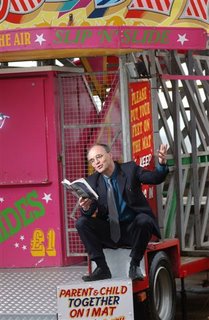
Well I finally got 50 in – the right number for a 50th birthday tour. And it was good to sense 50 souls following the first half action (growing up, leaving home, attempted manhood/ home-building and the would-be 'home' of football). And in the second half all 50 were rocking in their seats for The Beatles and (especially) the school poems. It really was a laugh a line for the latter and the skill of the comedian came into it – timing the next line just after the laughter peaked etc. A tricky manoeuvre? Well, I'll happily accept it. It's a hell of a lot easier than declaiming lines into a tumbleweed silence, that's for sure, and though this tour has been well received wherever it's gone it IS harder when the audience is small. Then the introduction of some tragic Boudicca poetry (from a vintage 1997 show but new to this tour since Wiveton) hard on the heels of the comedy show Marked for Life where I exploit the difference in meaning between 'schooldays' and 'education'. Such a key change from major to minor might have failed but it didn't. The Boudicca tour will always feel unfinished so it was great to be performing a slice of it again - notably without the constraint of half a ton of latex over my head…. Both halves seemed to go a lot quicker than usual last night. The consummate professionalism and physical suitability of the venue – as well as that big warm chuckling audience - also helped.
So, I’m looking back over the tour dates. The biggest theatre audience – until the last date – was the first – at Cwmbran. (I can't count the captive audiences of assembled Year Nines at Abersychan and Diss and the Year Seven assembly at Wells). Biggest books sales were at Cwmbran and Westacre though I think the biggest in proportion to audience size were probably Chepstow and Wiveton. The most severe disappointment – at a time early on in the tour when I wondered if it would ever really get going – was Sheringham where I lugged all my stage furniture and props and scoops in the Times Educational Supplement only to have to lug it all away again along with the stigma and chagrin of a cancelled show. (I hope the six who had booked tickets in advance got to see it somewhere anyway.) The lesson is, I think, that hot summer Bank Holiday dates at the seaside are not the best time to fill a theatre and that my show has to be marketed as the poetry/theatre crossover it is, not as the 'Literature' that audiences might preconceive as being a bit like homework. However, no venue on the tour was wasted and Sheringham produced the excellent laser printed colour programmes for several of the other dates, notably Westacre. Even The Lord Mayor's Chapel Bristol, where I went to perform with the whole of the city walking the other way to the Ashton Court Festival, provided some slick posters and displays in the heart of the city that looms so large in the book and show. Of the schools, all were special in some particular way. Abersychan, my alma mater, where it all began, gave me that wonderful feature in TES Cymru and TES as well as a day I’ll treasure for the rest of my life (see report, May 19 2006) – and a "Famous Poet Visits" feature in their posh newsletter which is the sort of thing all ex pupils must dream of. Diss was my biggest and boldest workshop/ performance combination and reversed a small run of low turn outs at a key time as well as putting the tour funds well into profit for the first time. It is also a specialist college that puts English where it should be – at the heart of the curriculum. Wells School was the best cold rainy Thursday a poet could have: a front page feature in Secondary Ed magazine on National Poetry Day turning up mid-workshop on the staffroom table. (See forthcoming article in same magazine about the tour and the joys of tabeleaux with top sets and the different but equal joys of bottom set Year 11 boys I spent an hour chanting with). Real work and a real joy. And finally, my own school, delayed from July (when I was laid up with a fever at a time when my own temperature was about the same as the Sahara summer outside) into a four day stint with Year 7s. Another front page (Lynn News, who'd covered the launch with a most intelligent article way back in April) and a gradual loosening of the Head of Department tie as I eased into the role of SMPISS (Slightly Mad Poet In –Smithdon - School). Ending that week in Wiveton, the gentlest and in many ways most intimate audience of the tour – poetry direct without theatre, the theatre for once not needed – and the rediscovery, for that venue, of my Boudicca poems, notably Safe European Home which an old afficinado requested. Then the little extra mini-reading in Camden Town as part of Bluechrome Live – Saturday 28 October – which, being a provincial from a tiny Norfolk village, I found extremely exciting just for being a Saturday night in London (the Halloween/ Sauvain-celebrating / Neo-punk crowds in the streets were a tremendous contrast from Sedgeford where a passing stranger brings us to the window) and where I confirmed that Boudicca was back on the Calway performance programme. I also met Guinevere Clark, a woman with an Arthurian name and the same initials as me whose book was published and marketed by Bluechrome at the same time, and many other up and coming Bluechrome poets.
I really wanted some kind of big harvest tour date to finish and, what do you now, I really got it at Westacre. There was the excellent fifteen-twenty minute feature on Radio Norfolk (URL for Listen Again etc. is on this website) the previous Sunday afternoon. Then several people who had been meaning to come to one of the shows finally made it, including some people who share the Welsh upbringing experience and now (like me) are based in Norfolk. And even, would you believe, an ex-colleague from a Lynn school (now North Norfolk) who shares my own particular hybrid West Country/ Welsh exile – Welsh mum/ Bath dad. There were budding poets and sixth formers (and a Year 9) from my own school – one of whom I spotted from behind stage in the bar with some nervousness but who certainly attended more last night than he often does in class! (I won't embarrass him by naming him but he knows who he is!) He was laughing his head off, though that's not the phrase he used to describe it. There were people I know quite well but never expected them at a poetry performance – nor did they perhaps – but it was great to have them 'with' me in every sense. There were lovely beautiful people from my village I have hardly seen since the last show they attended about six years ago. There were people I didn't know from Adam (a rare occurrence in Norfolk) who came up and said lovely enthusiastic things and bought books at the end – just what you want after a ninety minute one man performance. (In case anyone ever wonders what to say in these situations, "That was brilliant, much better than I expected, you’re a genius, wise, beautiful and very very funny, please may I have a signed book, here’s eight pounds" will usually do the trick! The one flaw in this whole set up is that after giving everything in a Friday one man show after a week at work, I then have to talk as I sign books to people who really want to make contact – as I do - but there’s always someone else behind them holding a tenner and wanting the same (and another two or three behind them). Lots of people had a different favourite poem or section and that’s really gratifying and I want to ask why but there’s never much time. It’s a wonder I even remember what my name is to sign it let alone maintain a conversation. Still, I have a few months ahead now where I can have all the solitude and quiet that I want. And probably will have too much of it before the month is out!
Next little gig, a Christmas poem from the book in South Creake. That'll do nicely.
Meanwhile, thanks to everyone who came to the show, bought the book, helped organise or host any of the events and crossed paths with me in any way on my little Exile pilgrimage. It’s made being 50 feel like 40 was supposed to – well they say 50 is the new 40:- a new beginning.
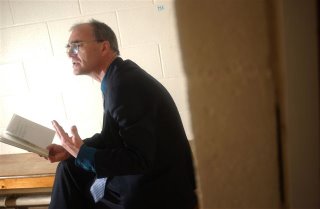
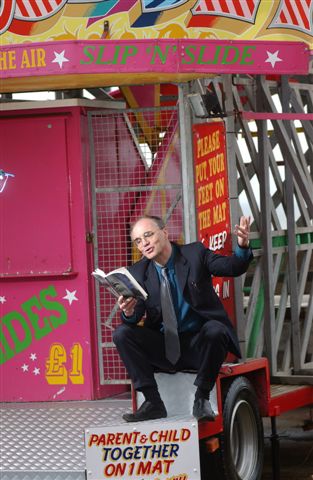
Well I finally got 50 in – the right number for a 50th birthday tour. And it was good to sense 50 souls following the first half action (growing up, leaving home, attempted manhood/ home-building and the would-be 'home' of football). And in the second half all 50 were rocking in their seats for The Beatles and (especially) the school poems. It really was a laugh a line for the latter and the skill of the comedian came into it – timing the next line just after the laughter peaked etc. A tricky manoeuvre? Well, I'll happily accept it. It's a hell of a lot easier than declaiming lines into a tumbleweed silence, that's for sure, and though this tour has been well received wherever it's gone it IS harder when the audience is small. Then the introduction of some tragic Boudicca poetry (from a vintage 1997 show but new to this tour since Wiveton) hard on the heels of the comedy show Marked for Life where I exploit the difference in meaning between 'schooldays' and 'education'. Such a key change from major to minor might have failed but it didn't. The Boudicca tour will always feel unfinished so it was great to be performing a slice of it again - notably without the constraint of half a ton of latex over my head…. Both halves seemed to go a lot quicker than usual last night. The consummate professionalism and physical suitability of the venue – as well as that big warm chuckling audience - also helped.
So, I’m looking back over the tour dates. The biggest theatre audience – until the last date – was the first – at Cwmbran. (I can't count the captive audiences of assembled Year Nines at Abersychan and Diss and the Year Seven assembly at Wells). Biggest books sales were at Cwmbran and Westacre though I think the biggest in proportion to audience size were probably Chepstow and Wiveton. The most severe disappointment – at a time early on in the tour when I wondered if it would ever really get going – was Sheringham where I lugged all my stage furniture and props and scoops in the Times Educational Supplement only to have to lug it all away again along with the stigma and chagrin of a cancelled show. (I hope the six who had booked tickets in advance got to see it somewhere anyway.) The lesson is, I think, that hot summer Bank Holiday dates at the seaside are not the best time to fill a theatre and that my show has to be marketed as the poetry/theatre crossover it is, not as the 'Literature' that audiences might preconceive as being a bit like homework. However, no venue on the tour was wasted and Sheringham produced the excellent laser printed colour programmes for several of the other dates, notably Westacre. Even The Lord Mayor's Chapel Bristol, where I went to perform with the whole of the city walking the other way to the Ashton Court Festival, provided some slick posters and displays in the heart of the city that looms so large in the book and show. Of the schools, all were special in some particular way. Abersychan, my alma mater, where it all began, gave me that wonderful feature in TES Cymru and TES as well as a day I’ll treasure for the rest of my life (see report, May 19 2006) – and a "Famous Poet Visits" feature in their posh newsletter which is the sort of thing all ex pupils must dream of. Diss was my biggest and boldest workshop/ performance combination and reversed a small run of low turn outs at a key time as well as putting the tour funds well into profit for the first time. It is also a specialist college that puts English where it should be – at the heart of the curriculum. Wells School was the best cold rainy Thursday a poet could have: a front page feature in Secondary Ed magazine on National Poetry Day turning up mid-workshop on the staffroom table. (See forthcoming article in same magazine about the tour and the joys of tabeleaux with top sets and the different but equal joys of bottom set Year 11 boys I spent an hour chanting with). Real work and a real joy. And finally, my own school, delayed from July (when I was laid up with a fever at a time when my own temperature was about the same as the Sahara summer outside) into a four day stint with Year 7s. Another front page (Lynn News, who'd covered the launch with a most intelligent article way back in April) and a gradual loosening of the Head of Department tie as I eased into the role of SMPISS (Slightly Mad Poet In –Smithdon - School). Ending that week in Wiveton, the gentlest and in many ways most intimate audience of the tour – poetry direct without theatre, the theatre for once not needed – and the rediscovery, for that venue, of my Boudicca poems, notably Safe European Home which an old afficinado requested. Then the little extra mini-reading in Camden Town as part of Bluechrome Live – Saturday 28 October – which, being a provincial from a tiny Norfolk village, I found extremely exciting just for being a Saturday night in London (the Halloween/ Sauvain-celebrating / Neo-punk crowds in the streets were a tremendous contrast from Sedgeford where a passing stranger brings us to the window) and where I confirmed that Boudicca was back on the Calway performance programme. I also met Guinevere Clark, a woman with an Arthurian name and the same initials as me whose book was published and marketed by Bluechrome at the same time, and many other up and coming Bluechrome poets.
I really wanted some kind of big harvest tour date to finish and, what do you now, I really got it at Westacre. There was the excellent fifteen-twenty minute feature on Radio Norfolk (URL for Listen Again etc. is on this website) the previous Sunday afternoon. Then several people who had been meaning to come to one of the shows finally made it, including some people who share the Welsh upbringing experience and now (like me) are based in Norfolk. And even, would you believe, an ex-colleague from a Lynn school (now North Norfolk) who shares my own particular hybrid West Country/ Welsh exile – Welsh mum/ Bath dad. There were budding poets and sixth formers (and a Year 9) from my own school – one of whom I spotted from behind stage in the bar with some nervousness but who certainly attended more last night than he often does in class! (I won't embarrass him by naming him but he knows who he is!) He was laughing his head off, though that's not the phrase he used to describe it. There were people I know quite well but never expected them at a poetry performance – nor did they perhaps – but it was great to have them 'with' me in every sense. There were lovely beautiful people from my village I have hardly seen since the last show they attended about six years ago. There were people I didn't know from Adam (a rare occurrence in Norfolk) who came up and said lovely enthusiastic things and bought books at the end – just what you want after a ninety minute one man performance. (In case anyone ever wonders what to say in these situations, "That was brilliant, much better than I expected, you’re a genius, wise, beautiful and very very funny, please may I have a signed book, here’s eight pounds" will usually do the trick! The one flaw in this whole set up is that after giving everything in a Friday one man show after a week at work, I then have to talk as I sign books to people who really want to make contact – as I do - but there’s always someone else behind them holding a tenner and wanting the same (and another two or three behind them). Lots of people had a different favourite poem or section and that’s really gratifying and I want to ask why but there’s never much time. It’s a wonder I even remember what my name is to sign it let alone maintain a conversation. Still, I have a few months ahead now where I can have all the solitude and quiet that I want. And probably will have too much of it before the month is out!
Next little gig, a Christmas poem from the book in South Creake. That'll do nicely.
Meanwhile, thanks to everyone who came to the show, bought the book, helped organise or host any of the events and crossed paths with me in any way on my little Exile pilgrimage. It’s made being 50 feel like 40 was supposed to – well they say 50 is the new 40:- a new beginning.
BBC Radio Norfolk Article
Reproduced courtesy of BBC Radio Norfolk
Exiled: Gareth Calway
Poet and teacher Gareth Calway plays truant from school to bring his Beatles-inspired performance poetry to the Westacre River Studios, near King's Lynn, on Friday, 3 November, 2006.
Gareth Calway turned 50 this year and wasn't afraid to shout about it. Most people would throw a party and feel a little worse for wear the morning after, but as a showman Gareth decided his birthday celebrations should be shared with most of the UK.
He chose to take his latest literary work Exile In His Own Country, the seventh collection of his poems, on tour.
"I was 50 this year and it was a bit of a landmark, so I thought let's mark it in some way. Celebrate it rather than worry about it," he said.
The tour started in South Wales, where Gareth spent his teenage years. After making his way around England, he brings the tour to a close in his new homeland - Norfolk.
"Some poets write brilliantly and don't read well, other people perform meaningless 'performance poetry' – with vim and gusto but it's hardly worth hearing," he said.
"What I'm trying to do is make both things happen at once. So you get literary quality work in a funny, moving, exciting way.
"The times that people have come up to me afterwards and said 'If I'd known it was like this I'd have come years ago'.
"If only I could get that message over and pack a few theatres - I could give up the day job," he added.
Bard or Beatles?
Gareth Calway is head of English at Smithdon High School in Hunstanton.
He admits his pupils are probably amused that his inspiration for poetry started not with Shakespeare, Wordsworth or Keats, but The Beatles.
"The Beatles lyrics are what got me started. They were about something, they were about things that I'd got going on in my world," he said.
"They were also incredibly talented and famous and got lots of girls so I thought that a good way to make a living," he laughed.
"It was the lyrics of Eleanor Rigby, that story that it tells, I thought it was amazing when I was a kid.
"That's what got me going in the first place and in a kind of homage to that, there's a section in the show called Beatles: A Prose Poem and I do The Beatles moment that was just so brilliant in my childhood, that Beatlemania period," he added.
Gareth Calway performs at the Westacre River Studios on Friday, 3 November, 2006 at 7.30pm. For more details call 01760 755800.
Exiled: Gareth Calway
Poet and teacher Gareth Calway plays truant from school to bring his Beatles-inspired performance poetry to the Westacre River Studios, near King's Lynn, on Friday, 3 November, 2006.
Gareth Calway turned 50 this year and wasn't afraid to shout about it. Most people would throw a party and feel a little worse for wear the morning after, but as a showman Gareth decided his birthday celebrations should be shared with most of the UK.
He chose to take his latest literary work Exile In His Own Country, the seventh collection of his poems, on tour.
"I was 50 this year and it was a bit of a landmark, so I thought let's mark it in some way. Celebrate it rather than worry about it," he said.
The tour started in South Wales, where Gareth spent his teenage years. After making his way around England, he brings the tour to a close in his new homeland - Norfolk.
"Some poets write brilliantly and don't read well, other people perform meaningless 'performance poetry' – with vim and gusto but it's hardly worth hearing," he said.
"What I'm trying to do is make both things happen at once. So you get literary quality work in a funny, moving, exciting way.
"The times that people have come up to me afterwards and said 'If I'd known it was like this I'd have come years ago'.
"If only I could get that message over and pack a few theatres - I could give up the day job," he added.
Bard or Beatles?
Gareth Calway is head of English at Smithdon High School in Hunstanton.
He admits his pupils are probably amused that his inspiration for poetry started not with Shakespeare, Wordsworth or Keats, but The Beatles.
"The Beatles lyrics are what got me started. They were about something, they were about things that I'd got going on in my world," he said.
"They were also incredibly talented and famous and got lots of girls so I thought that a good way to make a living," he laughed.
"It was the lyrics of Eleanor Rigby, that story that it tells, I thought it was amazing when I was a kid.
"That's what got me going in the first place and in a kind of homage to that, there's a section in the show called Beatles: A Prose Poem and I do The Beatles moment that was just so brilliant in my childhood, that Beatlemania period," he added.
Gareth Calway performs at the Westacre River Studios on Friday, 3 November, 2006 at 7.30pm. For more details call 01760 755800.
October 15, 2006
Can You See Me?
Bard on tour. The next three appearances:
Bluechrome Live
Date: Saturday 28 October
Venue: The United Reform Church, Buck Street, Camden NW1 (Map, 1 minute Camden Town Tube)
Show: A brief reading as part of the Bluechrome 2006 celebration.
Exile In His Own Country Tour
Date: 7.30pm, Friday 3rd November
Venue: River Studios, West Acre (Map, Website)
Show: The final date in my fourteen venue, eight month Exile In His Own Country tour. Ninety minutes one man show. And a fond fifty year old goodbye to all that...
North Creake Village Hall
Date: 7.30pm, Friday 15th December
Venue: North Creake Village Hall, where the music & poetry group meets once a month (Map).
Show: "Norfolk Carol" (a modern nativity poem from "Exile In His Own Coutnry" as part of the village celebration). I can't remember whether North Creake or South Creake is the Communist one, but I do remember the people there are the friendliest and most erudite on God's earth.
Bluechrome Live
Date: Saturday 28 October
Venue: The United Reform Church, Buck Street, Camden NW1 (Map, 1 minute Camden Town Tube)
Show: A brief reading as part of the Bluechrome 2006 celebration.
Exile In His Own Country Tour
Date: 7.30pm, Friday 3rd November
Venue: River Studios, West Acre (Map, Website)
Show: The final date in my fourteen venue, eight month Exile In His Own Country tour. Ninety minutes one man show. And a fond fifty year old goodbye to all that...
North Creake Village Hall
Date: 7.30pm, Friday 15th December
Venue: North Creake Village Hall, where the music & poetry group meets once a month (Map).
Show: "Norfolk Carol" (a modern nativity poem from "Exile In His Own Coutnry" as part of the village celebration). I can't remember whether North Creake or South Creake is the Communist one, but I do remember the people there are the friendliest and most erudite on God's earth.
October 09, 2006
Front Page of Sec Ed. on National Poetry Day!
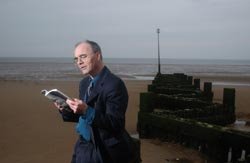
This article is reproduced courtesy of SecEd. You can view the article at their website, here.
Teaching Poet Spreads Creativity Across The Nation
Pete Henshaw
A teacher and published poet is marking national poetry week with a series of workshops. Gareth Calway, head of English and media at Smithdon High School in Norfolk, has been touring the nation’s schools for much of the year hosting poetry workshops in schools and promoting his seventh publication Exile In His Own Country.
The book is a selection of new poems, including one on an Ofsted inspection, which carries the lines: “Wesley won’t shut up of course. He never shuts up. I thought that this week that just for once he would shut up. I hear myself pleading, wheedling, whingeing.”
Gareth’s workshops are based on the football and schooldays sections of his latest book. The football section includes getting pupils to write about their sports dreams coming true, as well as looking at Greek tragic Chorus, African call and response chants, the roots of poetry from both thousands of years ago and on today’s football terraces.
The schooldays workshop begins with Gareth’s writing about the “monsters” who taught him, and goes on to explore the thin line between realistic comedy/characterisation through judicious hyperbole and the limits of this in daft over-exaggeration, sacrificing reality for (unconvincing) comedy.
This week is National Poetry Week, and to mark the occasion Gareth is today (October 5) visiting Alderman Peel High School in Norfolk for a workshop and has been doing a number of workshops in his own school all week.
Asked why poetry is important in a child’s education, Gareth said: “The English teacher should be the champion of poetry and is all too often its worst enemy, partly because such teachers have been pursued with the stick of measurable results, league tables, and exams for so long, and partly because English teachers are sadly often frightened of it.
“Poetry isn’t like that. It defies formulas and judgements. It is subjective, personal, profound, life-enhancing and fun. It is the joy of language – as music, gut-feeling, pattern, art, play and mischief as much as semantics, and much more than most exam answers.”
Gareth, who is the offical poet laureate of Bristol City Football Club, has also been confirmed as “poet in residence” at the National Association for the Teaching of English Easter conference next year at the University of Manchester, where he will be doing workshops and seminars on poetry and sport. Schools can request Gareth to stop by with his workshops. For details, visit www.garethcalway.co.uk
October 02, 2006
October Poem Of The Month
Sedgeford October
somewhere mellow between
the end of the overblown blackberries
_________and
the start of the harvested leaves
fused flies
on clinical sills
hint at bleached sun
_________and
in the hedges
thistle winds to come
to eyes trained on histrionic heights
of Welsh adolescence,
this stubborn serenity,
these mediaeval colours
_________are
endlessly reassuring:
a great grey blanket billowing unbroken from the North Pole
wild chords of geese in its folds;
the flinty, dependable noun
behind mists of adjectives
Poem Notes: This was when Octobers were a lot colder, children. The Rialto published this in the early 90s. It was originally written for the King's Lynn Festival in the summer of 1993 - an evening called "Poems and Places" - where I shared the billing with the uniformly excellent Alan Brownjohn, Kevin Crossley Holland and Paul Berry. They, like so many other poets, all live round these here parts and all continue to do sterling and likeable work. As I have a busy month or so finishing off my Exile tour in Wells, Wiveton and West Acre (along with workshops in my own school) I thought I'd choose a very local Norfolk poem from the new book to announce it. It will probably be a lot colder by the time I get to West Acre on Friday November 3 - but these days you never know.
somewhere mellow between
the end of the overblown blackberries
_________and
the start of the harvested leaves
fused flies
on clinical sills
hint at bleached sun
_________and
in the hedges
thistle winds to come
to eyes trained on histrionic heights
of Welsh adolescence,
this stubborn serenity,
these mediaeval colours
_________are
endlessly reassuring:
a great grey blanket billowing unbroken from the North Pole
wild chords of geese in its folds;
the flinty, dependable noun
behind mists of adjectives
Poem Notes: This was when Octobers were a lot colder, children. The Rialto published this in the early 90s. It was originally written for the King's Lynn Festival in the summer of 1993 - an evening called "Poems and Places" - where I shared the billing with the uniformly excellent Alan Brownjohn, Kevin Crossley Holland and Paul Berry. They, like so many other poets, all live round these here parts and all continue to do sterling and likeable work. As I have a busy month or so finishing off my Exile tour in Wells, Wiveton and West Acre (along with workshops in my own school) I thought I'd choose a very local Norfolk poem from the new book to announce it. It will probably be a lot colder by the time I get to West Acre on Friday November 3 - but these days you never know.
August 13, 2006
September Poem Of The Month
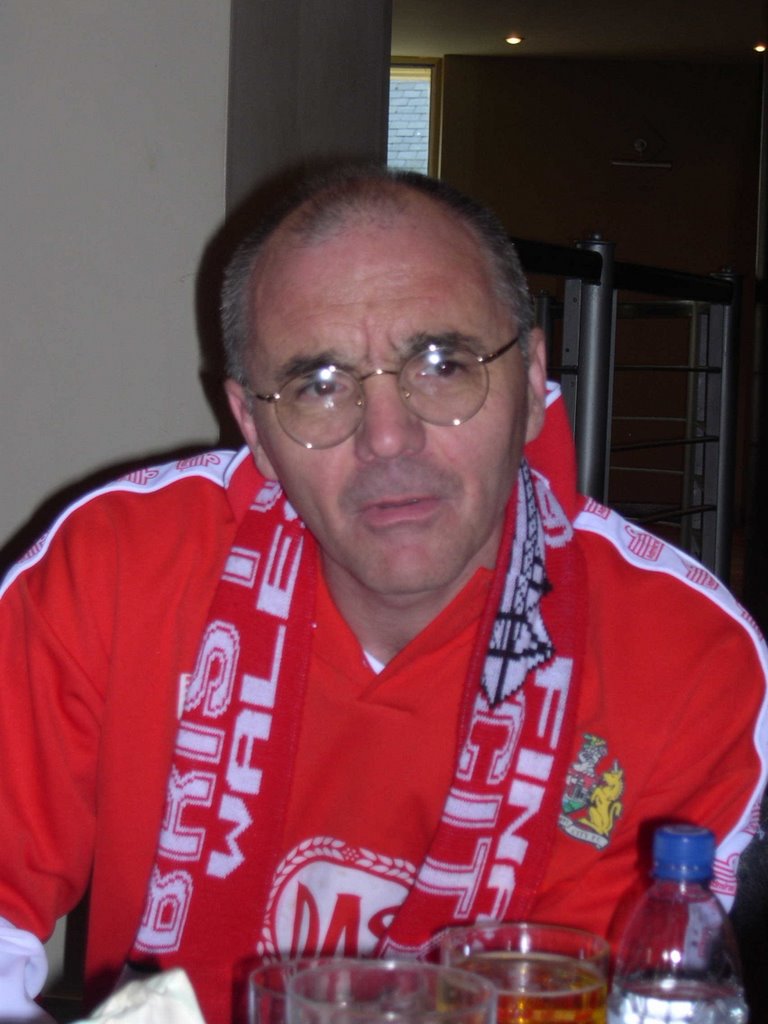
Pointless In Yorkshire
So here we go again: initial hope
Becomes despair in better stadiums
Against name teams who’ve faded and fallen
From higher flights than us, yet more old rope
For which I’ve paid new hard-earned cash, old dope
That has me driving endless hours for some
Receding goal that never seems to come
To seasoned losers, favourites who can’t cope.
And though I know by Tuesday I’ll be thinking
“At home we’ve won all of our games so far
(Even if it’s just one) and taken leads
In games away, not had the rub of the green,
It’s got to turn –” well, maybe, but it’s wearing
Thin as the air on a dead wishing star.
July 31, 2006
Granary Theatre, Wells - Report
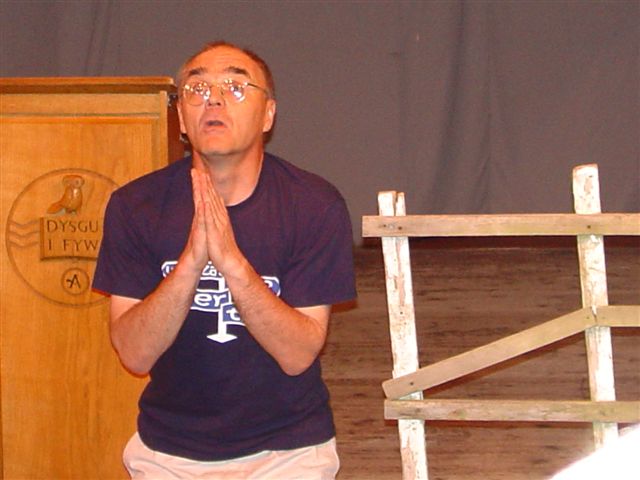
Granary Theatre, Wells, Friday July 28 2006
So, the last tour date of the summer for Exile In His Own Country. (The next –and last - time you can see the full Exile show will be at the River Studios, West Acre on Friday November 3 2006, 7.30).
The schooldays poems (which I now do with introductions) got their best sustained reception of the tour. It is a bit spooky having the actual lectern of my old school in Wales (on loan from Abersychan) on stage with me. The Beatles section feels increasingly like an evocation of some shared moment in our culture, or certainly in the lifetimes of the 30s-60s. This was probably my funniest evocation of a teacher preparing for the visit of an OFSTED inspector, And the final summer love poem for Norfolk – After The Show - had a special resonance in this venue and at this time.
So, that’s it. I’ve hung up the Beatle wig until November and put the bookstall away for a couple of months. See you in October.
July 27, 2006
Review of Exile Book and Show
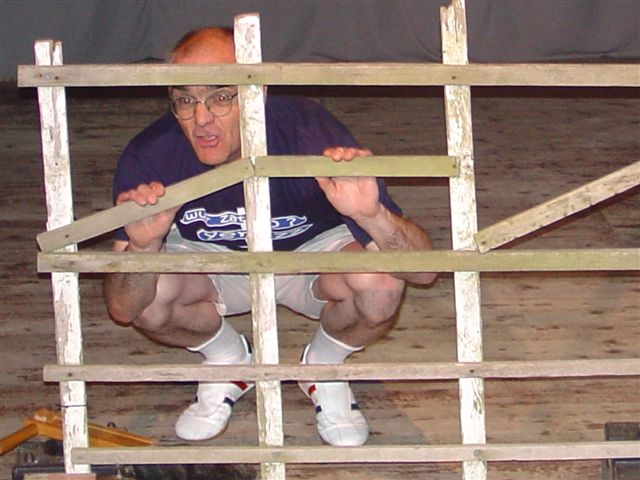
EXILE COMING HOME:
Exile In His Own Country by Gareth Calway, Chepstow Festival, July 22 2006
Chepstow, being both Fortress and Gateway, seemed fitting for ‘Exile In His Own Country.’ The poet enjoyed a special rapport with his audience. ‘I could hear you listening’. A Bristol-Welsh Bard sounding the changes of his personal journey through fifty years, he connected us with the past, often through the noble forms of poetic tradition.
The attractive printed programme explained the meaning of poetry in performance, and its journey, from Beowulf to the present time. The ‘sound-craft of a poem. . . is part of its larger meaning’. With a bit of help on the night from minimalist props, astute lighting and a great soundtrack.
A first memory at Bristol Zoo, at two years old, ‘A toucan’s eye/Explodes into I’ would be enough to exile anyone.
Indeed, bravery marked this performance. Not least for the reminder of school dinners! In ‘The Canteens of Moria’, he connects the ‘webbed, corrupted, gothic, grave-like things’ of ‘The Lord of the Rings’ to 1960s school canteen traumas , and realises we are always ‘part of what we’re forced to eat’. Ditto, Spiritual food, fed to engender everlasting lack of self-worth, in the humorous yet bitter ‘Dear God, ‘elp us to feel ashamed of our bodies’ - a reminder of those Sunday School misguided souls teaching humiliation instead of humility.
Faith was definitely a requirement, however, as any Bristol City supporter knows. 1966 is there all right, ‘refashioned as Hendrix . . . a minishort beauty born to die young’. So is Rugby. Terry Cobner of Pontypool and Wales taught Calway . . . very little, except the imminent ambush familiar to the Welsh. Ah, but Ma Kinnock ‘is as beautiful as the Barley Mountain in spring’ and anyway, ‘I don’t want to be Gareth Edwards. I want to be The Beatles’.
At seventeen -
‘The river’s prophet tongue I now understand;
I am heir to my druid realm at last’.
- Calway still needs ‘Help’ and a ‘real home’.
‘Student House’ poignantly expresses separation from childhood. the ‘cold but not keen’ nostalgia where telephone and door knob ‘hold no communion with (father’s) memory’. Perhaps it is the power that makes people afraid of poetry. Well, get over it – it’s worth it. Who could not relate to being ‘so very far away from the thing I burn for, I can almost touch it’?
The performance was haunted by the pounding hooves of the Ages of Romance, and the metred tread of Pilgrimage, carrying us on through the pain of first love lost: ‘My heart feels nothing of the sudden lance/That smashed its Jericho walls’- to the joust of ‘red knights tilting at perfection’. Football.
Here, the Bard of Bristol examines his own fervour of ‘the inferno of baying noise’ but then goes on to pitch us line after line of why the f-word, played out in ‘pavilions of banners’, continues to exact such consummate devotion. Calway shows it as one way a man can prove his loyalty - the pitch as a kind of tournament lawn on which physical skill combines with abstract virtues. ‘I know it’s all balls but I’m City till I die’.
The rollicking ‘Ballad of Ashton Gate’ is a carol, ending the first half with ‘The Atyeo End in excelsis . . .’
The second half kicked off with an energetic rap, an instant hit.
‘I came here for Eden and got Bill Gates.
Life is a Bitch, but the songs are great’
leading into Calway’s tribute to the ultimate hitmakers, the “toppermost of the poppermost” Beatles, complete with childhood mime playing Mam’s laundry slats to their “raw whoops of joy in four part harmony.”
There followed the ‘long siege’ of mock examinations, like watching a no goal match on ‘desk terraces’ in freezing classrooms:
Stoned on cold and boredom
With fifty-two minutes still to go’.
More laughter followed for Calway’s teacher waiting to be inspected by the ‘little blue-eyed men from Saturn’. Having now been ‘exiled’ in a Norfolk he loves for a quarter of a century, Calway is ‘subconsciously still waiting for teacher to come’ This was, for me, the most moving poem of the evening.
‘O Jesus! Still these discordant Years,
That carping torn, that gong-tormented Sea’.
Calway’s work is rooted and grown in real life. This means that, although the poems are written in demanding forms, they are fluent and require only to be heard. It’s a song of life that is sometimes ‘like trying to tune a pitchfork in a sow’s ear’ but includes the unexpected hilarities, -
“The assembly on healthy Norfolk won’t be given this morning
As both members of staff concerned are ill”.
- a whole life in two ‘halfs’ (as one audience member put it) Desperate but reaching for the stars, just as the ‘Star Teacher’ tells his pupil to do. Not bad, for someone once ‘marked for life’ by a teacher, lipstick matching her vicious red pen, who ‘delighted in Literature as some might in torture’. ‘Mark this’, says Calway, offering back Petrarchan sonnets, ballads, villanelles, iambic pentameter, and liberating free verse.
This is an heroic performance of warm, living, accessible - often very funny - poetry of great stature, which shows how extraordinary ‘ordinary’ life actually is.
Madeline Jones
July 25, 2006
Review Of The Exile Show

A Review of Gareth Calway Exile In His Own Country – The Drill Hall, Chepstow 22nd July 2006
Something odd happened in Chepstow on Saturday and I'm quite sure that the audience at The Drill Hall will never forget it. When I was at school, one of the highlights was the annual visit of the piano tuner, who unusually was deaf rather than getting the job via the then Government's sponsored 'Jobs for the Blind' initiative. Luckily for the appreciative audience on Saturday night, where Gareth Calway's one-man-tour had landed after visiting Bristol earlier in the day, Calway's recollection of his school-days is a lot funnier than my own and certainly not as off-key.
For those of you that don't know, Gareth Calway is a serious, high quality poet, but before you switch off expecting a pseudo-intellectual discussion of a dry poetry reading by a refugee from a 1970s Open University program, his approach is a little different to most.
Little, as in worlds apart.
Whilst his work stands up against the best on paper (his Exile In His Own Country tour is currently promoting his new book of the same name,) it is when you see him perform the work in a live setting that it truly comes to life.
To paraphrase Dervla Kiwan in her famous M&S adverts, this isn't just poetry, this is the finest hickory smoked, pine nut scattered verse-on-the-vine. This isn't just boring old fashioned classical da-di-da-di-da poetry, this is poetry that is about real lives, that is meant to be read by real people and has all that hear it nodding in recognition at its basic truths. This isn't just another detached academic discussing the ancient Greeks and the Roman gladiators, this is a football fan showing us exactly what it feels like to stand on the terraces in the near certainty that he will ultimately be disappointed, this is a music lover growing-up and then feeling discarded by his bedroom poster heroes to a soundtrack of the Beatles and the Stones, and this isn't the poorly recollected days of your own piano tuner, this is an acute eye detailing exactly what it was like to grow-up under the watchful gaze of teachers who were still allowed to bare their teeth and playtimes spent firing wooden guns and lobbing imaginary grenades.
But what of the show? Well, Calway's approach encompasses all of these things as he takes you on a whistle-stop journey from his schooldays in Wales, his exile in Bristol where he became the Official Poet Laureate of Bristol City - and given the attendance of the club's smiling Chairman, I would imagine he will continue to be so for a while longer - up to the modern, where as a teacher in Norfolk, the current reality of OFSTED and government interference provides a telling contrast to what had come before and the circle is truly squared.
All of this and much more is put across in an highly entertaining way to a lively Rock 'n' Roll soundtrack, without ever descending into amateur dramatic farce or stilted self-consciousness. Calway does what many see as impossible, he makes poetry accessible without 'dumbing down' and he tells it like it is without ever feeling the need to preach. It is an approach that should please all but the most elitist poetry lover and would give a couple of hours genuine enjoyment to young and old alike. In summary, highly recommended and if there are any TV executives reading this, you could, and often manage to, do a lot worse on a Saturday night.
Reviewed by: Erik Ryman, erik@erikryman.co.uk
July 15, 2006
Diss High School Workshop and Exile Show Tour Date, July 10 2006
CHEPSTOW FESTIVAL SHOW JULY 22- A GREAT NIGHT. HOT CONTENDER FOR THE MOST APPRECIATIVE AUDIENCE AWARD!!! REPORT TO FOLLOW.
So the joke was finally on me. I have written for years in novels and poems about a fictional school called Driftwood Comprehensive, situating it in a fictional Norfolk town called Dis Next the Sea, where all that can go tragic-comically wrong with a modern secondary education does. And on Monday July 10 I set off in beautiful summer morning sunshine through the gentle Norfolk countryside and peaceful woodland towards the A1066 (Not the A10666) where I would start the day in room 66 (Not 666) to encounter the real Diss High School.
Needless to say, Diss High School is a purposeful English/Humanities-led specialist college - and anything but the drifting equivalent of the one I’ve created in Dante’s underworld. The Head and the Head of the English department are inspiring and energetic and the school is obviously going places.
This time, I gave the football workshop to the Year Nines and the schooldays workshop to the Year Eights, the reverse of my arrangement at Abersychan. In both cases, I think the drama activities went down best. Some lively writing ensued. In the afternoon, I performed the full show either side of an afternoon break to the entire population of Year Nine (approx 200) on an old-fashioned heavyweight hardwood school stage that was itself as deep as some modern halls are long! It was very hot and muggy for performer and audience alike but being British we all survived. I noticed that the theatrical elements of the show went down best, particularly me being an infant reliving my first memory through the trellis (zoo cage) and being naughty at Sunday School.
The rap at the start of Act 2 got generous applause (despite some technical difficulties with the sound system) and as always the Beatles wig got one of the biggest cheers. It is a wry fact that a performer can spend a lifetime perfecting some unique combination of words, sound and movement but still it’s a silly wig that gets the plaudits! I was also engaged by the occasional heckle – eg Language! when I used a mild swear word and a word that sounded like Shipped vying between my chants of “England” in the 1966 poem. (This was the day after the 2006 World Cup Final that Italy won for the fourth time and we didn’t win – again.). The final writing tasks of the day included descriptions of “My Ideal Teacher.” Many of these were riveting stuff but, shall we say, the most amusing were not always ones you could put on a school display board!
There is great potential for excellent writing at Diss. There are plans to take the students off for a weekend retreat in some Norfolk stately home near the sea for an intensive creative writing experience next year and I hope very much indeed to meet students again on one of those. Meanwhile, thank you Diss High School for making me so welcome. And thanks for not being the Dis Next the Sea Comprehensive of my novel, poems and nightmares…
So the joke was finally on me. I have written for years in novels and poems about a fictional school called Driftwood Comprehensive, situating it in a fictional Norfolk town called Dis Next the Sea, where all that can go tragic-comically wrong with a modern secondary education does. And on Monday July 10 I set off in beautiful summer morning sunshine through the gentle Norfolk countryside and peaceful woodland towards the A1066 (Not the A10666) where I would start the day in room 66 (Not 666) to encounter the real Diss High School.
Needless to say, Diss High School is a purposeful English/Humanities-led specialist college - and anything but the drifting equivalent of the one I’ve created in Dante’s underworld. The Head and the Head of the English department are inspiring and energetic and the school is obviously going places.
This time, I gave the football workshop to the Year Nines and the schooldays workshop to the Year Eights, the reverse of my arrangement at Abersychan. In both cases, I think the drama activities went down best. Some lively writing ensued. In the afternoon, I performed the full show either side of an afternoon break to the entire population of Year Nine (approx 200) on an old-fashioned heavyweight hardwood school stage that was itself as deep as some modern halls are long! It was very hot and muggy for performer and audience alike but being British we all survived. I noticed that the theatrical elements of the show went down best, particularly me being an infant reliving my first memory through the trellis (zoo cage) and being naughty at Sunday School.
The rap at the start of Act 2 got generous applause (despite some technical difficulties with the sound system) and as always the Beatles wig got one of the biggest cheers. It is a wry fact that a performer can spend a lifetime perfecting some unique combination of words, sound and movement but still it’s a silly wig that gets the plaudits! I was also engaged by the occasional heckle – eg Language! when I used a mild swear word and a word that sounded like Shipped vying between my chants of “England” in the 1966 poem. (This was the day after the 2006 World Cup Final that Italy won for the fourth time and we didn’t win – again.). The final writing tasks of the day included descriptions of “My Ideal Teacher.” Many of these were riveting stuff but, shall we say, the most amusing were not always ones you could put on a school display board!
There is great potential for excellent writing at Diss. There are plans to take the students off for a weekend retreat in some Norfolk stately home near the sea for an intensive creative writing experience next year and I hope very much indeed to meet students again on one of those. Meanwhile, thank you Diss High School for making me so welcome. And thanks for not being the Dis Next the Sea Comprehensive of my novel, poems and nightmares…
July 14, 2006


July 10, 2006
Western Daily Press Article
This article is reproduced courtesy of the Western Daily Press
WESTERN DAILY PRESS: TUESDAY JANUARY 17 2006-07-09
NEW GOALS FOR POET LAUREATE OF ASHTON GATE
How do you mark your 50th birthday? If you're Gareth Calway, you aim higher than you've ever done before as a poet, with a book that brings together all your best work, and then some. It's an exciting prospect, and Exile In His Own Country is due out in a few weeks' time, produced by the cutting-edge poetry publishers blue chrome.
It's his seventh book, and his admirers say it sums up all the qualities the late poet laureate Ted Hughes once praised in his work - strength, wholesomeness and the best kind of simplicity.
The publishers see Calway as an erudite writer, and one steeped in the lore of Eastern mysticism, myth, history, the East Anglia countryside - and Bristol City Football Club. And what? Yes, that's right, because in among all his other attributes, this head of English at a Norfolk high school is the official poet laureate at Ashton Gate.
His family is steeped in Bristol City fandom, even though Gareth himself was brought up in Frome and spent his teenage years in the South Wales valleys, escaping back this side of the river whenever he could.
One of the joys of living in Frome was seeing his winter idol John Atyeo in summer mode for the town's cricket team, though he was clearly not at the ground on the day Big John rose majestically and headed a rearing bouncer away for four byes.
Knowing Gareth Calway's taste for words and Atyeo, that single act would have been worth seven volumes of poetry in itself.There is certainly City aplenty in the forthcoming book, however, along with vivid memories of inedible Frome infant-school dinners in the early Sixties and the poet's first memory - of being attacked by a toucan at Bristol Zoo in 1958, at the age of two. Odd how one's first memories are so often frightening ones.
All that's a few weeks away, however. A new book of Gareth's is already out, and Bristol City from start to finish, is Sheer Paltry, published by the club at £5 and with all profits going to Ashton Gate. With its clever play on the Bristol "L" in the title, it's 40 years of football stories and verse, developed from the Calway CD Bristol City Ruined My Life - And Made My Day of a couple of years ago.
Though Calway is a mere stripling, born in 1956, the book is full of baby boomer lore, and rich in nostalgia for the Sixties and Seventies.
It's also an interesting insight into a man whose story is not unusual but speaks of an uncommon life, for all that: the alienation from working-class roots imposed by grammar school and university, an atavistic identification with one part of the world while becoming ever more deeply entrenched in another.
Gareth Calway is known to hundreds, if not thousands, in his adopted East Anglia as "a bald head of English", the man behind poetry anthologies and competitions for teenagers and sometime regional organiser for the Schools Poetry Association.
Yet he will still sit for five hours in his car to watch 90 minutes of who knows what at Ashton Gate, screaming and shouting with the rest of the lads - one of them, yet in some ways, forever one step removed.
So why be there? He writes: "If it weren't for the tightening in the stomach every match day. . . the shiver of the perfectly pitched pass, the tantalising tactical one-twos. . . the frantic flash of foot through frenzied ball. . . the red knights tilting at perfection. . . then I probably wouldn't bother. . ."
Sheer Paltry, price £5, is on sale in the Bristol City club shop or via the website: http://www.garethcalway.co.uk/purchasepage
WESTERN DAILY PRESS: TUESDAY JANUARY 17 2006-07-09
NEW GOALS FOR POET LAUREATE OF ASHTON GATE
How do you mark your 50th birthday? If you're Gareth Calway, you aim higher than you've ever done before as a poet, with a book that brings together all your best work, and then some. It's an exciting prospect, and Exile In His Own Country is due out in a few weeks' time, produced by the cutting-edge poetry publishers blue chrome.
It's his seventh book, and his admirers say it sums up all the qualities the late poet laureate Ted Hughes once praised in his work - strength, wholesomeness and the best kind of simplicity.
The publishers see Calway as an erudite writer, and one steeped in the lore of Eastern mysticism, myth, history, the East Anglia countryside - and Bristol City Football Club. And what? Yes, that's right, because in among all his other attributes, this head of English at a Norfolk high school is the official poet laureate at Ashton Gate.
His family is steeped in Bristol City fandom, even though Gareth himself was brought up in Frome and spent his teenage years in the South Wales valleys, escaping back this side of the river whenever he could.
One of the joys of living in Frome was seeing his winter idol John Atyeo in summer mode for the town's cricket team, though he was clearly not at the ground on the day Big John rose majestically and headed a rearing bouncer away for four byes.
Knowing Gareth Calway's taste for words and Atyeo, that single act would have been worth seven volumes of poetry in itself.There is certainly City aplenty in the forthcoming book, however, along with vivid memories of inedible Frome infant-school dinners in the early Sixties and the poet's first memory - of being attacked by a toucan at Bristol Zoo in 1958, at the age of two. Odd how one's first memories are so often frightening ones.
All that's a few weeks away, however. A new book of Gareth's is already out, and Bristol City from start to finish, is Sheer Paltry, published by the club at £5 and with all profits going to Ashton Gate. With its clever play on the Bristol "L" in the title, it's 40 years of football stories and verse, developed from the Calway CD Bristol City Ruined My Life - And Made My Day of a couple of years ago.
Though Calway is a mere stripling, born in 1956, the book is full of baby boomer lore, and rich in nostalgia for the Sixties and Seventies.
It's also an interesting insight into a man whose story is not unusual but speaks of an uncommon life, for all that: the alienation from working-class roots imposed by grammar school and university, an atavistic identification with one part of the world while becoming ever more deeply entrenched in another.
Gareth Calway is known to hundreds, if not thousands, in his adopted East Anglia as "a bald head of English", the man behind poetry anthologies and competitions for teenagers and sometime regional organiser for the Schools Poetry Association.
Yet he will still sit for five hours in his car to watch 90 minutes of who knows what at Ashton Gate, screaming and shouting with the rest of the lads - one of them, yet in some ways, forever one step removed.
So why be there? He writes: "If it weren't for the tightening in the stomach every match day. . . the shiver of the perfectly pitched pass, the tantalising tactical one-twos. . . the frantic flash of foot through frenzied ball. . . the red knights tilting at perfection. . . then I probably wouldn't bother. . ."
Sheer Paltry, price £5, is on sale in the Bristol City club shop or via the website: http://www.garethcalway.co.uk/purchasepage
June 21, 2006
The Lord Mayor's Chapel - July Show
Photo reproduced courtesy of Si Barber
FROM THE BRISTOL CITY COUNCIL WEBSITE; WHAT'S ON JULY 2006
Exile In His Own Country
The Lord Mayor's Chapel
22 Jul 2006 Start: 2:00 PM
Gareth Calway takes poetry to places it doesn't always get to: from Hindi Picture to the boardroom at Ashton Gate Stadium; from punk history to world jazz rap; from the pulpit of the Lord Mayor's Chapel to the streets of Wells-next-the-Sea. Calway performs his new work "Exile in His Own Country" at the Lord Mayor's Chapel.
Cost Details:
Adult: £5.00 Child: N/A Family: N/A
Concession: N/A O.A.P: N/A Group: N/A
Booking: Tickets available from the Verger at the venue 0117 929 4350 or call 01485 571828
CAR PARKING - IF YOU DON'T KNOW THE AREA AND ALL ITS LITTLE CAR PARK SECRETS, THE BEST OPTION IS PROBABLY THE MULTI STOREY CAR PARK AT THE TOP OF PARK STREET (ON THE TRIANGLE)
TICKETS FOR THE EVENT CAN BE RESERVED AND PICKED UP ON THE DOOR: YOU CAN DO THIS ON EITHER NUMBER.
June 18, 2006
World Cup Football Poetry Workshop for children, Millennium Library, Norwich, Saturday June 17
Ronaldo goes into a burger bar and asks for two whoppas. The sales assistant responds, "You’re not fat - and you’ve still got it..."
Well the mums got the joke anyway!
I met two splendid young poets, appropriately called Sophie and Hannah, and Jamie who turned up wearing a Norwich City baseball hat looking very nervous and ended the day with the biggest grin I've seen on a Norwich fan since the Sunday they all celebrated their last promotion to the Premiership.
Three organisers - from at least two organisations, I lost count - also turned up at various stages of the proceedings and John Thompson, an extremely helpful librarian - and keen comic poet in his own right - popped in several times, beyond the call of duty, with some much appreciated assistance, and colourful World Cup stickers. (He also put in an order for my latest book to join the library stock.)
The mums read a copy of Exile while waiting and laughed a good deal. Special thanks to Jamie's mum who helped the (initially almost silent!) group make a genuine racket during the final call and response activity, with Jamie on rattle and Sophie/Hannah on big drum, as we composed an England tribal "Everywhere We Go" chant for the terraces. "We are the boys in blue and white, Love to watch tv all night, We 'ate Argentina, Crespo is a plonker..."
Other tasks included writing the Imaginary Madrid fantasy news report in which England (or in one case Spain!) win the World Cup Final and of course making that tableau of poor old Tommy Doherty's goal on the front cover of "Sheer Paltry" before writing captions and then poems in role as one of the characters. (The fed up steward was as usual a great favourite).
Then we had squash and biscuits provided by Creative Arts East. The ages today were 9-11 and two differences from the secondary age group I noticed are (1) I have to go a bit slower at first as the kids find their confidence and comfort zone and (2) Their imaginary world is extraordinarily bright and vivid and, with a bit of care and guidance, activities like these can open up a rich vein of intelligence that will hopefully never leave them. Sadly I don’t think they get this sort of self-discovery from cramming for SATS!
Well the mums got the joke anyway!
I met two splendid young poets, appropriately called Sophie and Hannah, and Jamie who turned up wearing a Norwich City baseball hat looking very nervous and ended the day with the biggest grin I've seen on a Norwich fan since the Sunday they all celebrated their last promotion to the Premiership.
Three organisers - from at least two organisations, I lost count - also turned up at various stages of the proceedings and John Thompson, an extremely helpful librarian - and keen comic poet in his own right - popped in several times, beyond the call of duty, with some much appreciated assistance, and colourful World Cup stickers. (He also put in an order for my latest book to join the library stock.)
The mums read a copy of Exile while waiting and laughed a good deal. Special thanks to Jamie's mum who helped the (initially almost silent!) group make a genuine racket during the final call and response activity, with Jamie on rattle and Sophie/Hannah on big drum, as we composed an England tribal "Everywhere We Go" chant for the terraces. "We are the boys in blue and white, Love to watch tv all night, We 'ate Argentina, Crespo is a plonker..."
Other tasks included writing the Imaginary Madrid fantasy news report in which England (or in one case Spain!) win the World Cup Final and of course making that tableau of poor old Tommy Doherty's goal on the front cover of "Sheer Paltry" before writing captions and then poems in role as one of the characters. (The fed up steward was as usual a great favourite).
Then we had squash and biscuits provided by Creative Arts East. The ages today were 9-11 and two differences from the secondary age group I noticed are (1) I have to go a bit slower at first as the kids find their confidence and comfort zone and (2) Their imaginary world is extraordinarily bright and vivid and, with a bit of care and guidance, activities like these can open up a rich vein of intelligence that will hopefully never leave them. Sadly I don’t think they get this sort of self-discovery from cramming for SATS!
Western Mail report
This article is reproduced courtesy of John Jones and the Western Mail
Exile In His Own Country, by Gareth Calway
Jun 17 2006
AUTHOR Gareth Calway returned to school at Abersychan Secondary School in May, 35 years late but with all his homework done.
He was there to launch his seventh book of poetry, Exile In His Own Country (Bluechrome, £7.99), playing truant from his job as a teacher in Norfolk to revisit the school that provides the setting and themes of a whole section of his book, Marked For Life.
The new book adds to the literature of the Eastern valley and is the first to combine a sequence under the title Torfaen Monologues, wry and bitter-sweet accounts of teenage valleys life in the 70s. It also records his lifelong love for Bristol City Football Club, for which he's official poet laureate.
Exile In His Own Country, by Gareth Calway
Jun 17 2006
AUTHOR Gareth Calway returned to school at Abersychan Secondary School in May, 35 years late but with all his homework done.
He was there to launch his seventh book of poetry, Exile In His Own Country (Bluechrome, £7.99), playing truant from his job as a teacher in Norfolk to revisit the school that provides the setting and themes of a whole section of his book, Marked For Life.
The new book adds to the literature of the Eastern valley and is the first to combine a sequence under the title Torfaen Monologues, wry and bitter-sweet accounts of teenage valleys life in the 70s. It also records his lifelong love for Bristol City Football Club, for which he's official poet laureate.
June 06, 2006
June Poem Of The Month
The Beautiful Game
Football is art’s reflection of oneness
In a world of divisions; of beauty’s truth
Leaping muscle-bound fouls; the dreams of youth
Without its injured ordinariness
Or age’s silting of its genius;
The Best without its thickening uncouth
Slurred self-disgrace or bruising disproof
By yobs in boots; the angel dance of studs:
-Like Pele’s pass, to gift a certain goal
He’d made his own, to some more mortal bloke
He’d knew without a call or look was there;
-Or Maradonna’s second that turned a whole
Defence, a childhood’s poverties, to air
More light than hand of God or head of coke.
Note: For some reason, my mind is turning to football - and the World Cup - this June. This poem is from the Tribes section of "Exile In His Own Country" and celebrates the Pele-eyed vision of the whole event. It's a more serious version of my football fantasy piece, "Imaginary Madrid" in which Bristol City win the European Cup 4-0 over "Real" Madrid and Calway gets the third. I really do think that football can be "art's reflection of oneness in a world of divisions." Really. Of course, if it's England's World Cup, the oneness will be that much easier to feel, but it's there anyway.
Football is art’s reflection of oneness
In a world of divisions; of beauty’s truth
Leaping muscle-bound fouls; the dreams of youth
Without its injured ordinariness
Or age’s silting of its genius;
The Best without its thickening uncouth
Slurred self-disgrace or bruising disproof
By yobs in boots; the angel dance of studs:
-Like Pele’s pass, to gift a certain goal
He’d made his own, to some more mortal bloke
He’d knew without a call or look was there;
-Or Maradonna’s second that turned a whole
Defence, a childhood’s poverties, to air
More light than hand of God or head of coke.
Note: For some reason, my mind is turning to football - and the World Cup - this June. This poem is from the Tribes section of "Exile In His Own Country" and celebrates the Pele-eyed vision of the whole event. It's a more serious version of my football fantasy piece, "Imaginary Madrid" in which Bristol City win the European Cup 4-0 over "Real" Madrid and Calway gets the third. I really do think that football can be "art's reflection of oneness in a world of divisions." Really. Of course, if it's England's World Cup, the oneness will be that much easier to feel, but it's there anyway.
June 01, 2006
TES Cymru Article
This article is reproduced courtesy of TES Cymru and Nerys Lloyd-Pierce and was published on Friday May 26.
FOOTBALL IS SHEER POETRY FOR BOYS
Returning to Abersychan comprehensive school after an absence of 35 years conjures up a string of memories for prodigal poet, Gareth Calway.
He recalls the anxiety of his first day, aged 12, newly arrived from Somerset, wearing the hideous brown uniform that was the order of the day then; the furious red pen of the English teacher, "Ma Bart", slashing through his homework.
Yet despite her uncompromising attitude to marking schoolbooks, the classroom dragon inadvertently encouraged him to write.
"She ran an Eisteddfod poetry prize, which I entered aged 15. The theme was Spring, but I thought that was boring, so I based my poem on a Beatles' lyric. With the arrogance of youth, I was convinced that I¹d win."
He didn't, having failed to stick to the brief. But the joy of self-expression through verse remained.
A lifelong Bristol City fan, and the club's official poet laureate, Calway, 50, uses football metaphors and his book of football poems, "Sheer Paltry", as a tool to pass on the power of poetry to the group of 30 Year 8 schoolboys attending his workshop.
"Football chants echo the call-and-response form of poetry that harks back to Greek theatre, and is also found in African tribal chants and blues music," he explains.
Now based in Hunstanton in Norfolk, where he is head of English at Smithdon High School, Calway has just published his seventh poetry book, Exile in His Own Country.
The title refers to his own experiences of being an English boy entering the Welsh Valleys, and conversely being a Welshman in Norfolk.
This duality was part of the appeal when Abersychan head teacher, Mike Conway, invited him back to perform.
"I feel that it's important for the pupils to experience someone coming in from the outside, but Gareth, ironically, is also from their own community, so there's a lovely touch to that."
And, as boys and girls at Abersychan are taught English in a single sex environment (following a pilot scheme run in conjunction with Bath University), the football theme is appropriate.
"In order to engage boys, and hold their concentration, lessons have to revolve around topics they can relate to, and need to be broken up into manageable sections," adds English teacher, Sian Agland. "Gareth succeeds in doing both by using football as a reference point, and by keeping the session hands-on and active."
Calway's work seems to strike a chord with the Abersychan lads.
"I'd never really thought that football and poetry would go together," says Liam Cowels, 13, "And I always thought poetry was boring before, but this is fun."
Like Ma Bart before him, Gareth Calway aims to organise a poetry competition at the school. But one thing is certain, entrants won't be penalised for failing to write about spring.
FOOTBALL IS SHEER POETRY FOR BOYS
Returning to Abersychan comprehensive school after an absence of 35 years conjures up a string of memories for prodigal poet, Gareth Calway.
He recalls the anxiety of his first day, aged 12, newly arrived from Somerset, wearing the hideous brown uniform that was the order of the day then; the furious red pen of the English teacher, "Ma Bart", slashing through his homework.
Yet despite her uncompromising attitude to marking schoolbooks, the classroom dragon inadvertently encouraged him to write.
"She ran an Eisteddfod poetry prize, which I entered aged 15. The theme was Spring, but I thought that was boring, so I based my poem on a Beatles' lyric. With the arrogance of youth, I was convinced that I¹d win."
He didn't, having failed to stick to the brief. But the joy of self-expression through verse remained.
A lifelong Bristol City fan, and the club's official poet laureate, Calway, 50, uses football metaphors and his book of football poems, "Sheer Paltry", as a tool to pass on the power of poetry to the group of 30 Year 8 schoolboys attending his workshop.
"Football chants echo the call-and-response form of poetry that harks back to Greek theatre, and is also found in African tribal chants and blues music," he explains.
Now based in Hunstanton in Norfolk, where he is head of English at Smithdon High School, Calway has just published his seventh poetry book, Exile in His Own Country.
The title refers to his own experiences of being an English boy entering the Welsh Valleys, and conversely being a Welshman in Norfolk.
This duality was part of the appeal when Abersychan head teacher, Mike Conway, invited him back to perform.
"I feel that it's important for the pupils to experience someone coming in from the outside, but Gareth, ironically, is also from their own community, so there's a lovely touch to that."
And, as boys and girls at Abersychan are taught English in a single sex environment (following a pilot scheme run in conjunction with Bath University), the football theme is appropriate.
"In order to engage boys, and hold their concentration, lessons have to revolve around topics they can relate to, and need to be broken up into manageable sections," adds English teacher, Sian Agland. "Gareth succeeds in doing both by using football as a reference point, and by keeping the session hands-on and active."
Calway's work seems to strike a chord with the Abersychan lads.
"I'd never really thought that football and poetry would go together," says Liam Cowels, 13, "And I always thought poetry was boring before, but this is fun."
Like Ma Bart before him, Gareth Calway aims to organise a poetry competition at the school. But one thing is certain, entrants won't be penalised for failing to write about spring.
Subscribe to:
Posts (Atom)