Showing posts with label Bury St Edmunds. Show all posts

May 07, 2018

1068 and All That - first stop Bury Saint Edmunds Arts Festival May 23

The Penland Phezants bring you "As Free As The Waters That Flow Through The Fen; A Very English Resistance: The True Story of Hereward The Wake."


950 years ago, Hereward the Wake came home (from outlawry, exile and a gallery of bold and magical adventures in Cornwall, Ireland and Flanders) as a famous warrior and the leading military genius of his age. He was no Little Englander, speaking several European languages and with experience of leading several foreign armies, and as at home with Danes as with Saxons: his name means 'Head of the army' in both Danish and English. But he did not come home to rest on his laurels. He came home to lead the growing English Resistance against the Norman Conquest. Hereward first avenged the Norman murder of his brother and theft of his manor in his home town of Bourne in Lincolnshire, then established himself in the Isle of Ely alongside the Earl of Morcar (the dead King Harold's brother) and King Sweyn of Denmark, repeatedly outwitting a desperate siege of the Isle personally led by William the Conqueror himself. 


So successful was Hereward's defence that William, incredibly, was on the point of offering peace terms when Hereward was betrayed by his erstwhile military allies, the Abbot and monks of Ely Abbey. The ever-elusive Hereward escaped to further historic triumphs against William's armies at Burgh (Peterborough) and the later rearguard victories against all odds in Fenland, Lincolnshire Greenwood and the ancient Saxon forests of Northamptonshire.


Gareth Calway's 90 minute narrative tells the full story, from the magical folk tales of Hereward's early continental career to his historic defence of Saxon England. Based closely on the honest Latin chronicles compiled by 12C monks, this historically-based narrative gives full rein to the Freeborn English humour and derring do of a real life Robin Hood. (The Robin Hood legend borrows much of the spirit and many of Hereward's real-life adventures.) 

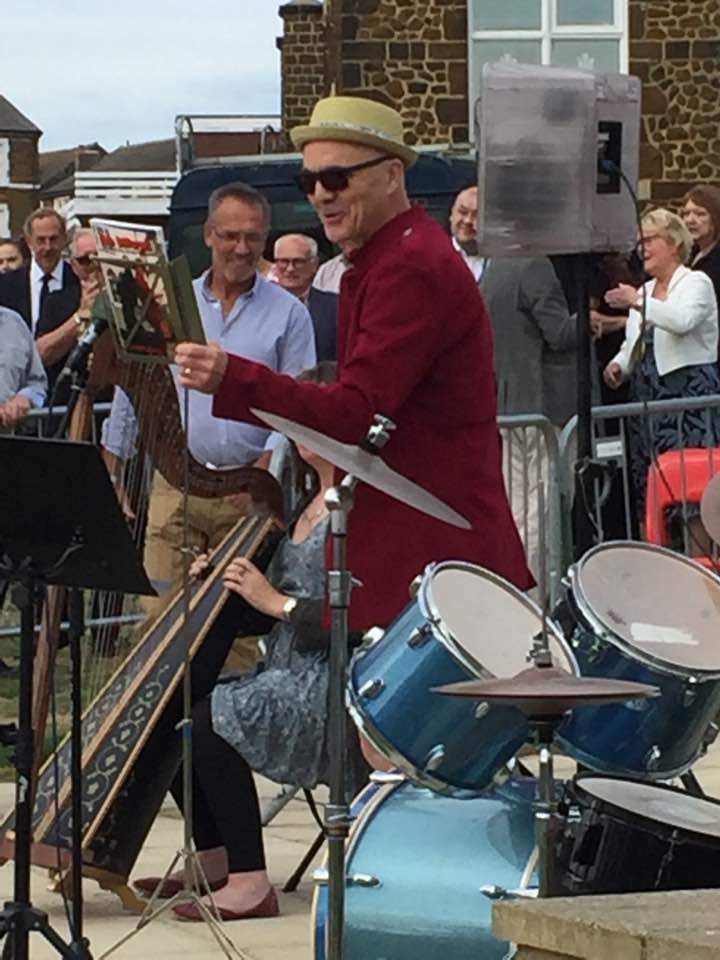
The compelling narrative is given a period flavour by harp music composed and performed by Welsh Romany-influenced harpist Vanessa Wood-Davies and a folk perspective by a sequence of new ballads written by poet Gareth Calway and folk musician Andy Wall.  The Penland Phezants' stirring performance of these is a particular highlight of and perfect fit for this great English folk tale.


Starts: 8pm
Tickets: £10, £2 discount off top price band for Festival Friends, purchase ten or more tickets in one transaction and save £1 per ticket 
Venue: Station Hill Social Club, Bury St Edmunds

August 19, 2017

Lancelot and the Grail maiden - Waywood's first album


LANCELOT AND THE GRAIL MAIDEN - click to hear the new Waywood album.

Hear our Soundcloud hit!


We are Waywood. A voice and a  harp telling stories. Here is our contribution to an ageless tradition. We hope you enjoy the new stories of Norfolk we tell.

Next gigs: Bourne, Lincs, 7 Sep.


Lynn Heritage Day, Hanse House, Lynn,  10 Sep


On 10 September, Waywood will be showcasing their new album of Norfolk stories as part of Heritage Day in Lynn  These stories include homages to the extraordinary number of pioneers Lynn has produced through the ages. Characters like William Sawtrey one time priest of St Margaret's Church (now Lynn Minster) - and in 1401 the first man to be burned for his beliefs in England - and his famous parishioner, Margery Kempe, who combined marriage and fourteen children with a unique visionary life travelling as a pilgrim throughout the Hanseatic world and beyond and also famously wrote the first autobiography in English. Waywood also tell such strange ghost stories of ordinary Norfolk people in history as that of Susan Nobes, who was struck by lightning in Sedgeford Church in 1819 - a ballad that has now had nearly a thousand plays worldwide on Soundcloud - and of Norfolk gentlefolk like the Brown Lady reputed to haunt both Houghton and Raynham Hall.  "The Brown Lady", as the ballad explains, was Dorothy Walpole not just sister of first British Prime Minister (and Lynn MP for 40 years) Sir Robert Walpole but also the wife of 'Turnip' Townshend. The mysterious nature of her death and the assertion that she is the only ghost every to have been photographed (on the stairs of Raynham Hall in 1936!) all add to the crepuscular glamour of this tale. 
Gareth will also rap his "Ballad of Badass King John - As Seen On TV!" for the first time since he did so at the official ceremony unveiling King John's statue in Lynn last October, when the performance was shown on the BBC News. Vanessa will join him for only their second public performance of a ballad commissioned from them by the Borough of West Norfolk and King's Lynn about the other West Norfolk figure honoured last June with a statue - Henry LeStrange, the man who invented New Hunstanton.
Waywood will be introduced by town historian Dr Paul Richards at 1 pm in the Gallery at Hanse House on Heritage Day (Sunday September 10) and will perform for about an hour. The show is free. Audiences are welcome to drop in and stay for a song or two or for the entire concert, whichever they prefer. "We know that visitors have a lot of great things to see and hear in Lynn on that day," commented Gareth.

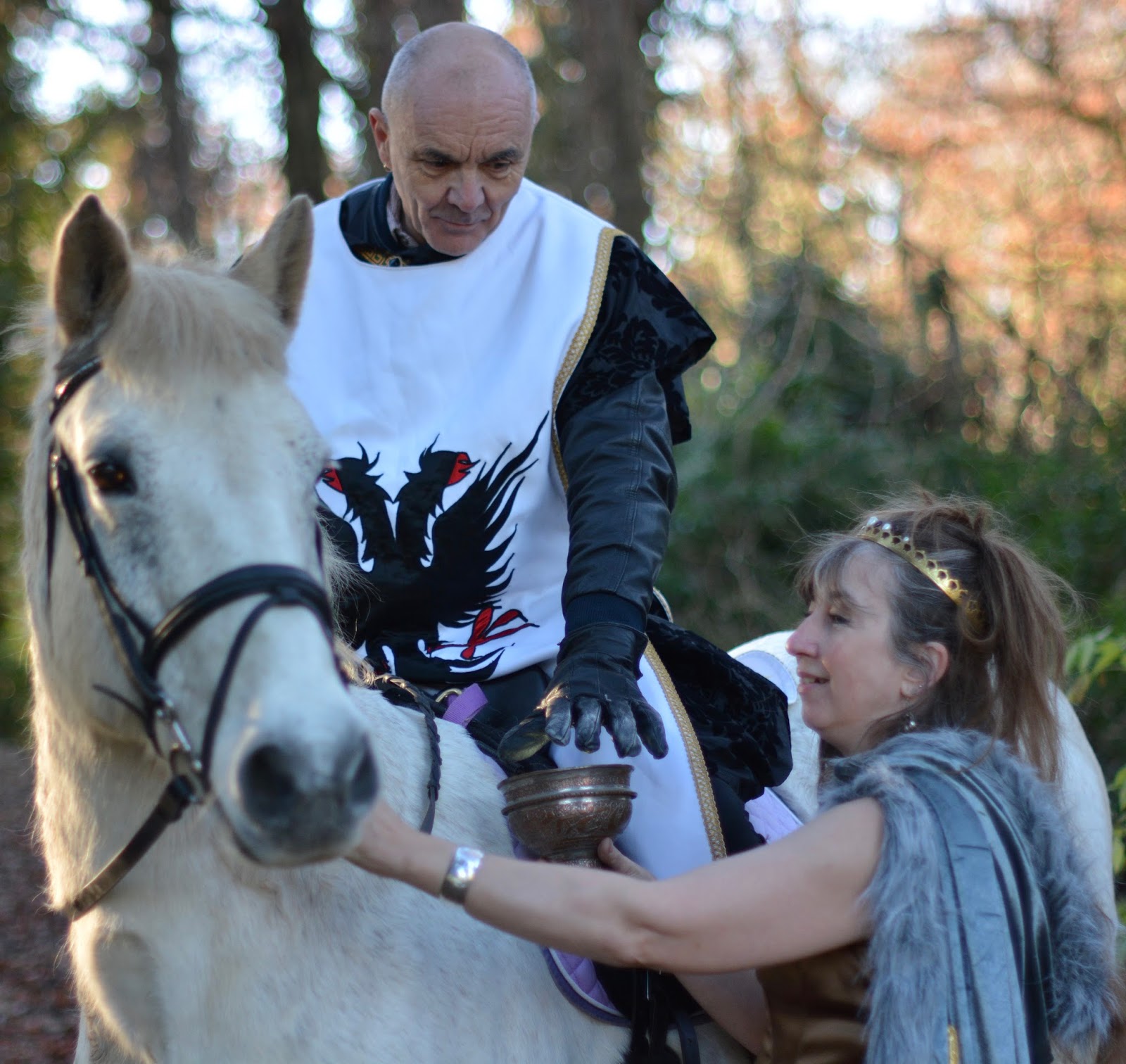
"It will be worth seeing us just for the costumes!" said Vanessa, who has been busy creating a fetching Robin Hood i' the Greenwood look for the duo's new Hereward material to add to the Lancelot and Grail Maiden chic Waywood enjoyed modelling on their recent album cover. "Not many realised Lancelot was wearing the standard of the Hanseatic League on his tabard for that cover shoot," (see above) Vanessa explained. "But with so much Lynn and Hanseatic material in our repertoire, why wouldn't you?"

Pics below by Bhas Allan, Elaine Bird, David Maile, Joan Wall and Zariah Wood-Davies.


The newly unveiled statue of Henry LeStrange 

Waywood sing his praises

'He carved his vision from carrstone rocks"

"A holiday heaven from his hands"

Lovewood, her work done.

The sculptor and Loveway the poet suffering for their art after the ceremony. 
(This is the easy bit)

No, not REM, Waywood at the album launch.

Lovewood making the harp talk

Lovewood and harp as one

Just to show it wasn't easy making that album cover look easy

Mine's a pint, please, Grail maiden.

The real William Sawtrey, first man to be burned for his beliefs in England

Loveway playing Sawtrey in our Morality Play - "A Nice Guy: The Burning Of William Sawtrey" at the Lynn Fringe in 2015. Lovewood is just out of shot left playing Soul. Bhas Allan ( for once not taking the pics) is the devil telling Sawtrey he's toast.

Waywood harping tall histories (and looking vertically stretched) at the 2016 Heritage day in Lynn

Original press release


Poet Gareth Calway and Harpist Vanessa Wood-Davies, both of Sedgeford,  are releasing a 'craft' album of their Norfolk ballads at the Bury St Edmunds Festival on May 19. All but the title track of these harp-accompanied verse tales commemorate a real character from Norfolk's past - from national figures like William Sawtrey of Lynn, the first man to be burned for his beliefs in England, to unsung ones like Susan Nobes of Sedgeford, killed by lightning in Sedgeford Church in 1819. As Waywood (the artists previously known as Lovehearts and Redwine), the two have written, composed, performed, recorded and produced the album themselves and will be performing them on the opening night of the Festival. Andy Wall and Gareth will close the evening with their Ely Folk Festival commission, Bread or Blood, about the Littleport and Ely Riots of 1816 and singer Sharon Clifton will commemorate Ann Boleyn (executed May 19 1536) and Margery Kempe in song .   www.buryfestival.co.uk  


December 22, 2016

St Edmund for England

Hear our Ballad for St Edmund here

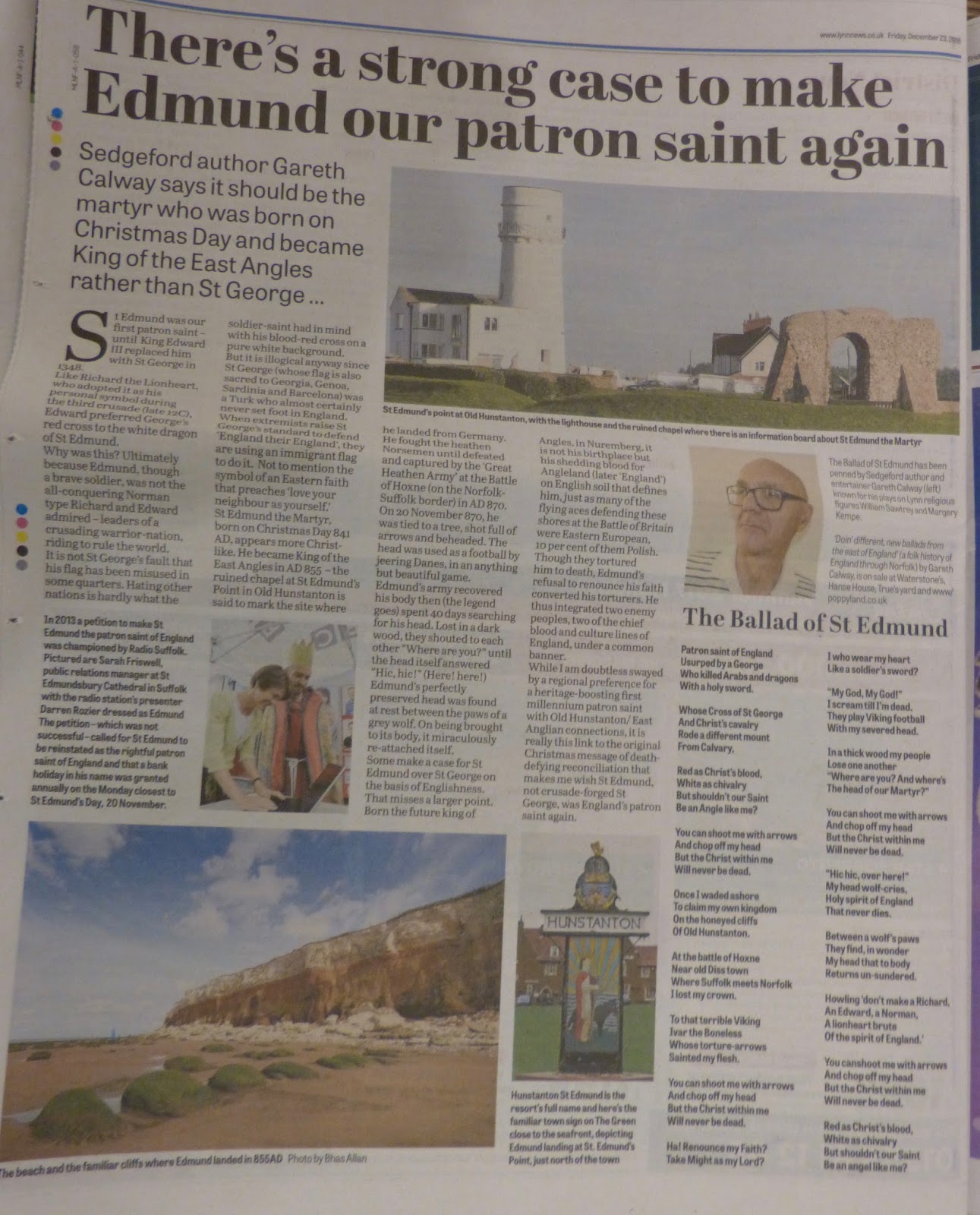
Read my full page Lynn News feature on why St Edmund (as in Bury St Edmunds and Hunstanton St Edmund) should be England's patron saint.


St Edmund - born the King of Angles

St Edmund was our first patron saint. King Edward III replaced him with St George in 1348. Like Richard the Lionheart, who adopted it as his personal symbol during the third crusade (late 12C), Edward preferred George's red cross to the white dragon of St Edmund.

Why was this? Ultimately because Edmund, though a brave soldier, was not the all-conquering Norman type Richard and Edward admired: leaders of a crusading warrior-nation, riding to rule the world.

It is not St George's fault that his flag has been misused in some quarters. Hating other nations is hardly what the soldier-saint had in mind with his blood-red cross on a pure white background.

But it is illogical anyway since St George (whose flag is also sacred to Georgia, Genoa, Sardinia and Barcelona) was a Turk who almost certainly never set foot in England. When extremists raise St George's standard to defend 'England their England,' they are using an immigrant flag to do it.  Not to mention the symbol of an Eastern faith that preaches 'love your neighbour as yourself.'

St Edmund the Martyr, born on Christmas Day 841 AD, appears more Christ-like. He became King of the East Angles in AD 855 - the ruined chapel at St Edmund's Point in Old Hunstanton is said to mark the site where he landed from Germany. He fought the heathen Norsemen until defeated and captured by the 'Great Heathen Army' at the Battle of Hoxne (on the Norfolk-Suffolk border) in AD 870.

On 20 November 870, he was tied to a tree, shot full of arrows and beheaded. The head was used as a football by jeering Danes, in an anything but beautiful game.

Edmund's army recovered his body then (the legend goes) spent 40 days searching for his head. Lost in a dark wood, they shouted to each other "Where are you?" until the head itself answered "Hic, hic!" (Here! here!)

Edmund's perfectly preserved head was found at rest between the paws of a grey wolf. On being brought to its body, it miraculously re-attached itself.

Some make a case for St Edmund over St George on the basis of Englishness. That misses a larger point. Born the future king of Angles, in Nuremberg, it is not his birthplace but his shedding blood for Angleland (later 'England') on English soil that defines him, just as many of the flying aces defending these shores at the Battle of Britain were Eastern European, 10% of them Poles.

Though they tortured him to death, Edmund's refusal to renounce his faith converted his torturers. He thus integrated two enemy peoples, two of the chief blood and culture lines of England, under a common banner.

While I am doubtless swayed by a regional preference for a heritage-boosting first millennium patron saint with Old Hunstanton/ East Anglian connections,  it is really this link to the original Christmas message of death-defying reconciliation that makes me wish St Edmund, not crusade-forged St George, was England's patron saint again.


The Ballad of St Edmund, Patron St. Of England (until 1348.) 
The historical argument
The religious argument

Patron saint of England
Usurped by a George
Who killed Arabs and dragons
With a holy sword.

Whose Cross of St George
And Christ's cavalry
Rode a different mount
From Calvary,

Red as Christ's blood,
White as chivalry
But shouldn't our Saint
Be an Angle like me?

You can shoot me with arrows
And chop off my head
But the Christ within me
Will never be dead.

Once I waded ashore
To claim my own kingdom
On the honeyed cliffs
Of Old Hunstanton.

At the battle of Hoxne
Near old Diss town
Where Suffolk meets Norfolk
I lost my crown

To that terrible Viking
Ivar the Boneless
Whose torture-arrows
Sainted my flesh.

You can shoot me with arrows
And chop off my head
But the Christ within me
Will never be dead.

Ha! Renounce my Faith?
Take Might as my Lord?
I who wear my heart
Like a soldier's sword?

"My God, My God!"
I scream till I'm dead.
They play Viking football
With my severed head.

In a thick wood my people
Lose one another
"Where are you? And where's
The head of our Martyr?"

You can shoot me with arrows
And chop off my head
But the Christ within me
Will never be dead.

"Hic hic, over here!"
My head wolf-cries,
Holy spirit of England
That never dies.

Between a wolf's paws
They find, in wonder
My head that to body
Returns un-sundered.

Howling 'don't make a Richard,
An Edward, a Norman,
A lionheart brute
Of the spirit of England.'

You can shoot me with arrows
And chop off my head
But the Christ within me
Will never be dead.

Red as Christ's blood,
White as chivalry
But shouldn't our Saint
Be an angel like me?


And also its brother double page feature in the EDP on St Felix (as in Felixtowe, Babingley, Dunwich, Gt Ryburgh...)

The print edition (23 Dec) of the Lynn News includes the Ballad of St Edmund and other pictures.