Showing posts with label King's Lynn. Show all posts

May 27, 2025

Skirting Heresy (The Story of Margery Kempe of Lynn) with Vanessa Wood-...


"Skirting Heresy" is the title of an epic play by New York author Elizabeth MacDonald which I edited for a production in Lynn Minster in 2018, mainly adding several existing songs from a previous play of my own which which you'll find on the Peacock's album  peacocks-tale.bandcamp.com/album/a-mas…for-margery and - in different versions - on the album the Penland Phezants ( Andy Wall, Vanessa, Melanie and me) created for the Skirting Heresy show. Andy and Vanessa wrote the folk tunes; I wrote the lyrics and the beat-based rap and chant bits. The "Skirting Heresy" score is collected on thepenlandphezants.bandcamp.com/album/son…ery-kempe
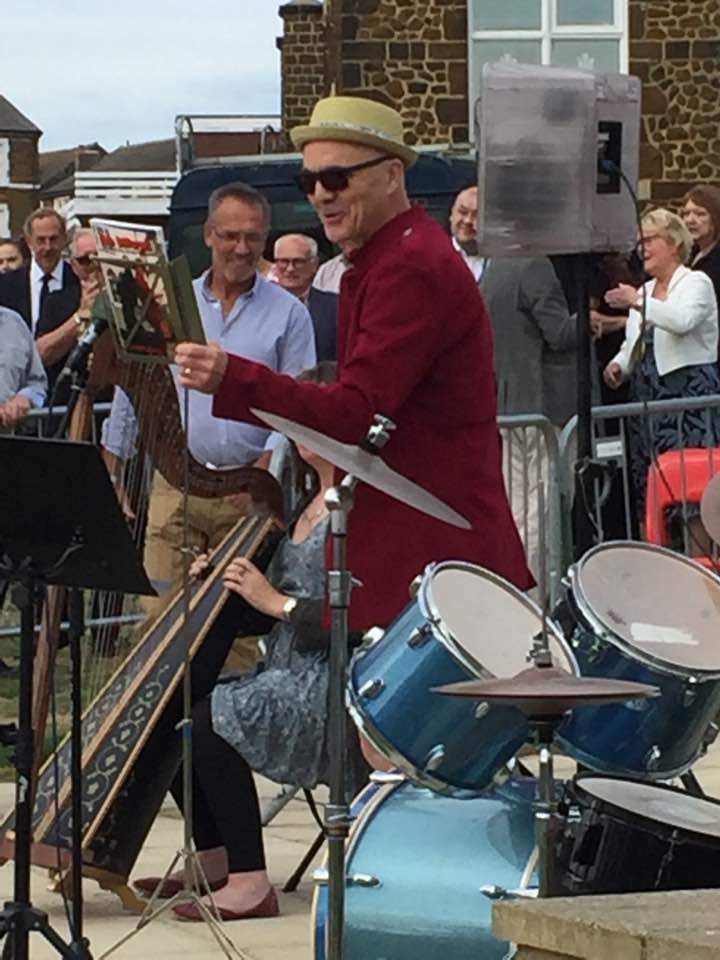
This track "Skirting Heresy" using the title of the play as a refrain was written by Andy and I to cover a lengthy curtain call for the epic cast of 70 and to tell the whole story of the Book in a summary form. We both rather extended ourselves and we were all still performing it about 4 minutes after the epic curtain call ended! I recall pointedly singing "You're a menace to churchman but a mystic to me" to possibly the least facilitating churchman ever to host a play about one of his most famous ancestral parishioners.
This is the abridged Peacock version. The full Peacock version is here-  soundcloud.com/gareth-calway/skirting-heresy-in-full
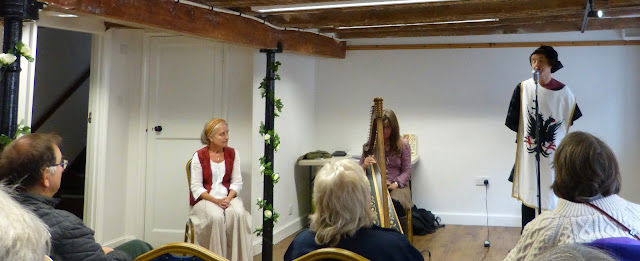
The lovely upbeat Andy-led folk performance is on the Phezants album link above. This version features the three other performers on that track (adding Vanessa's beautifully measured harp to our usual Peacock duo) taking it somewhere more mediaeval.

January 13, 2025

The Ballad of Sir Robert Walpole


On January 17, 1712, after a furious and partisan Parliamentary debate, the British Secretary of War in a whig ministry (Robert Walpole) was committed to the Tower and expelled from the House of Commons. The majorities in favour of the measures were narrow and a motion to overturn the expulsion was defeated by only 12 votes. The merchant whigs favoured the war with France because victory over such a world rival would benefit British trade, the tories were against it because their crypto-Jacobite squires were paying for it. Walpole stood accused of corruption in the matter of forage contracts. He said he had declared that he was reserving a part of the forage contract for the army in Scotland for his friend Robert Mann. The contractors paid Mann five hundred guineas, twice, not to accept the contract. Walpole denied that he himself had himself benefited and indeed there was no evidence whatsoever - either at the time or since - to prove that he had, or that he took bribes or percentages from the deals.  In a pre-democratic/post-democratic mirror reverse image of our own time, Britain’s future Prime Minster was imprisoned for corruption even though he wasn’t found guilty whereas the incumbent President of the United States (in Walpole’s time a British colony) hasn’t been imprisoned even though he was.
 “The punishment was out of all relation to the crime” wrote JH Plumb in his classic 1956 biography of Walpole (though noting the Secretary of War’s wealth had increased immeasurably during his office) and Swift at the time opined that Walpole’s prosecution was really “a leading card to maul the Duke of Marlborough” ie a part of a general attack on the war against France and its inconveniently glorious Commander in Chief. “I heartily despise what I shall one day revenge,” declared a beaten but unbowed Walpole. His incarceration in the Tower lasted six months and his disgrace and exclusion from the Commons for two years. The electors of Lynn in the by-election occasioned by his expulsion returned him unopposed, an act as potent as it was unconstitutional. On 18 March 1714 he returned to the House and made one of the most forceful and eloquent speeches of his career, attacking the ministry’s craven appeasement of France and of plotting for a ‘popish successor’ and made another full of zest and wit on 16 April which drew thunderous applause. With the passing of Queen Anne, Marlborough’s restoration to Commander in Chief and the arrival in England of a Hanoverian (King George I, securing a protestant, anti-Jacobite and whig succession, he could look forward (Plumb suggests) to “the profits of office and the prospect of revenge.” He wasn’t out of the woods yet, as it happened, - in some ways, even as Britian’s first and still longest-serving prime minister, he never would be - but the old survivor was back with a vengeance and, by 1721 the former Secretary of War and Lynn career MP (40 years) would  be presiding over ‘The Age of Walpole” and - ironically, given his former ministry - a long and profitable period of peace and national expansion.
“The Ballad of Sir Robert Walpole” was originally written to mark the bicentenary of Walpole’s return to Parliament in 1714 and published in “Doin’ Different”, a collection of new folk ballads about (mainly) Norfolk notables the following year. The book was the literary part of a project in which Norfolk-based musicians set our words and the ensuing collaborations toured East Anglian venues and festivals. The composer of the Walpole tune (and 5 others in the book) was Warwick Jones who plays it with us on this performance - Warwick has 4 composer and/or performer credits on the 2024 album of the project “Done Different.” This one in all its major-minor comic glory is an absolute treat to sing. Walpole was larger than life in every way, seeming to belong naturally to the Hogarth cartoons in which his era is preserved and extravagantly embodied in Houghton Hall, Norfolk, the immense and palatial neoclassical stately home – a “Neptune and Britannia Rampant Counting House as Castle” - he built in the West Norfolk woods.  We have tried to convey something of Walpole’s formidable largeness of life and Hogarthian cartoon spirit, the latter most especially in the choruses (which in the film the feminine side of our duo sings live to a bucolic audience of horned cattle in the January grounds of Houghton Hall.) 

October 12, 2023

Badass King John


@PeacockTaleFolkIndieDuo On the 7th anniversary of my rapping this as part of the civic unveiling of the statue of King John in Lynn (Oct 12 2016), an unexpected climax for the tour phase of the Doin Different project, here is a new version as a duo as heard on our double album of the project DONE DIFFERENT (releases November 2023). The entire civic ceremony (including the rap) was filmed in a borough council film https://www.youtube.com/watch?v=BXE9BdSGCgM and it was the lead story on BBC LOOK EAST primetime news that day, including footage of the rap and an interview with yours truly.afterwards. https://www.bbc.co.uk/programmes/b07xps0n Badass King John was Ballad 7 in the 39 ballad book https://www.poppyland.co.uk/products/B79622 and is track 4 on the new album. https://peacocks-tale.bandcamp.com/album/done-different (link goes live November 2023).

The impressive statue, cast in bronze, was made by Scottish sculptor Alan Beattie Herriot, who was in the town to see it unveiled. Legend has it that on October 12, 1216 King John lost the crown jewels in the Wash, and the £22,000 statue was unveiled 800 years to the day later.

January 30, 2021

January 30, Humpty Dumpty and The Siege of Lynn


The nursery rhyme "Humpty Dumpty" is said to be a concise folk account of the English Civil War. In some interpretations Humpty Dumpty is that fallen would-be Absolute Monarch (Charles I) himself, whom all his cavalry and men couldn't restore. In others it is a piece of fallen royalist artillery on the walls of Colchester during the siege of 1648. We wonder if the rhyme immortalised the moment when the Humpy Dumpty of Absolute Monarchy was forever broken in these islands as not even the Restoration of 1660 could put Humpty together again or prevent him developing back into the Parliamentary model.

January 30 1649 was the day Englishmen took the rather un-English step of chopping off a Head of State ("Chop off his head with the crown upon it," as Cromwell put it) and January 30 1661 was the day the only English republic was symbolically beheaded in the posthumous exhumation and beheading of Cromwell's corpse, until then honourably buried in Henry VII's tomb.  (Cromwell's head now resides secretly in Sidney Sussex College, Cambridge, the college he himself attended but had to leave on his father's death.) So it seems a fitting day to release our gothic musical comedy about a decisive early action in the Civil War, the Siege of Lynn of 1643.

It makes a nice tourist-story to suggest Lynn was a valiant Royalist town holding back the tide but in fact the backwoods Cavaliers who stormed and held it for a month had as much legitimacy as the thugs who stormed the Capitol in the last days of Trump. The royalist coup, against the two legitimately elected Parliamentarian MPs and a Parliamentary mayor, was led by a Sir Hamon Le Strange of Hunstanton Hall (a large painting of him still has pride of place in the elegant Town Hall) anxious for his large but precarious personal fortune if the Parliamentarians won the war and started to address corruption. He was right to be anxious. His, and his son Roger's, passionate Royalism was indistinguishable from their financial self-interest and the deaths, destruction and terror their month-long coup brought down upon the strategically vital port were ultimately in that very cavalier and not very noble cause.

It's also important to remember that the King was not the constitutional monarchy of today, which most of the Parliamentarians would have fought for themselves, but a deluded tyrant. It would be a much better heritage story to explain that in 1643 a key victory for the future progression of Britain was fought and won across the great Ouse between West Lynn and Lynn. Parliament would never have won the War without its naval supremacy and the port of Lynn, along with its supply route into London and ten counties, was essential to retaining this at the start. Once Lynn was re-secured, the War could be fought on other frontiers. But if Lynn had remained in the hands of unelected cavaliers long enough for the royalist Duke of Newcastle to relieve the town, the whole course of the war might have been different.

Credits:

A Phezant's Tail-John Charlton composition.
(Words and bridge: The Phezant's Tail
Melody on the verses and chorus: John Charlton)
Produced by The Phezant's Tail

We are indebted to John Charlton for his work on this track, the first in a two way collaboration between us. His melody helped us marry those mutual exclusives: poetry sung and poetry acted (a long ambition of ours). He also sang with us and played acoustic and bass on the chorus and verse. And a very good time was had by all.

Pic of Lynn from West Lynn by Bhas Allan, taken in January 2019.  Cromwell's Parliamentary artillery bombarded Lynn from this side while its navy blockaded from the Wash. The stained glass (west) window 'shot all to hell' was in the double towered church pictured (St Margaret's, Lynn Minster) and happened on September 3, a spookily recurring date in Cromwell's career. (The date of his three decisive victories in Ireland, Scotland and England 1649-1651 and the day he died in 1658.)

February 29, 2020

The Book of Margery Kempe of Lynn

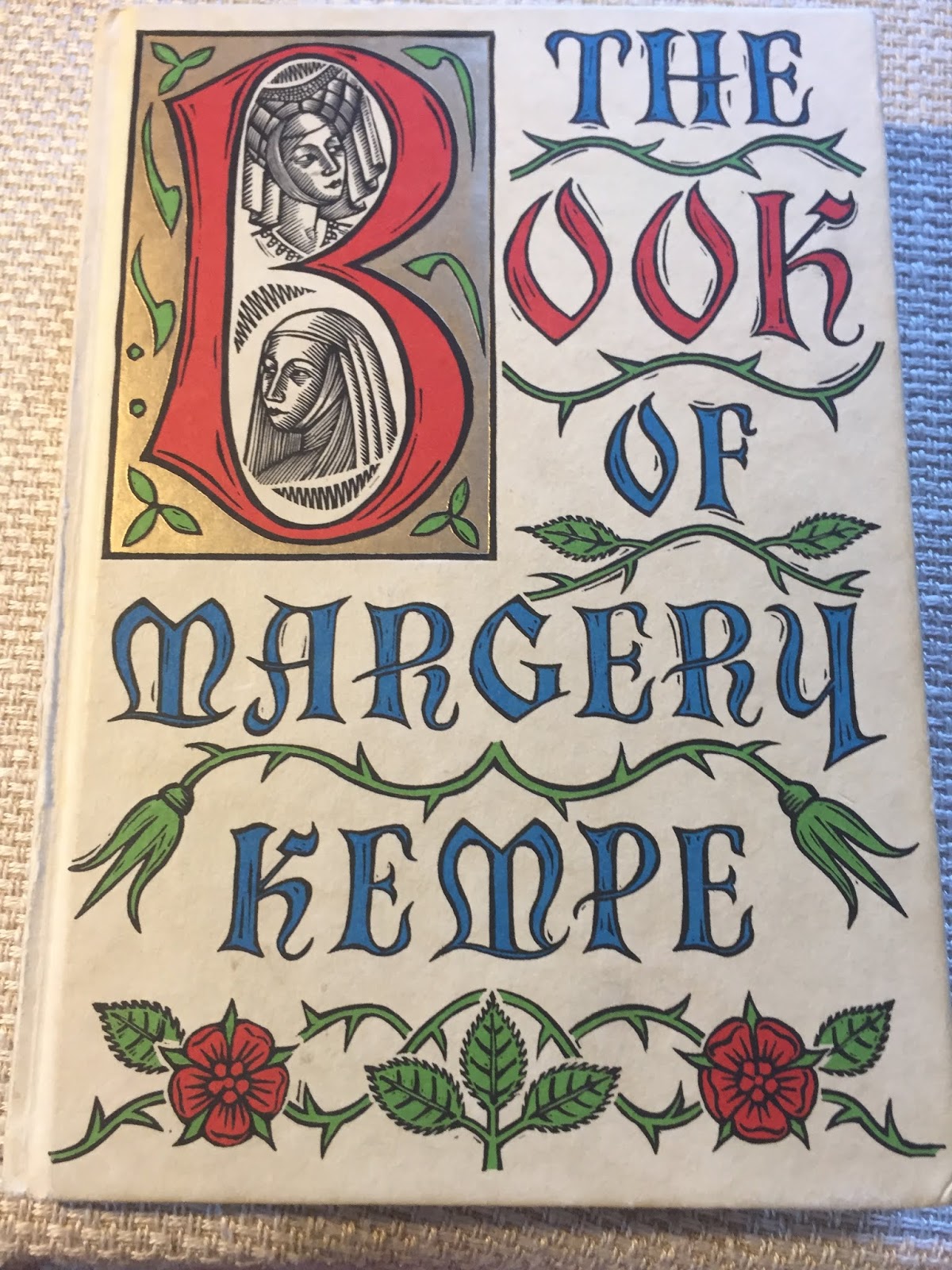
The Book of Margery Kempe is believed to be the first autobiography in the English language. In this new Poppyland pamphlet by Gareth Calway the author examines the history of the book itself and the manuscript that emerged in 1934. He explores its content and explains why it was such a pioneering work, the places that are still associated with Kempe and its influence on modern day writers, historians and dramatists. A selection from the full Bhas Allan photoshoot (see below) supporting the text is also included in the pamphlet.

The anchorhold in All Saint's, South Lynn, Lynn's oldest church.


Lynn Minster, whose foundation deed as St Margaret's refers to the building in honour of St Mary Magdalen, St Margaret and all holy virgins. Perhaps, as a tribute to its pioneering parishioner, Margery, independent wives should be added to that roll!


Fourteenth century brasses from St Margaret's, showing the Mayor and his wives. Margery's father was Mayor and MP a generation later.


St Margaret's from the south.


St Margaret's tower - with a sense of Margery's visionary eye.


The Whitefriars Gate, the only survival of a building in which the illiterate Margery is believed to have dictated her Book to a scribe. With a plaque containing at least two howlers addressed in the pamphlet.


Lynn mediaeval waterfront, from West Lynn. Margery's merchant father and burgess husband worked here and Margery sailed from a point somewhere in the middle of this view, which would have been marked then by a large pilgrims' cross. However, she sailed on her most famous pilgrimage to the Holy Land from Great Yarmouth (whose plaque - also reproduced in the pamphlet - accurately describes Margery as the author of her own Book.)


Richard Castre, Vicar of Sedgeford, and later of St Stephens in Norwich, was a friend and supporter of Margery.  She certainly needed support against some very powerful opponents, including the Archbishop of York (and the Mayor of Leicester) who charged her with heresy.


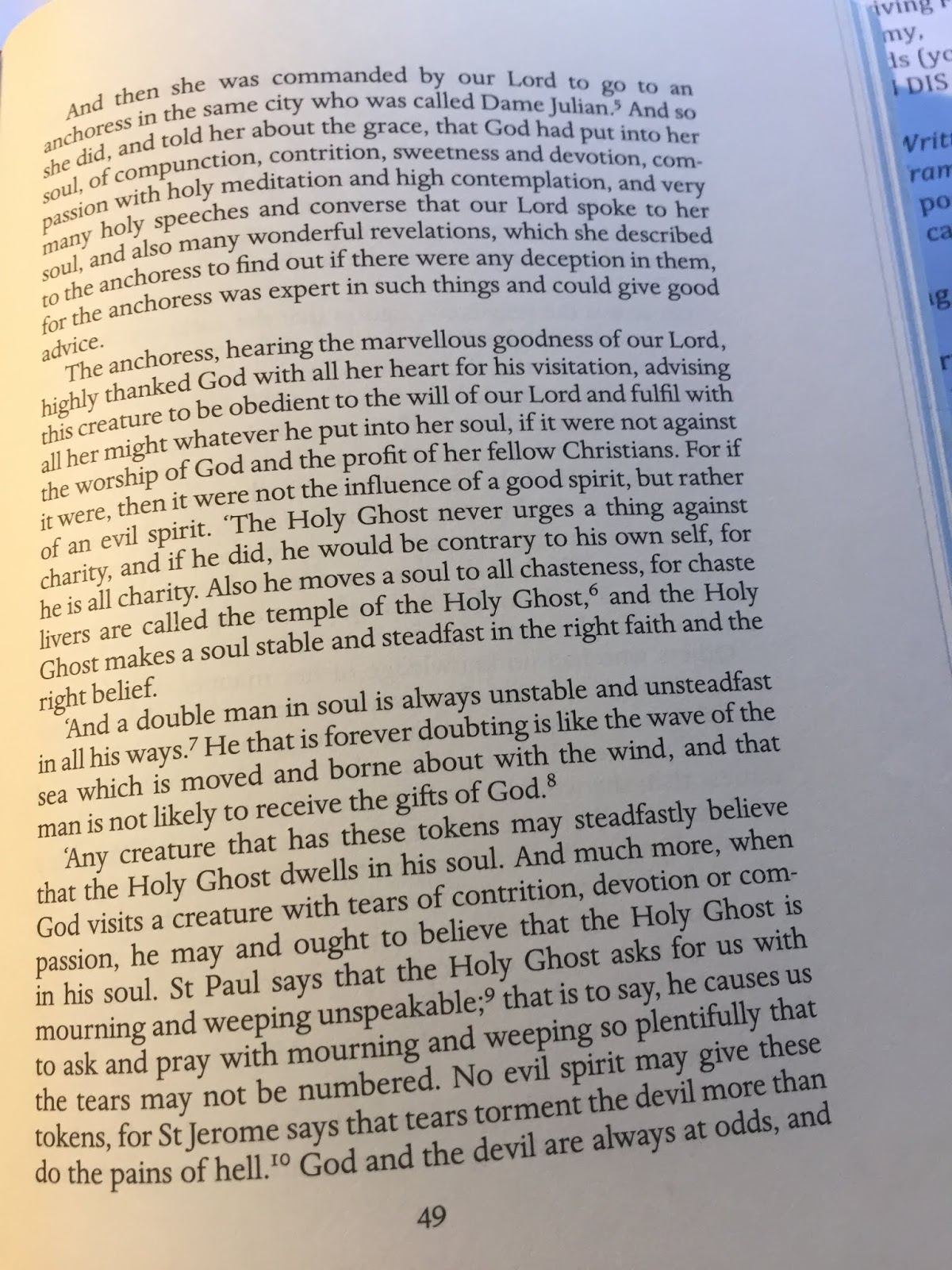
Post script. In response to the third comment below, here is the passage in which Margery describes her meeting with Julian in her cell in Norwich. (chapter 18, Book 1)


November 24, 2019

It All Comes Out In The Wash by Bardonthewire ( solo album released)

Press Release

This is my arty arty solo album - poems set to Norfolk soundscapes,  including an epic musical account of the 1819 Thunderstorm in Sedgeford (performed in Sedgeford on its bicentenary last July); some vistas of Norfolk autumn; a Greek Choral Ode; comic songs; some elegies; my long delayed Welsh Rock Symphony (all four moments and a coda!!!!)  and a charmingly set Sedgeford Christmas poem and a charmingly set satirical one. 

By the end, we're a long way from the Wash in my Welsh/West country boyhood but by then it should be clear 'Wash' is a metaphor as well.

This digital album is available online only on this link - https://bardonthewire.bandcamp.com/album/it-all-comes-out-in-the-wash-album
Sleevenotes below.

Very congenial listening at this time of the year (autumn into winter/Christmas) I've let myself go wherever the words took me, boldly going into soundscapes and scores and whatever else is needed to bring the poems alive for the listener as an audio experience. Lots of experimental sound poem things including the finally realised ambition of a full blown rock symphony (tracks 13-16).

The title is fairly geographical for the first 'side' (tracks 1-11, though beginning to wander across Norfolk from the Wash by the end) celebrating and enjoying the country of Norfolk where I've lived for the past 40 years but broadens after that to include all the stuff pumping out from deeper levels of memory and experience. And in general to indicate the wash of an artist's palate, splashing about all over the shop. 

Cover pic by Bhas Allan 


April 29, 2018

The Ballad of John Kempe Part 1

Hear this ballad set to music and played by the Penland Phezants (and with explanatory notes) here

"Upon the Ouse's stinking beach
I stand and look across,
Amid the waste, and West Lynn seems
The Eden that we've lost.
"I take the ferry there, now Lynn's
Jerusalem or Rome,
Those Walsinghams she'll chase to find
She's just as far from home.
"The grass is always greener on
The other side," I say.
She says, "in heaven it really is
This green hill far away."
With a bump, I bring her back to Earth,
"You’re a mother not that maid
Who sang the Song of Songs to kings,
Our class must toil and trade."
"You great lump, John, in lechery,
You waste my church-spire dreams;
Trade children, chores and chamber pots
For heaven's shining greens."
"The grass is always greener on
The other side," I say.
She says, "in heaven it really is
This green hill far away."

September 07, 2017

The Ballad of Johnny Hopper (the Nerveless Nazikiller)


(born May 1912 King's Lynn, Norfolk; moved Normandy 1924; survived 8 months Gestapo HQ 1942  and 3 years Mauthausen and Dachau 1943-45; East Anglian mushroom farmer, 1945-1991.)

See August issue of BBC History magazine for the full story


Johnny Hopper of Lynn and Normandy,
Forest fugitive, bandit, sinner,
Hit Hitler's Paris in the spring
Took his wife Paulette out to dinner.

"Give me my usual table, boy,
With my back against the wall,
And your two-faced entrance in my sights
And a hand on my trusty pistol.

His 'Resistance' contact  came on time,
A Gestapo and soldiers in tow;
He blew them away as he hit the ground,
Copped a wound, and a crueller blow.

With a fate worse than death closing in,
He shot dead his wounded wife,
"I've relived that fatal moment
Every day of my life."  

'Never give up and never complain'
His old priest in Normandy said.
The only lesson that ever got through
His lone-wolf bullet head

A long horse-face as pale as Death,
The hood life, stripped to the bone;
A wolf with 5000 francs on his head,
As lupine-lean and as lone.

He shot the quisling sheriff of Caen:
He shot the deputy as well
And an SS - "a Nazi piece of goods" -
Beat Dachau, but not his own hell.

With a fate worse than death closing in,
He shot dead his wounded wife,
"I've relived that fatal moment
Every day of my life."  


August 19, 2017

Lancelot and the Grail maiden - Waywood's first album


LANCELOT AND THE GRAIL MAIDEN - click to hear the new Waywood album.

Hear our Soundcloud hit!


We are Waywood. A voice and a  harp telling stories. Here is our contribution to an ageless tradition. We hope you enjoy the new stories of Norfolk we tell.

Next gigs: Bourne, Lincs, 7 Sep.


Lynn Heritage Day, Hanse House, Lynn,  10 Sep


On 10 September, Waywood will be showcasing their new album of Norfolk stories as part of Heritage Day in Lynn  These stories include homages to the extraordinary number of pioneers Lynn has produced through the ages. Characters like William Sawtrey one time priest of St Margaret's Church (now Lynn Minster) - and in 1401 the first man to be burned for his beliefs in England - and his famous parishioner, Margery Kempe, who combined marriage and fourteen children with a unique visionary life travelling as a pilgrim throughout the Hanseatic world and beyond and also famously wrote the first autobiography in English. Waywood also tell such strange ghost stories of ordinary Norfolk people in history as that of Susan Nobes, who was struck by lightning in Sedgeford Church in 1819 - a ballad that has now had nearly a thousand plays worldwide on Soundcloud - and of Norfolk gentlefolk like the Brown Lady reputed to haunt both Houghton and Raynham Hall.  "The Brown Lady", as the ballad explains, was Dorothy Walpole not just sister of first British Prime Minister (and Lynn MP for 40 years) Sir Robert Walpole but also the wife of 'Turnip' Townshend. The mysterious nature of her death and the assertion that she is the only ghost every to have been photographed (on the stairs of Raynham Hall in 1936!) all add to the crepuscular glamour of this tale. 
Gareth will also rap his "Ballad of Badass King John - As Seen On TV!" for the first time since he did so at the official ceremony unveiling King John's statue in Lynn last October, when the performance was shown on the BBC News. Vanessa will join him for only their second public performance of a ballad commissioned from them by the Borough of West Norfolk and King's Lynn about the other West Norfolk figure honoured last June with a statue - Henry LeStrange, the man who invented New Hunstanton.
Waywood will be introduced by town historian Dr Paul Richards at 1 pm in the Gallery at Hanse House on Heritage Day (Sunday September 10) and will perform for about an hour. The show is free. Audiences are welcome to drop in and stay for a song or two or for the entire concert, whichever they prefer. "We know that visitors have a lot of great things to see and hear in Lynn on that day," commented Gareth.

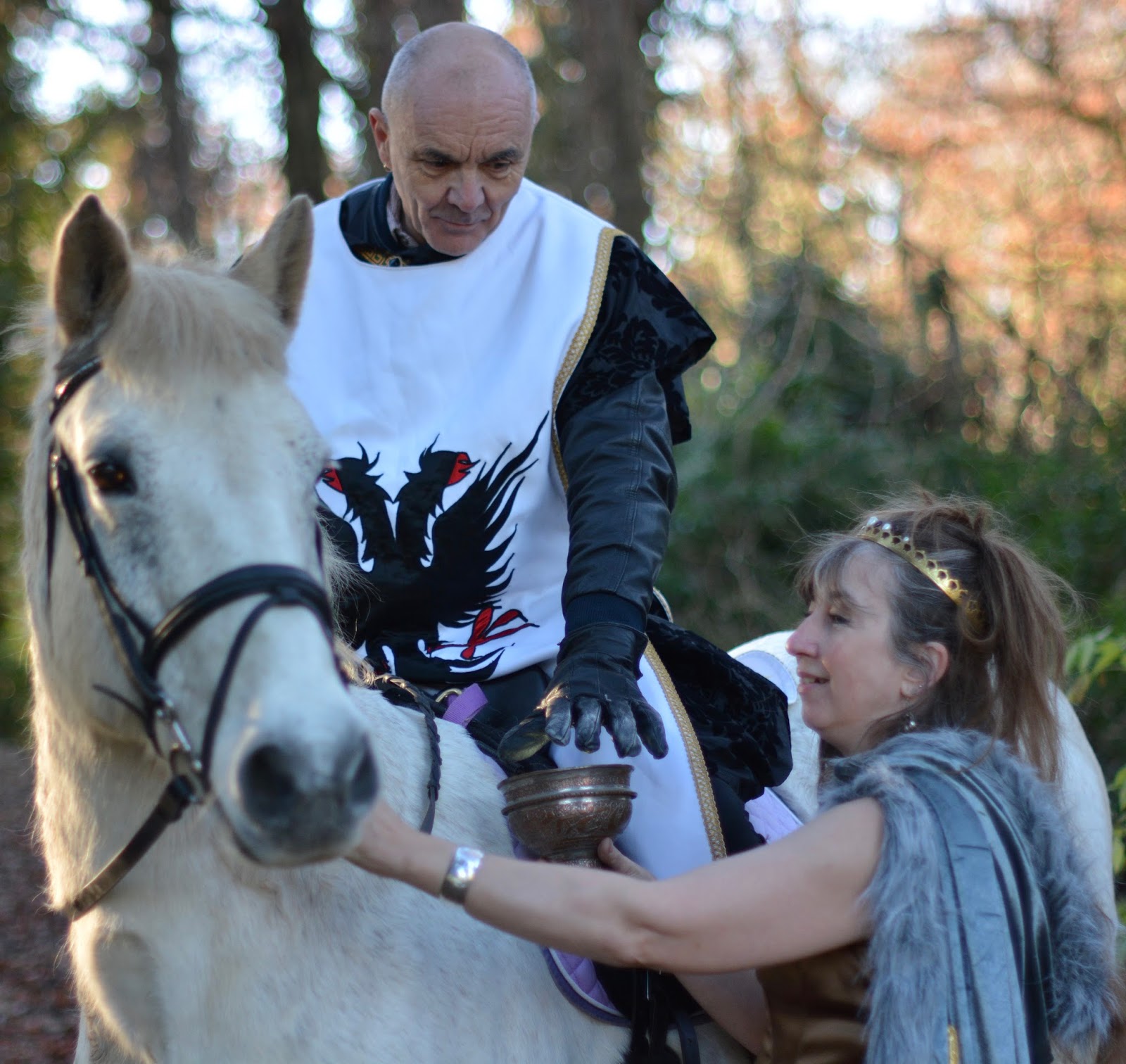
"It will be worth seeing us just for the costumes!" said Vanessa, who has been busy creating a fetching Robin Hood i' the Greenwood look for the duo's new Hereward material to add to the Lancelot and Grail Maiden chic Waywood enjoyed modelling on their recent album cover. "Not many realised Lancelot was wearing the standard of the Hanseatic League on his tabard for that cover shoot," (see above) Vanessa explained. "But with so much Lynn and Hanseatic material in our repertoire, why wouldn't you?"

Pics below by Bhas Allan, Elaine Bird, David Maile, Joan Wall and Zariah Wood-Davies.


The newly unveiled statue of Henry LeStrange 

Waywood sing his praises

'He carved his vision from carrstone rocks"

"A holiday heaven from his hands"

Lovewood, her work done.

The sculptor and Loveway the poet suffering for their art after the ceremony. 
(This is the easy bit)

No, not REM, Waywood at the album launch.

Lovewood making the harp talk

Lovewood and harp as one

Just to show it wasn't easy making that album cover look easy

Mine's a pint, please, Grail maiden.

The real William Sawtrey, first man to be burned for his beliefs in England

Loveway playing Sawtrey in our Morality Play - "A Nice Guy: The Burning Of William Sawtrey" at the Lynn Fringe in 2015. Lovewood is just out of shot left playing Soul. Bhas Allan ( for once not taking the pics) is the devil telling Sawtrey he's toast.

Waywood harping tall histories (and looking vertically stretched) at the 2016 Heritage day in Lynn

Original press release


Poet Gareth Calway and Harpist Vanessa Wood-Davies, both of Sedgeford,  are releasing a 'craft' album of their Norfolk ballads at the Bury St Edmunds Festival on May 19. All but the title track of these harp-accompanied verse tales commemorate a real character from Norfolk's past - from national figures like William Sawtrey of Lynn, the first man to be burned for his beliefs in England, to unsung ones like Susan Nobes of Sedgeford, killed by lightning in Sedgeford Church in 1819. As Waywood (the artists previously known as Lovehearts and Redwine), the two have written, composed, performed, recorded and produced the album themselves and will be performing them on the opening night of the Festival. Andy Wall and Gareth will close the evening with their Ely Folk Festival commission, Bread or Blood, about the Littleport and Ely Riots of 1816 and singer Sharon Clifton will commemorate Ann Boleyn (executed May 19 1536) and Margery Kempe in song .   www.buryfestival.co.uk