Showing posts with label Oliver Cromwell. Show all posts
Showing posts with label Oliver Cromwell. Show all posts
August 05, 2022


August 05, 2021
The English Civil Wars and Other Nursery Crimes coming this Sunday!!
The video premieres Sunday August 22, 11 am. (date the Civil War started in 1642)
A musical film of the Phezant Tail’s new album “The English Civil Wars and Other Nursery Crimes” which premieres on August 22, the date the English Civil War began in 1642. Both album and film tell the story of an England at war with itself in the Roundhead v Cavalier conflict of 1642-1651 (and the origins of that conflict in the English Reformation of a century before) revealing the hidden meanings of familiar nursery rhymes associated with those conflicts. This soundtrack is linked here to still images of the folk and storytelling duo in Royalist and Puritan costume against the historical interior (stained glass, plain glass, wall paintings, whitewashed wall paintings, altar rails etc) and exterior of a small local parish church in Norfolk, which preserve the story of those conflicts. It also features two colour plates central to the story of that Radical 17C attempt to build a visionary new England by the artist William Blake from his mixed media works ‘Milton’ and ‘Jerusalem.’
Photography by Bhas Allan. (Additional photography by the Phezant's Tail)
The costumes are Cromwell's Preachy/New Jerusalem (Maz) and Whore of Babylon/Old Gloriana (Gaz) depending on your point of view!
Digital download of album with full notes, lyrics and credits https://phezants-tail.bandcamp.com/al... (this link also goes live on Aug 22)
January 30, 2021
January 30, Humpty Dumpty and The Siege of Lynn

The nursery rhyme "Humpty Dumpty" is said to be a concise folk account of the English Civil War. In some interpretations Humpty Dumpty is that fallen would-be Absolute Monarch (Charles I) himself, whom all his cavalry and men couldn't restore. In others it is a piece of fallen royalist artillery on the walls of Colchester during the siege of 1648. We wonder if the rhyme immortalised the moment when the Humpy Dumpty of Absolute Monarchy was forever broken in these islands as not even the Restoration of 1660 could put Humpty together again or prevent him developing back into the Parliamentary model.
January 30 1649 was the day Englishmen took the rather un-English step of chopping off a Head of State ("Chop off his head with the crown upon it," as Cromwell put it) and January 30 1661 was the day the only English republic was symbolically beheaded in the posthumous exhumation and beheading of Cromwell's corpse, until then honourably buried in Henry VII's tomb. (Cromwell's head now resides secretly in Sidney Sussex College, Cambridge, the college he himself attended but had to leave on his father's death.) So it seems a fitting day to release our gothic musical comedy about a decisive early action in the Civil War, the Siege of Lynn of 1643.
It makes a nice tourist-story to suggest Lynn was a valiant Royalist town holding back the tide but in fact the backwoods Cavaliers who stormed and held it for a month had as much legitimacy as the thugs who stormed the Capitol in the last days of Trump. The royalist coup, against the two legitimately elected Parliamentarian MPs and a Parliamentary mayor, was led by a Sir Hamon Le Strange of Hunstanton Hall (a large painting of him still has pride of place in the elegant Town Hall) anxious for his large but precarious personal fortune if the Parliamentarians won the war and started to address corruption. He was right to be anxious. His, and his son Roger's, passionate Royalism was indistinguishable from their financial self-interest and the deaths, destruction and terror their month-long coup brought down upon the strategically vital port were ultimately in that very cavalier and not very noble cause.
It's also important to remember that the King was not the constitutional monarchy of today, which most of the Parliamentarians would have fought for themselves, but a deluded tyrant. It would be a much better heritage story to explain that in 1643 a key victory for the future progression of Britain was fought and won across the great Ouse between West Lynn and Lynn. Parliament would never have won the War without its naval supremacy and the port of Lynn, along with its supply route into London and ten counties, was essential to retaining this at the start. Once Lynn was re-secured, the War could be fought on other frontiers. But if Lynn had remained in the hands of unelected cavaliers long enough for the royalist Duke of Newcastle to relieve the town, the whole course of the war might have been different.
Credits:
A Phezant's Tail-John Charlton composition.
(Words and bridge: The Phezant's Tail
Melody on the verses and chorus: John Charlton)
Produced by The Phezant's Tail
We are indebted to John Charlton for his work on this track, the first in a two way collaboration between us. His melody helped us marry those mutual exclusives: poetry sung and poetry acted (a long ambition of ours). He also sang with us and played acoustic and bass on the chorus and verse. And a very good time was had by all.
Pic of Lynn from West Lynn by Bhas Allan, taken in January 2019. Cromwell's Parliamentary artillery bombarded Lynn from this side while its navy blockaded from the Wash. The stained glass (west) window 'shot all to hell' was in the double towered church pictured (St Margaret's, Lynn Minster) and happened on September 3, a spookily recurring date in Cromwell's career. (The date of his three decisive victories in Ireland, Scotland and England 1649-1651 and the day he died in 1658.)
May 30, 2017
INSTALLATION OF CIVIL WAR CANNONBALL AT MARRIOTT'S WAREHOUSE TRUST SAT. JUNE 3 10.30am.
(Part of Local History Day)
 The cannonball in all its glory, now on permanent public display at Marriott's Warehouse
 The Ballad of the Backwoods Cavalier (lyrics at end of this blogpost)
 The Ballad of Freeborn John (lyrics at end of this blogpost)

"'I spilled my blood so I need a voice,'/ Said Freeborn John at Putney..."
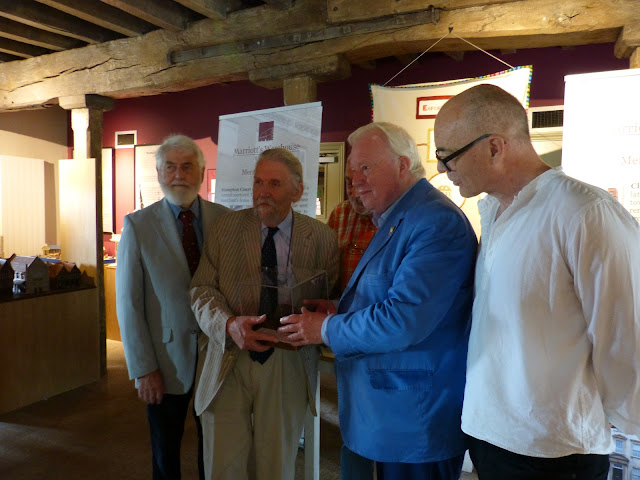


Dr Paul Richards, who gave an excellent talk about the Siege, with the other Marriott's Warehouse Trustees, along with performers on the day Andy (hidden) and Gareth

The cannonball as presented to Gareth by Veronica Lane
This 17th century
cannonball dates from the Civil War and was
found in a field near King’s Lynn. It was given to Gareth Calway by Veronica
Lane whilst he was touring with his Oliver Cromwell show. Gareth then presented
the cannonball to Marriott’s Warehouse Trust in 2016. During the Civil War the
town suffered a three-week siege from 28th August to 15th September
1643 following a Royalist coup. Parliamentarian forces blockaded the town to
the east and by sea, while cannons were fired across the River Ouse from West
Lynn. On 3rd September 1643 one cannonball went through St.
Margaret’s Church’s west window.
The Siege of Lynn was very
important in terms of the Civil War and also because of its impact on the
population of Lynn. To mark the
occasion, Gareth will join with Andy Wall director of Ely Folk Festival to perform
"The Ballad of Freeborn John" their song about the issues at stake in
the Civil War and declaim his comic ballad "The Ballad of The Backwoods
Cavalier" which tells the story of the Siege as PG Wodehouse might have
told it! Dr Paul Richards will deliver a short talk about the impact of the
Siege on Lynn's population.
The Ballad of The Backwoods Cavalier
My father leapt upon his high horse
And galloped it hard into Lynn,
“I seize this Parliamentary town,
Declare it for the King!”
“You have no mandate!” cried Mayor and MPs
Laughed Dad, “Arrest those knaves!
Cavalier bravado has come to town
Which you from yourselves I’ll save.”
Though Cromwell’s preachies at the Gate
Of Lynn as at Heaven knock,
Our stained glass windows shoot all to hell,
Our royal passage block,
We are the laughing cavaliers
And we need a royal 'we'
Now it's weeing down with cannonballs
And the last laugh is on me.
Say I “Great king, your
royal East
And loyal Lynn, I’ll re-seize ’em,
They’re rebels for Your Majesty
And I’m the man to lead ’em!”
The king he writes a broad letter
And thrusts it into my hand,
“Roger L’Estrange shall rule in Lynn
With phantoms I command.”
We live and die a chevalier’s
life,
And we spend a royal p.
On a black marble floor for our horse's hooves
And a falconer and a fool for me.
We are the laughing cavaliers
And we need a royal 'we'
Now it's weeing down with cannonballs
And the last laugh is on me.
.
From Oxford Town to Norfolk woods
The four winds see me ride
And show my fine letter to a Jack
His poor coat to turn or bribe.
‘Captain Leaman’ is that seaman,
Cries he, ‘Er, we’ll talk anon,
I must now to Lynn awhile but will
Return here to Appleton.”
He rides to Colonel Walton and brings
Six redcoats in disguise,
“Show us His Royal Traitor’s hand!’
They pinch me as a spy.
We are the laughing cavaliers
And we need a royal 'we'
Now it's weeing down with cannonballs
And the last laugh is on ...we.
© Gareth Calway 2015
© Gareth Calway 2015
The Ballad of Freeborn John
The bloodiest war in our history
And one in four of us died
For a castled king on a stagnant throne
In a revolutionary tide.
‘I spilt my blood so I need a voice!’
Cries Freeborn John at Putney,
‘Who dies for England is England’s king,
We are no grandee’s army.
‘The poorest man in England has
The right to live as the greatest,
Our God’s the All in all, our king’s
The Christ in every breast.’
The bloodiest war in our history
And one in four of us died
For a castled king on a stagnant throne
And a revolutionary tide.
We’re the voice of the Freeborn Englishman
That was raised at Magna Carta,
The Dissenting flag of the Good Old Cause,
The common or garden martyr.
I rose with Tyler, Straw and Ball
When peasants shook the kingdom,
I was sold down that river of blood by a king
Who hawked the soul of England.
We need no manor house and land
To fix our permanent interest,
We fight for England, our rights and ourselves:
No mercenary business.
The bloodiest war in our history
And one in four of us died
For a castled king on a stagnant throne
And a revolutionary tide.
I will rise at Kett’s Hill and Tolpuddle,
I will fall at Peterloo,
March to Chartist hell and a Newport hotel
To win this Britain for you,
Die a million deaths in two world wars
Though the portion’s not so many
As died for Charles, that Man of Blood,
And in our redcoat Army.
A new model England truly advanced,
Through rank and royal sin
In a cavalry charge to a Future Now
Whose God Not Man Is King.*
The bloodiest war in our history
And one in four of us died
For a castled king on a stagnant throne
And a revolutionary tide.
© Gareth Calway 2015
© Gareth Calway 2015
*the epitaph on Cromwell’s tomb


December 21, 2015
The Puritans' Christmas Party
(published in the EDP 19 Dec 2015)

And here I am talking baubles on Dec 23 2015 on BBC Radio Berkshire, 24 minutes in-
What would a Christmas Party at Oliver Cromwell’s house be like? It sounds like one of those oxymorons the great Puritan epic poet John Milton (Cromwell’s Latin Secretary) favoured – the ‘darkness visible’ of hell for instance. Oliver Cromwell’s House in Ely is inviting visitors to find out.
There would be poetry and music – Cromwell was a generous patron of the arts. There would even be minced pies and mulled wine – Cromwell, contrary to popular misconception, banned neither. But this is not really the issue. The issue is what would Cromwell celebrate.
Milton’s famous Ode ‘ On the Morning of Christ’s Nativity tells us.
In it Nature is represented as an Eve figure, a fallen woman. At Christ Tide, the dead of winter, she is nervous about meeting her Maker. Though naked of her ‘gawdy trim' – her flowers and foliage - her ‘guilty front’ is shameful.
Nature needs a December covering of virgin snow. In such wise, eyes downward, she is able to meet Christ’s gaze.
So far so anti-festive and anti-fun. The party-pooping killjoy Puritan, fearing life and the female, which some less spartan strands of Christianity, embellished with millenniums of solstice festival imported from pagan traditions - comparatively - embrace.
But hold you hard there. Milton’s poem is called ‘ON the morning of Christ’s Nativity.’ Eternity has entered Time; there is a deeper magic afoot. Every Christmas day is still the first. And on it, all evil and all pagan gods are banished.
Milton describes himself at the Nativity running ahead to offer his gift – the poem - ahead of the three ‘wisards’ bringing the newborn Christ their pagan gold, frankincense and myrrh.
It is this Eternity that the Puritans sought to enter at ‘Christ Tide’ behind closed doors and in quiet reflection with their families.
And though Cromwell never sought personally to impose such peace on the wassailing revellers whom Puritans would see as worshipping Mammon, his fundamentalist government did and it has rankled ever since.
There is nothing in the Bible telling Christians to celebrate Christ’s birth on 25 December (Mithras’s birthday and the Roman Saturnalia) nor to observe our chilly season of gifts, ghost stories, gluwein, or even the robin – a bird sacred to Thor. Pagans worshipping the sunrise at Stonehenge would recognise our 'Christ'mas before Jesus of Nazareth would.
But English Protestants defending the Reformation from what they saw as a sneaky Stuart slide back towards the excesses of Rome felt the same about the Stuart ‘Mass'. So even the mild Anglican Midnight service we attend as a concession to a half-forgotten faith in the midst of a month of shopping, feasting and boozing would have offended Cromwell let alone some of his more extreme supporters.

Cromwell bitterly divides opinion. As a board in Oliver Cromwell House asks, is he hero or villain?
His hero status is as a pioneer of Parliamentary government and constitutional monarchy. Modern Britons might admire his combination of strong progressive leadership with ‘warts and all' lack of vanity and personal ambition; the way a humble inspired Fen farmer rose to lead cavalry charges, then a new model army he founded with Sir Thomas Fairfax and finally the Greater England which conquered and constitutionally modernised (in Ireland, alas, brutally though no more brutally than the Tudors and Stuarts) the home nations.
AUDIO. The Ballad of Cromwell's Head, sung live in the Civil War Room at Oliver Cromwell's House, Ely.
Much – not all - of the Cromwellian project was reversed at the Restoration. But The Glorious Revolution of 1688 and subsequent progressive legislation restored it and revealed a man centuries ahead of his time. We admire too his Protestant non-sectarianism, his principles, the lack of corruption in his regime.
We don’t like him very much though. And much of that comes out in the popular myth that he cancelled Christmas.
I blame The Good King Charles interpretation of history which starts in the children’s fairy tales about the period: Charles I a martyred Christ figure, as painted by Van Dyke, rather than the tyrant and ‘Man of blood’ who broke treaties and perpetuated civil wars that wiped out one in four of the English population (more than both world wars put together). Paint is where the resemblance ends – there is a Miltonic cosmos between Charles’ absolutism and the Sermon on the Mount.
And but for the grace of Cromwell’s victory at Dunbar, Charles’ son, the “Merry Monarch,’ would have handed over Britain to Covenant-bashing Scottish Calvinists – they’d have cancelled a lot more than Christmas. This is forgotten. Instead, children hear about Charles II’s attractively indulgent (and self-centred) lifestyle and the romance of his royal escape to France from ‘Cromwell’s preachies.’
Neither Charles was a Good King Wencelas. All those fun-loving Cavalier Christmases in stately homes were of little use to the poor and homeless Christ inconveniently emphasises.
To me, the real folk song romantics of the English Civil War are not wealthy cavaliers hiding up trees, in drag, or down the priest holes of stately homes but the levelling redcoats who fought for a new England they could believe in. An England challenging the ‘divine right of kings’ to reverse the Reformation by stealth and to rule without Parliament.
Unlike fellow East Anglian people’s champion Robert Kett, Cromwell had the misfortune not to die for the cause – he lived to implement it. How does the romantic reputation of ‘God’s Englishman’ (Cromwell) endure success? How did he use the power he won?
Cromwell believed in oligarchy, not democracy, though for the first time in English history, one not based on class. The Rule of the Saints meant any Protestant man with a stake in the country, not just by owning property in it (Cromwell was himself never a great landowner) but by fighting for it. The Parliamentary army was drawn from a much wider and more democratic franchise than Parliament.
To Cromwell, Protestantism meant the individual conscience guided by God. (‘God not Man is King’ was the epitaph on his tomb.) And God could speak through anybody.
This made him (contrary to propaganda) unusually tolerant as (against the Puritan stereotype) he claimed no special divination over other Protestants. And Catholic historians agree that even Catholics, except (alas) in Ireland, were better treated under his regime than was the norm under the Stuarts and Tudors.
‘Puritans’ did not see themselves through our modern eyes as killjoys but as mainstream Protestants defending the Reformation and the Protestant England of Good Queen Bess. Cromwell is popularly misrepresented as smashing all the stained glass out of the Lady Chapel of Ely Cathedral (that was Thomas Cromwell) and as draining all the colour and cheer out of Christmas.
But Oliver was defending the deep magic of Christ Tide. Of Eternity entering Time. Not just from the heathen paganism of pre-Christian times but from the ‘Roman’ festival the Stuart Church would make of it, the country and Christianity.

The Christmas trail at Oliver Cromwell House in Ely visitely.eastcambs.gov.uk runs until twelfth night. It guides visitors around Cromwell’s house and asks them to identify objects alien to genuine Christmas tradition.
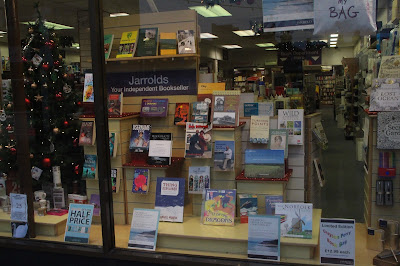
Gareth Calway has just published ‘Doin different – new ballads from the East of England’ - on sale in bookshops throughout East Anglia or from www.poppyland.co.uk . 'Doin different' includes ballads on Cromwell, Cavaliers, Roundheads, Robert Kett and the proto-Protestant martyr William Sawtrey of Lynn.

Anto Morra’s new CD ‘Boudicca’s Country’ (12 ballads from ‘Doin different) includes ‘A Lynn Carol’ inspired by Margery Kempe - you can hear it live tomorrow at Fring Church Carol Service or on www.poppyland.co.uk - and ‘The Ballad of Cromwell’s Head’.

Read Gareth's EDP feature on The Meaning of Christmas: Santa and Saturnalia at the Solstice
For an opposing view see ‘William Winstanley- The Man Who Saved Christmas’ by Alison Barnes (www.poppyland.co.uk)

And here I am talking baubles on Dec 23 2015 on BBC Radio Berkshire, 24 minutes in-
What would a Christmas Party at Oliver Cromwell’s house be like? It sounds like one of those oxymorons the great Puritan epic poet John Milton (Cromwell’s Latin Secretary) favoured – the ‘darkness visible’ of hell for instance. Oliver Cromwell’s House in Ely is inviting visitors to find out.
There would be poetry and music – Cromwell was a generous patron of the arts. There would even be minced pies and mulled wine – Cromwell, contrary to popular misconception, banned neither. But this is not really the issue. The issue is what would Cromwell celebrate.
Milton’s famous Ode ‘ On the Morning of Christ’s Nativity tells us.
In it Nature is represented as an Eve figure, a fallen woman. At Christ Tide, the dead of winter, she is nervous about meeting her Maker. Though naked of her ‘gawdy trim' – her flowers and foliage - her ‘guilty front’ is shameful.
Nature needs a December covering of virgin snow. In such wise, eyes downward, she is able to meet Christ’s gaze.
So far so anti-festive and anti-fun. The party-pooping killjoy Puritan, fearing life and the female, which some less spartan strands of Christianity, embellished with millenniums of solstice festival imported from pagan traditions - comparatively - embrace.
But hold you hard there. Milton’s poem is called ‘ON the morning of Christ’s Nativity.’ Eternity has entered Time; there is a deeper magic afoot. Every Christmas day is still the first. And on it, all evil and all pagan gods are banished.
Milton describes himself at the Nativity running ahead to offer his gift – the poem - ahead of the three ‘wisards’ bringing the newborn Christ their pagan gold, frankincense and myrrh.
It is this Eternity that the Puritans sought to enter at ‘Christ Tide’ behind closed doors and in quiet reflection with their families.
And though Cromwell never sought personally to impose such peace on the wassailing revellers whom Puritans would see as worshipping Mammon, his fundamentalist government did and it has rankled ever since.
There is nothing in the Bible telling Christians to celebrate Christ’s birth on 25 December (Mithras’s birthday and the Roman Saturnalia) nor to observe our chilly season of gifts, ghost stories, gluwein, or even the robin – a bird sacred to Thor. Pagans worshipping the sunrise at Stonehenge would recognise our 'Christ'mas before Jesus of Nazareth would.
But English Protestants defending the Reformation from what they saw as a sneaky Stuart slide back towards the excesses of Rome felt the same about the Stuart ‘Mass'. So even the mild Anglican Midnight service we attend as a concession to a half-forgotten faith in the midst of a month of shopping, feasting and boozing would have offended Cromwell let alone some of his more extreme supporters.

Cromwell bitterly divides opinion. As a board in Oliver Cromwell House asks, is he hero or villain?
His hero status is as a pioneer of Parliamentary government and constitutional monarchy. Modern Britons might admire his combination of strong progressive leadership with ‘warts and all' lack of vanity and personal ambition; the way a humble inspired Fen farmer rose to lead cavalry charges, then a new model army he founded with Sir Thomas Fairfax and finally the Greater England which conquered and constitutionally modernised (in Ireland, alas, brutally though no more brutally than the Tudors and Stuarts) the home nations.
AUDIO. The Ballad of Cromwell's Head, sung live in the Civil War Room at Oliver Cromwell's House, Ely.
Much – not all - of the Cromwellian project was reversed at the Restoration. But The Glorious Revolution of 1688 and subsequent progressive legislation restored it and revealed a man centuries ahead of his time. We admire too his Protestant non-sectarianism, his principles, the lack of corruption in his regime.
We don’t like him very much though. And much of that comes out in the popular myth that he cancelled Christmas.
I blame The Good King Charles interpretation of history which starts in the children’s fairy tales about the period: Charles I a martyred Christ figure, as painted by Van Dyke, rather than the tyrant and ‘Man of blood’ who broke treaties and perpetuated civil wars that wiped out one in four of the English population (more than both world wars put together). Paint is where the resemblance ends – there is a Miltonic cosmos between Charles’ absolutism and the Sermon on the Mount.
And but for the grace of Cromwell’s victory at Dunbar, Charles’ son, the “Merry Monarch,’ would have handed over Britain to Covenant-bashing Scottish Calvinists – they’d have cancelled a lot more than Christmas. This is forgotten. Instead, children hear about Charles II’s attractively indulgent (and self-centred) lifestyle and the romance of his royal escape to France from ‘Cromwell’s preachies.’
Neither Charles was a Good King Wencelas. All those fun-loving Cavalier Christmases in stately homes were of little use to the poor and homeless Christ inconveniently emphasises.
To me, the real folk song romantics of the English Civil War are not wealthy cavaliers hiding up trees, in drag, or down the priest holes of stately homes but the levelling redcoats who fought for a new England they could believe in. An England challenging the ‘divine right of kings’ to reverse the Reformation by stealth and to rule without Parliament.
Unlike fellow East Anglian people’s champion Robert Kett, Cromwell had the misfortune not to die for the cause – he lived to implement it. How does the romantic reputation of ‘God’s Englishman’ (Cromwell) endure success? How did he use the power he won?
Cromwell believed in oligarchy, not democracy, though for the first time in English history, one not based on class. The Rule of the Saints meant any Protestant man with a stake in the country, not just by owning property in it (Cromwell was himself never a great landowner) but by fighting for it. The Parliamentary army was drawn from a much wider and more democratic franchise than Parliament.
To Cromwell, Protestantism meant the individual conscience guided by God. (‘God not Man is King’ was the epitaph on his tomb.) And God could speak through anybody.
This made him (contrary to propaganda) unusually tolerant as (against the Puritan stereotype) he claimed no special divination over other Protestants. And Catholic historians agree that even Catholics, except (alas) in Ireland, were better treated under his regime than was the norm under the Stuarts and Tudors.
‘Puritans’ did not see themselves through our modern eyes as killjoys but as mainstream Protestants defending the Reformation and the Protestant England of Good Queen Bess. Cromwell is popularly misrepresented as smashing all the stained glass out of the Lady Chapel of Ely Cathedral (that was Thomas Cromwell) and as draining all the colour and cheer out of Christmas.
But Oliver was defending the deep magic of Christ Tide. Of Eternity entering Time. Not just from the heathen paganism of pre-Christian times but from the ‘Roman’ festival the Stuart Church would make of it, the country and Christianity.


The only gift....There it is, in the Jarrolds' Christmas window.


Read Gareth's EDP feature on The Meaning of Christmas: Santa and Saturnalia at the Solstice
For an opposing view see ‘William Winstanley- The Man Who Saved Christmas’ by Alison Barnes (www.poppyland.co.uk)
Subscribe to:
Posts (Atom)