Showing posts with label Cromwell. Show all posts
Showing posts with label Cromwell. Show all posts


August 30, 2016
The Siege of Lynn 1643 (EDP and Lynn News features 2013)
Over 1000 views for this post so far...
The Ballad of the Backwoods Cavalier by Lovehearts & Redwine (voice and harp)
Lynn News advance feature here

The features below were first published in 2013. On Saturday September 3 2016, at Marriott's Warehouse Upstairs doors open 7 pm, The English Civil War In Lynn and Other Stories takes the story further.
Lynn historian Dr Paul Richards and local bard Gareth Calway are once again teaming up to deliver a fascinating insight into the history of King's Lynn. Dr Richards will speak about Lynn in the 1620s-1660s and the impact of Puritanism and the Revolution on the town. Gareth's ballads will provide a fresh interpretation of some of the characters involved in the Civil War, as well as other figures linked to King's Lynn, from King John to Fanny Burney. Gareth will be joined by harpist Vanessa Wood Davies and musician Tim Chipping (of Longshoredrift) - who have composed music for many of the ballads and will be peforming alongside him.
Gareth will also be presenting the Marriott's Warehouse Trust with a cannonball from the 1643 siege of Lynn, which was fired from West Lynn during a terrifying three week bombardment!
Tickets are £5 each and are available from True's Yard Fisherfolk Museum (10am-3:30pm Tues-Sat). Contact the Museum on 01553 770479 or info@truesyard.co.uk.

The Siege of Lynn. (EDP feature January 2013)
Less Puritan than Yarmouth or Norwich, and with more active Cavaliers in its backwoods, King’s Lynn was the only place in Norfolk where Civil War blood was shed or gunfire heard. And if the Earl of Newcastle’s Royalist force had relieved the town, war and country may well have turned king-wards and changed the course of English history.
Both of Lynn’s MPs supported Parliament. Yet ‘Lynn Regis’ bears the (temporary) distinction – or stigma - of being the only Royalist town in Eastern England.
We need to keep these terms in perspective. Lynn was a port, living by corn, wine, timber, salt; a place of merchants and fishermen not political activists or holy warriors. Her two MPs were elected by only 300 people and the general populace was more interested in trade. War was bad for business. In addition, many of Lynn’s more radical Puritans had given up on building the new Protestant Jerusalem in England in the 1630s and sailed from Lynn to New England. (Cromwell had nearly done the same in the middle of his mental breakdown/spiritual crisis in 1630.)
Charles I needed a strong fleet: the Civil War was partly triggered by his levies of Ship Money on a reluctant population. So after first losing London and then the East-based navy to Parliament, Charles – the divinely righted but not very bright national leader who had declared war on both sides of Europe’s Thirty Years War at once and had to pay damaging reparations to both - desperately needed Lynn. It was the chief exporter of the region’s corn; favoured port of entry to the eastern counties and import-supplier to ten counties (and of course London).
Parliament grasped this vital strategic importance of Lynn as a gateway between the Royalist stronghold of the North and the Parliamentary stronghold of East and South, the most thickly populated and advanced section of the country. It instructed the town to keep armed men on its walls and by January 1642 gunpowder had been stored at Market Cross, St Anne’s Fort, Trinity Hall and Red Mount.
The Parliament-tending corporation prepared defences and sent out for an engineer to repair those walls. Drawbridges were set up at the east and south gates. Ironically, all of this Parliamentary prep would be seized by Royalists and used against the Parliamentary army in 1643.
The Royalist gentry of west Norfolk put pressure on Charles I sympathisers in the corporation. In spring 1643, Cromwell rushed from subduing mild Royalist unrest at Lowestoft to order the Mayor of Lynn to arrest ‘13 local gentlemen’ regarded as threats, orders duly carried out in May. They managed to escape – or were allowed to while sympathisers within the corporation, including the covertly Royalist Mayor, looked the other way. This happens more than once in this story.
(drama) Enter the dashing Hamon L’Estrange of Hunstanton Hall, a sexagenarian Cavalier living in the grand style with expensive tastes; expensive sons running up debts; eighteen servants (including a falconer and a fool) and a black marble floor in his stables. Supported by Sir Richard Hovell of Hillington and the Morduants of Massingham - encouraged by the Yelvertons of Rougham and the Pastons at Appleton - he now led a Town Hall coup, declaring himself, on 13 August – without any mandate whatsoever - ‘governor of Lynn for the king’.
The borough’s two MPs, John Percival and Thomas Toll, were put under house arrest.
Parliament’s Eastern Association appointed the Earl of Manchester to retake the town and was scorned by the royalist press as having ‘as much hope of Heaven’s gate as to enter Lynn.’ The Puritans, as always, took this rebuke at its Biblical Word. That’s exactly where they believed they were going, via Lynn, trusting in God and keeping their powder dry. Cromwell and Manchester lambasted the committees of the Eastern Association for ‘more arms, more troops, more supplies.’ With all the eloquent directness of the Fen farmer he was, young Colonel Cromwell warts and all chastised his superiors: ‘If I could speak words to pierce your hearts with the sense of our and your condition, I would… If somewhat be not done …you will see Newcastle’s army march up into your bowels.’
Under August skies, a siege was brewing. The 8000 strong Eastern Association army blockaded Lynn on land. Warwick’s Roundhead warships patrolled the Wash: only one Royalist ship carrying vital supplies sneaked through to the town, using fake signals and being fired on by blank rounds as part of a well-worked deception. That’s def. one for the children’s novel.
Ironically, the strong fortifications and well-equipped garrison established by Parliament now stood firm against it, ordnance turned towards land rather than sea by ‘strangers’ from west Norfolk. Were they loyalists or traitors?
To one besieging Roundhead captain they were a ‘wicked crew… enemies to God and Parliament …malignants and recusants…’ bankrolled by L’Estrange. Significantly, L’Estrange had a very real economic motive for his cavalier coup: he faced possible financial ruin if his enemies controlled Norfolk. In Puritan terms it was God versus Mammon: L’Estrange had invested ‘a thousand pounds out of his own purse’ in the coup and (his supporters’) ungodly strength... (‘1200 muskets, 500 barrels of gunpowder with bullet unanswerable, and three or four troops of horse…’) was only beatable because they were ‘cowardly Cavaliers’ without ‘the strength of the Lord.’
Cromwell ordered a new battery of cannon to move into position at West Lynn, his last local action before galloping north with a (siege-weakening) detachment of horse and dragoons for a pre-emptive strike at Newcastle.
The hope was to bombard the town – or rather a west Norfolk gentry who had seized leadership of its citizens - into submission, without the need of an assault.
One ‘eighteen pound’ cannonball notoriously smashed through the west window of St Margaret’s on Sunday September 3, ‘took the middle pillar a great part of, and broke it in a hundred pieces, dispersing them all over the church.’ ‘The people departed in a most confused manner….some leaving their hats, some their books, and some their scarves.’
Shot and granados flew daily into Tuesday Market Place, inflicting damage on persons, houses and property but most enormously on minds: homes and businesses were abandoned and the shrieks of women and children carried well beyond the town walls. It was a war of terror.
Death counts vary. One contemporary account suggests ‘above eighty … on both sides’ though parish registers record just two soldiers buried at St Margaret’s during the weeks of the siege and one at St Nicholas’s.
Routes south and east and fresh water supplies from the Gaywood River to the north were cut off. Manchester and his Parliamentarian army was within musket shot by September 7th.
The garrison dug in and waited for Newcastle. He never came. It made cavalier sallies out: attempting to capture ‘3-400 beefs’ bound for Setchey Market; burning an almshouse known as the Hospital in the nearby village of Gaywood to prevent besiegers taking up quarters there, and meeting every summons to surrender with bravado.
Meanwhile the local economy choked and the town feared ruin and destruction. Boats for a river assault, ladders for scaling the walls and a force of 8000 men were all in place. Despite the derring do-and-die-hard-ism among some Royalists, when Manchester sent word that women and children should be sent out of the town - prior to a general assault on 16 September - an honourable surrender was agreed ‘not as fearing the taking of the town but to avoid the effusion of blood.’ The gun barrage over the sluggish Ouse CEASED, sudden silence informing villages and farms to east and west the siege was over.
Or almost. A grumbling appendix of garrison offence required one further show of force– along with a farcical (though to Manchester’s rustic soldiery, alarming) ‘two hour wrangle at the gate, in the darkness of the summer night’ amid harrowing cries of ‘Give fire!’ Men died in the confusion.
Next day, Manchester’s troops marched into Tuesday Market Place through streets lined only with women – that’s an interesting story to research and tell on another occasion - and established his HQ at the house of deposed MP Thomas Toll (who had escaped house-arrest several days earlier though a window. The usual story.) The Earl ordered a thanksgiving service for the peaceful end of the siege, and sermons for the townspeople each morning.
Royalist arms were seized; leaders arrested. After a parley lasting many hours, and a pause for dinner, Hamon L’Estrange was held liable for all damages caused and his estates and property in west Norfolk sequestrated. His gamble on the fortunes of war had miscarried, though not that disastrously, as he was still able to divide a considerable estate between his sons on his death in the Cromwellian England of 1653. The ‘gentlemen strangers’ were told to leave town, though keeping their horses, swords and pistols. A general amnesty was agreed and Lynn’s Parliament-tending, make-trade-not-war townspeople got their desired end.
For the next year, until the war moved west and south on the growing Parliamentary tide, Lynn became the front line garrison-town of the Eastern Association and major munitions store of Parliament forces. London ships landed military cargoes for distribution inland up the Ouse and some Lynn merchants grew rich on the gun-running.
But by January 1645, Alderman Toll was travelling to Norwich to complain. The cost of billeting the garrison was unpopular and debts were incurred by tradesmen for supplies to the army. Enlisted Lynn men needed compensation for their dependents and impressed sailors’ families grew rancorous. Such grievances took years to settle: 2000 oaks were sent from London to repair buildings in 1648 – 5 years - and tradesmen’s garrison debts were not settled until 1649. Just what trade didn’t need, as feared.
Hamon’s youngest son Roger, after fighting at his father’s side at the Siege of Lynn, joined the King at Oxford. He was ‘an enthusiastic, hot-headed, plausible young man… perpetually evolving ambitious schemes and failing to bring them to fruition.’ There is a word for people like him – it is ‘cavalier.’ He convinced the King, against all the evidence, that a spirit of Royalist resistance remained at Lynn and that he was the man to lead it.’
The King supplied him with a commission and a letter, dated November 1644, promising him ‘a considerable power’ to consolidate the uprising. Roger went straight to Appleton Hall, owned by the Royalist William Paston of Oxnead, and enlisted a Lynn sea captain named Leaman in his hare-brained scheme, who promptly shopped him to the authorities in Lynn. They sent their agents, disguised as beggar sailors, to rush up the stairs and arrest the Cavalier spy, costing his father deep in the purse and in deeply personal embarrassment. Roger was imprisoned for four years in Newgate under sentence of execution. He escaped ‘with the privy of his keeper’ – there you go again - in the relaxed conditions at the end of the First Civil War - then promptly engaged in a madcap rising in the Second!
Sources: RW Ketton-Cremer ‘Norfolk In The Civil War’; P. Richards ‘King’s Lynn’; Susan Yaxley ‘The Siege of King’s Lynn’.


The Lecture: Cavalier and Puritan
In September 1643, along the Lynn waterfront, huge cannon balls and shot took the place of peaceful trade. When we last gave this talk in Lynn on Sep 3, we did so in the very firing line of that siege. To the combatants in 1643, it was a matter of life and death, fought over the banks of the Ouse. Why? What was at stake?


The Lecture: Cavalier and Puritan
In September 1643, along the Lynn waterfront, huge cannon balls and shot took the place of peaceful trade. When we last gave this talk in Lynn on Sep 3, we did so in the very firing line of that siege. To the combatants in 1643, it was a matter of life and death, fought over the banks of the Ouse. Why? What was at stake?
We might call it the advance of history. The advance of Parliamentary government – victorious at Lynn and subsequently in the War of which it was a microcosm, reversed by the Restoration; then confirmed again by the Glorious Revolution of 1688 and completed by all the subsequent Reform Acts. The cavalry charge of the parliamentary future. Against the besieged castle of the royalist past.
We might also call it the Puritan Revolution but all these terms are loaded - by hindsight, and by the memory of radical army activists who briefly flourished in the ferment of civil war, like prophets of the future. The ‘Anglican’ Revolution might be a more accurate term. Mainstream ‘Puritans’ would have seen themselves as conservative defenders of the Elizabethan settlement against an all too ‘cavalier’ Stuartship (stewardship) of it. In their own hearts and minds ‘Puritans’ were resisting a counter-Reformation being sneaked back in through the vestry door by Catholic-leaning Stuart kings and Archbishops, all of them suspected of holding a candle at both ends for the Pope.
These ‘Puritans’ were preserving the Reformation of Oliver Cromwell’s great great grandfather once removed Thomas Cromwell, whose statue-bashing and stained glass-smashing is often blamed (like much else) on Oliver.
So when I use the term ‘Puritan’ don’t Quaker in your boots too much: think Church of England, albeit a Church of England fighting for its very life and for the soul of the country in a war that killed one in four Englishmen. That’s per capita more than both World Wars out together. The bloodiest war in our history, in fact. Almost too horrible for the national memory to recover. Yet still shaping us and our ‘liberal’ constitution: one in which Catholics and nonconformists were not fully citizens until the 19C; in which the last king to rule as a Catholic is still Henry VIII; the last to die as one is Charles II (he converted on his death bed;) where a Catholic Tony Blair still has to leave office before his ‘conversion;’ where the ‘Puritan’ remains a bogey man. Where ‘Cavalier’ is a both glamorously positive noun and a negative adjective (a caddish – flaky - gallant.)
The Ballad of Freeborn John
The English Republican (sung live at Oliver Cromwell's House, Ely)
The English Republican (sung live at Oliver Cromwell's House, Ely)
The Ballad of The Backwoods Cavalier (hear this comic ballad live, performed by Lovehearts and Redwine, at True's Yard on Sep 2 and Marriott's Warehouse on Sep 3 2016.)
Hamon L’Estrange of Hunstanton Hall (was) a sexagenarian Cavalier living in the grand style with expensive tastes; expensive sons running up debts; eighteen servants (including a falconer and a fool) and a black marble floor in his stables. …He… led a Town Hall coup, declaring himself, on 13 August – without any mandate whatsoever - ‘governor of Lynn for the king’. The borough’s two MPs, John Percival and Thomas Toll, were put under house arrest.
Hamon’s youngest son Roger, after fighting at his father’s (losing) side at the Siege of Lynn, joined the King at Oxford. He was ‘an enthusiastic, hot-headed, plausible young man… perpetually evolving ambitious schemes and failing to bring them to fruition.’ He convinced the King, against all the evidence, that a spirit of Royalist resistance remained at Lynn and that he was the man to lead it.’ The King supplied him with a commission and a letter, dated November 1644, promising him ‘a considerable power’ to consolidate the uprising. Roger went straight to Appleton Hall, owned by the Royalist William Paston of Oxnead, and enlisted a Lynn sea captain named Leaman in his hare-brained scheme, who promptly shopped him to the authorities in Lynn
Magazine Cottage, Sedgeford, is believed to have been a powder magazine built in 1640 by Hamon L’Estrange, Lord of the Manor of Sedgeford.
My father leapt upon his high horse
And galloped it hard into Lynn,
“I seize this Parliamentary town,
Declare it for the King!”
“You have no mandate!” cried Mayor and MPs
Laughed Dad, “Arrest those knaves!
Cavalier bravado has come to town
Which you from yourselves I’ll save.”
Though Cromwell’s preachies at the Gate
Of Lynn as at Heaven knock,
Our stained glass windows shoot all to hell,
Our royal passage block,
My dad’s the lord of this manor, say I,
And cavalier farmers are we,
Against the odds and facts and slings
Of cowherd reality.
Say I “Great king, your royal East
And loyal Lynn, I’ll re-seize ’em,
They’re rebels for Your Majesty
And I’m the man to lead ’em!”
The king he writes a broad letter
And thrusts it into my hand,
“Roger L’Estrange shall rule in Lynn
With phantoms I command.”
We live and die a chevalier’s life,
Have it all and spend even more
On a falconer, fool, on a fowl-mouthed fop’s
Black marble stable floor.
My dad’s the lord of this manor, say I,
And cavalier farmers are we,
Against the odds and facts and slings
Of cowherd reality.
.
From Oxford Town to Norfolk woods
The four winds see me ride
And show my fine letter to a Jack
His poor coat to turn or bribe.
‘Captain Leaman’ is that seaman,
Cries he, ‘Er, we’ll talk anon,
I must now to Lynn awhile but will
Return here to Appleton.”
He rides to Colonel Walton and brings
Six redcoats in disguise,
“Show us His Royal Traitor’s hand!’
They pinch me as a spy.
My dad’s the lord of this manor, say I,
And cavalier farmers are we,
Against the odds and facts and slings
Of cowherd reality.
Reviews of the Marriott's Warehouse show

"September 3rd. On the banks of West Lynn stood an army of vengeful Parliamentarians, led by Oliver Cromwell. Cannons fired over the Great Ouse…
Exactly 371 years later, a sell-out crowd gathered at Marriott’s Warehouse. The Siege of Lynn and the Civil War were revived by eminent historian Dr Paul Richards and the writer and raconteur Gareth Calway.
Dr Richards delivered a talk on the Siege, with various fascinating diversions. He set out a compelling case that Lynn’s politics were influenced more by mercantile interests than spiritual convictions.
Part 2, presented by Gareth Calway, starred Cromwell’s decapitated head. In this amusing monologue, fact was stranger, and more macabre, than fiction. We were treated to more puns than we could count (eyes rolled, not unlike the heads!). This consummate performance was a novel way to present the past.
The evening’s entertainment was fit for a King - or a Lord Protector!" Helen Thirkettle
DOIN DIFFERENT - AUDIO, VIDEO AND HISTORICAL RESOURCES
December 04, 2015
The Meaning of Christmas - Solstice, Saturnalia or Santa? (EDP Weekend Dec 21 feature)
There is a live broadcast of this feature done as an entertainment here
Happy Christmas 2019 (a combined-arts card)

The solstice
The Meaning of Christmas
So the year turns, the fairy bulbs grow into the gloom and we are once again at the solstice.
Puritans have always demanded that we should ‘put back’ the Christ into Christmas. Pagans counter that ‘Christ Mass’ has much more to do with the winter solstice.
Solstice celebration was certainly there first. Stonehenge, raised at the turn of the Neolithic and Bronze Age, predates the ‘first’ Christmas (in Bethlehem) by thousands of years.
The spooky Scandinavian festival of St Lucy (Dec 21st,) at ‘the year’s deep midnight’ led by girls wearing white robes with red sashes preserves remote memories of how the frozen north celebrated the winter solstice with large bonfires to scare off evil spirits and turn back the course of the sun.
As you look out of your hostelries at the fairy lights, that Christmas cheer-in-the-dark comes from a tradition much nearer Bergen than Bethlehem.
True, the Biblical God comes to earth in a stable surrounded by animals, farm workers, angels and wise men with gifts. But nowhere in the Bible does it tell Christians to celebrate that birth on the 25th December.
In fact the first December Christmas wasn’t until 350 AD when Pope Julius I established it on Mithras’s birthday, the last day of the Roman Saturnalia, a midwinter holiday when work was suspended, the moral and social order was upended, and gifts were exchanged.
There is not a verse in the Bible about holly, ivy, mediaeval geese, Victorian turkeys, German fir trees, mulled wine, mince pies, Christmas Eve ghost stories, robins or Santa.
The word ‘Christmas’ never occurs. Like Christmas puddings, pies and trifles, it is a mediaeval invention. More Saxon ‘Mess’ (feast) than Latin ‘Missa’ (a service).
'Mince' pies are Elizabethan. Their suet, dried fruit and spices ‘minced’ into the meat were regarded as so indulgently ‘pagan’ that Oliver Cromwell passed an Act of Parliament authorising the imprisonment of anyone found guilty of eating a currant pie.
Oh no he didn’t! In 1650, he was away defeating the real killjoys – the Covenant-bashing Scots – at Dunbar, in the service of a Puritan government whose intolerance often exasperated him – ‘what keep wine out of the country lest men be drunk!’ But this is where our folk-memory that the ‘Puritans cancelled Christmas’ comes from.
Let’s talk turkey, a Tudor innovation and one of Henry VIII’s less controversial cuts. But only after Scrooge sent a big one to Bob Cratchit did the turkeys really start voting for Christmas.
Unlike most of our modern Christmas traditions, turkey isn’t German, Nordic or American in origin. Germany tucks in to roast goose and carp served with Gluwein while Icelanders feast on Gammon steak, herring and reindeer. In America, from which it was introduced to Europe by the Spanish in the sixteenth century, a turkey dinner is more associated with November Thanksgiving.
Some believe Goose is a more authentic choice but the old folk rhyme is against them.
At Christmas a capon, at Michaelmas a goose
And somewhat else at New Year’s tide, for feare the lease flies loose.
Geese were released into the stubble fields at Michaelmas to fatten up on the dropped grain. Poor farmers often paid their landlords in geese. So, gentlemen, your authentic Christmas dinner is capon - a castrated cock!
St Boniface cut down an oak in anger – some German pagans were worshipping it - and a fir tree (symbolising Christianity) sprang up from the roots. European tree worship survived in the Scandinavian custom of decorating the Christian house and barn with evergreens at the New Year to scare away the devil. Germans still set up a Paradise Tree in their homes on Dec 24, the feast day of Adam and Eve, hanging it with communion wafers and candles (now cookies) as the symbol of Christ.
But it was not until Prince Albert of the Victoria and Albert Museum, brought it to England in 1840 that it took over the British living room.
Oh no it wasn’t! It was Good Queen Charlotte, German wife of George III, in 1800. Not to mention the ancient British druids who used holly and mistletoe as symbols of eternal life and placed evergreen branches over doors to keep away evil spirits.
Santa wears red instead of the authentic Christmas/solstice green of Gawain and the Green Knight because of coca cola.
Oh no he doesn’t! That change to red precedes coca cola by over a decade.
The holly king fought the oak king for rulership of the year. Its fresh green leaves and bright berries signify the green of growth and fertility – also represented by mistletoe - and the red of blood, a reminder of the springtime to come. Christianity added the blood and crown of thorns of a love that dies for others.
And a spirit of generosity. Let’s raise a glass of mulled wine to the sainted fourth century Bishop of Myra, thanks to whom Christmas really does have its roots in Turkey. Sinterklass. Saint Nicholas. Santa. He believed in giving gifts to children so that they could enjoy their childhood.
An old British folk tale has it that when Jesus was on His way to Calvary, a robin picked a thorn out of his crown, and the blood which issued from the wound falling on the bird dyed its breast red. The robin was originally Thor’s bird – and no real robin ever sang in Palestine - but this legendary bird surely flies higher and sings more sweetly in these Christian versions.
The Christ was definitely an addition to the original pagan ‘Christmas’ – but what a thrill it adds.
Did Cromwell Cancel Christmas? Short Lynn News feature here
The Puritans' Christmas Party (EDP feature, 2015)
January 20, 2014
Cromwell's Talking Head and Siege of Lynn winter tour 2014

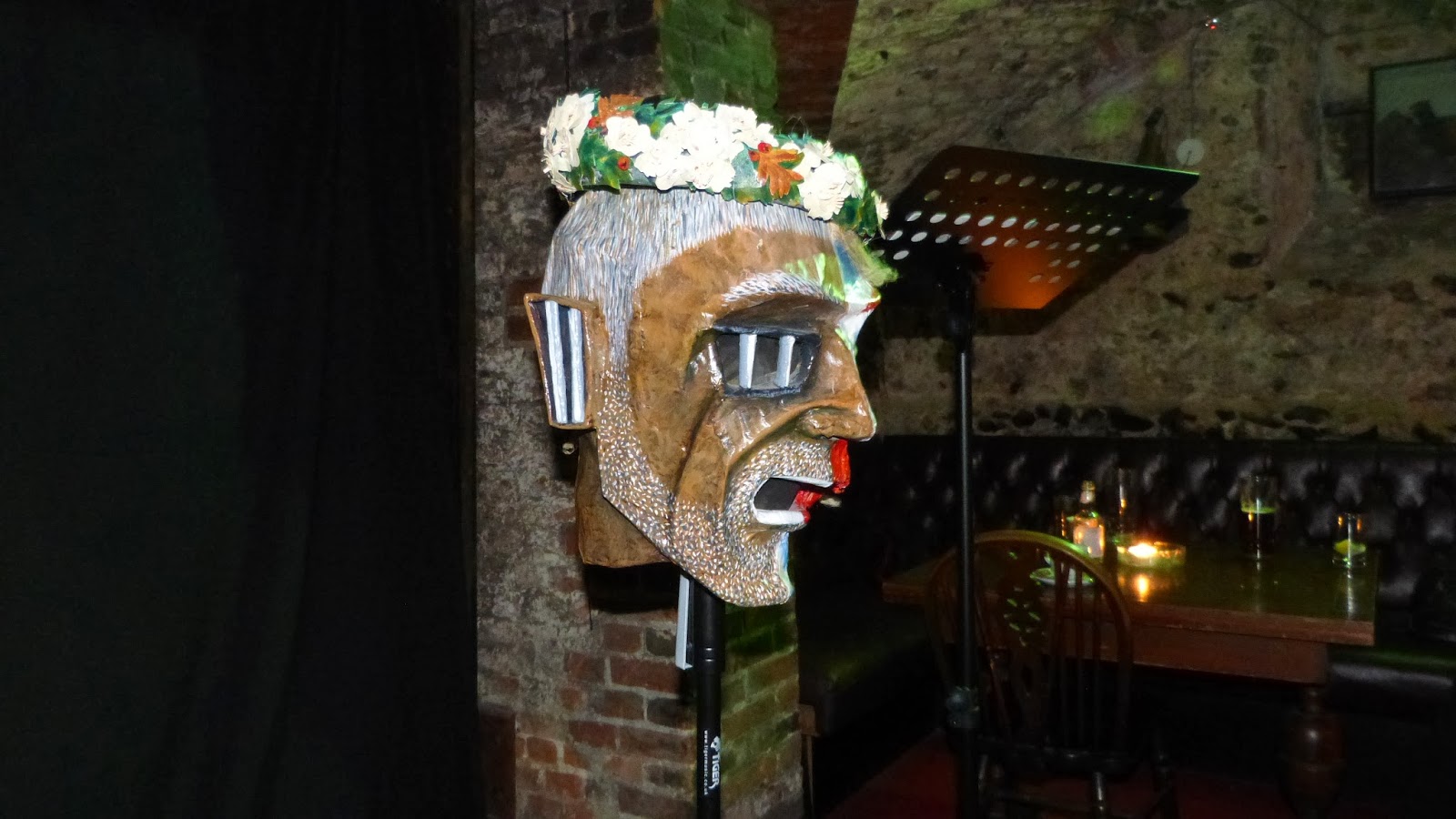
Cromwell’s Talking Head, a dramatic monologue by Gareth Calway. Lively rehearsed reading in the horrible history genre aimed at the naughty kid in all of us. But it's all true - Cromwell the king-killer really was dug up from his 'royal' grave at the Restoration and his head stuck on a traitor's pole for 25 years. Cromwell’s severed head tells his ghastly story of civil war and regicide to a modern grave robber. You’ll laugh your head off!
TOUR DATES
Cambridgeshire
Cromwell's Talking Head by Norfolk author Gareth Calway Oliver Cromwell’s House, 29 St Mary’s St, Ely CB7 4HF - Thursday, January 30, 2014. Ticket info 01353 662062 www.olivercromwellshouse.co.uk East Cambridgeshire Tourist Office says, "Join us on the anniversary of Cromwell’s grisly exhumation for a guided tour of his former home followed by a lively reading of a dramatic monologue. Hear the real story of what happened to the great man’s beheaded corpse. 2 pm. £7.50 includes glass of Cromwell cider."

Norfolk
Cromwell’s Talking Head plus, a dramatic monologue by Gareth Calway. Cromwell’s horrible history told by his severed head! Includes a bonus talk on the Siege of Lynn, 1643. Two gigs:
The Gin Trap, Ringstead, Norfolk, Friday 31 January. £5. Starts 7.30. Ticket info 01485 571828 www.garethcalway.co.uk

Great Massingham Social Club, Norfolk, Monday 3 February. £5. Members free. Starts 7.30. Ticket info 01485 571828 www.garethcalway.co.uk


Filled the 'Folkpot' room at Great Massingham with the artistic and intellectual flower of West Norfolk (3 pictured of 23 present). Expert questions after the talk - a real debate with real people engaged with the issues - in a fun atmosphere and lots of naughty kid laughter during the monologue. A splendid time had by all and a small party to follow - not bad for a cold Monday night in February!
Norwich,
Jurnet's Bar, Wensum Lodge, Wednesday 5 February 9.30 pm. Donation box only. Bar. Info 01485 571828. (as part of regular 8 pm-10.30 pm Storytelling event run by Dave Tong www.theyarnsmithofnorwich.com)
New territory - in the history-burdened bowels of the big city among ye guild of dedicated storytellers and with Cromwell comically at odds with the set theme of the evening - dragon tales (from all cultures, Nordic, Japanese, Beowulf etc) - but you could hear a pun drop in the silence. I sportingly contributed an impassioned Worm to the first half - dramatic verse done as one man theatre is not quite storytelling either. Had some generous feedback though.

http://www.lynnnews.co.uk/what-s-on/lifestyle-and-leisure/gareth-takes-a-horrible-history-look-at-cromwell-at-west-norfolk-venues-1-5835343
News Release from East Cambridgeshire District Council 21 January
What did happen to Oliver Cromwell’s body?
This January, Oliver Cromwell House will be the place to learn about what really happened to the former Lord Protector’s beheaded corpse.
‘Cromwell’s Talking Head’ on Thursday 30 January at 2pm, visitors to the tourist venue will be taken on a guided tour of the House followed by a dramatic monologue from Norfolk author Gareth Calway.
Gareth will explain how the body was buried in the manner of a king only to be exhumed after the Restoaration to be hung, drawn and quartered with the head put on the traitor’s pole over Westminister Hall for 25 years.
The mystery of what happened next is then told in vivd detail as Cromwell’s remains were hidden in various locations, presented at freaks shows and became the source of a terrible curse before finally being laid to rest at Sideny Sussex College in Cambridge.
Tracey Harding, Team Leader Tourism and Town Centre Services at East Cambridgeshire District Council, said: “It is wonderful to have Gareth Calway come back to tell his fascinating monologue of what happened to Oliver Cromwell’s corpse after it was exhumed during the reign of Charles II. What adds to the colour of the talk is knowing it is all based as far as possible on historical fact – it reminds us all that we have much to learn from the behaviour of our ancestors.”
Tickets are priced at £7.50 includes which includes a glass of Cromwell cider. For more information call 01353 662062 or visit www.visitely.org.uk.
ENDS
Notes for editors
For further information contact Tony Taylorson in the Communications Team on 01223 699285.
PRESS RELEASE JANUARY 20 2014.
'Cromwell's Talking Head' is a lively rehearsed reading of 25 minutes, with a bit of Celtic drum. It was the first ever spoken word hosted by Ely Folk Festival last August (picture attached), officially judged as 'wonderful' and went down well in a hot marquee to eighty plus people.
It is in the horrible history genre and aimed at the naughty kid in all of us. But it's all true - Cromwell the king-killer really was dug up from his 'royal' grave at the Restoration, hung, drawn, quartered and his head stuck on a traitor's pole for 25 years. After centuries of adventures in freaks shows and dodgy museums, bits nicked by trophy hunters, and carrying a legendary curse, the head was authenticated by cranial detectives and in 1960 secretly buried at his old college in Cambridge University. Secretly in case drunken royalist students dig him up again! In the monologue, the head tells the ghastly story and the story of the Civil War to a young grave robber who has dug up more than he bargained for. It's funny, informative and not that comfortable for royal ears. You’ll laugh your head off!
PRESS RELEASE Jan 15 2014
CROMWELL’S TALKING HEAD RETURNS TO OLIVER CROMWELL’S HOUSE
As Head of State, Oliver, emulating his Tudor ancestor Thomas, oversaw an English Revolution centuries ahead of his time and raised English prestige abroad to its highest level between Agincourt and Trafalgar (400 years). Yet within three years of ‘royal’ burial, he was disgraced and spat upon. Only in Victorian times was there a national revival of respect/campaign for a statue outside the Parliament he did so much to advance. (Queen Victoria refused assent.) Gareth’s monologue has been described as "A triumph of narration and vocal colour" (Radio drama reviews) and as an "Interesting and lively new take on Cromwell" (Cromwell House) Surprising facts about Oliver – like his tolerance – will emerge. Cromwell’s Talking Head has a twice-yearly residency at Oliver Cromwell’s house marking Oliver’s posthumous execution (Jan 30) and ‘lucky day’ (Sep 3.)
An exciting partnership with ex-Mayor of Lynn and now deputy lord lieutenant of Norfolk Dr Paul Richards (author of the documentary history of King’s Lynn) is planned for next September 3 at Marriott’s Warehouse. This partnership will combine Calway’s monologue with some context from Dr Richards about Cromwell’s securing of King’s Lynn for the Parliamentary cause in 1643, against the intrigues of Thomas Gurlyn, Dr Richards’ mayoral predecessor – and a covert royalist - at that time. Meanwhile, at Ringstead and Massingham, Cromwell’s Talking Head is preceded by the author’s own talk on The Siege of Lynn 1643.
http://www.edp24.co.uk/norfolk-life/norfolk-history/17_jurnet_s_house_1_214362 Fascinating history of this house. Owned by Jews until the latter's expulsion from England for 400 years until - yes - Cromwell welcomed them back. Later owned by the famous Pastons. Dripping with history and atmosphere.
The Siege of Lynn 1643. Feature article published in the Eastern Daily Press Friday 24 January
The Siege of Lynn 1643
Less Puritan than Yarmouth or Norwich and with more active Cavaliers in its backwoods, King’s Lynn was the only place in Norfolk where Civil War blood was shed or gunfire heard. And if the Earl of Newcastle’s Royalist force had relieved the town, it might have turned war and country king-wards.
The Siege of 1643 is the whole war in microcosm: Cavalier audacity; Parliamentary accountability; a divided populace (tending to Parliament) above all united in devout wish for harvest, trade, peace over plunder, billeting, destruction.
And introducing one Colonel Cromwell, typically chastising his then superiors to greater efforts. ‘If I could speak words to pierce your hearts with the sense of our and your condition, I would… If somewhat be not done …you will see Newcastle’s army march up into your bowels.’
And an explosive September 3, ominous date of all Cromwell’s decisive victories, and his death.
Both of Lynn’s two MPs supported Parliament. Yet ‘Lynn Regis’ bears the (temporary) distinction – or stigma - of being the only Royalist town in Eastern England.
Charles I needed a strong fleet: the Civil War was partly triggered by his levies of Ship Money on a reluctant population. Losing London to Parliament was a blunder; losing the East-based navy began to seem like fecklessness. So he needed Lynn: chief exporter of the region’s corn; favoured port of entry to the eastern counties and import-supplier to ten counties (and London).
Parliament grasped this vital strategic importance of Lynn as a gateway between Royalist North and Parliamentary East and South. It instructed the town to keep armed men on its walls and by January 1642 gunpowder had been stored at Market Cross, St Anne’s Fort, Trinity Hall and Red Mount.
The Parliament-tending corporation prepared defences and sent out for an engineer to repair those walls. Drawbridges were set up at the east and south gates. Ironically, all of this would be seized by Royalists and used against the Parliamentary army in 1643.
The Royalist gentry of west Norfolk put pressure on Charles I sympathisers in the corporation. In spring 1643, Cromwell rushed from subduing mild Royalist unrest at Lowestoft to order the Mayor of Lynn to arrest ‘13 local gentlemen’ regarded as threats, orders duly carried out in May. They managed to escape – or were allowed to while sympathisers within the corporation, including the covertly Royalist Mayor, looked the other way.
Enter the dashing Hamon L’Estrange of Hunstanton Hall, a sexagenarian Cavalier living in the grand style with expensive tastes; expensive sons running up debts; eighteen servants (including a falconer and a fool) and a black marble floor in his stables. Supported by Sir Richard Hovell of Hillington and the Morduants of Massingham - encouraged by the Yelvertons of Rougham and the Pastons at Appleton - he now led a Town Hall coup, declaring himself on 13 August ‘governor of Lynn for the king’.
The borough’s two MPs, John Percival and Thomas Toll, were put under house arrest.
Parliament’s Eastern Association appointed the Earl of Manchester to retake the town and was scorned by the royalist press as having ‘as much hope of Heaven’s gate as to enter Lynn.’ The Puritans, as always, took this rebuke at its Word. Cromwell and Manchester lambasted the committees of the Eastern Association for ‘more arms, more troops, more supplies.’ Trust in God and keep your powder dry.
A siege brewed. An August entry in the record of the civic authorities notes that ‘a great company of strangers are now come to the Burgh’ and must be resisted. The 8000 strong Eastern Association army blockaded Lynn on land. Warwick’s Roundhead warships patrolled the Wash: only one Royalist ship carrying vital supplies sneaked through to the town, using fake signals and being fired on by blank rounds as part of a well-worked deception.
Ironically, the strong fortifications and well-equipped garrison established by Parliament now stood firm against it, ordnance turned towards land rather than sea by ‘strangers’ from west Norfolk. Were they loyalists or traitors?
To one besieging Roundhead captain they were a ‘wicked crew… enemies to God and Parliament …malignants and recusants…’ bankrolled by L’Estrange (who faced possible financial ruin if his enemies controlled Norfolk) with ‘a thousand pounds out of his own purse’ and (whose) ungodly strength... (‘1200 muskets, 500 barrels of gunpowder with bullet unanswerable, and three or four troops of horse…’) was only beatable because they were ‘cowardly Cavaliers’ without ‘the strength of the Lord.’
Cromwell ordered a new battery of cannon to move into position at West Lynn, his last local action before galloping north with a (siege-weakening) detachment of horse and dragoons for a pre-emptive strike at Newcastle.
The hope was to bombard the town – or rather a west Norfolk gentry who had seized leadership of its citizens - into submission, without the need of an assault.
One ‘eighteen pound’ cannonball notoriously smashed through the west window of St Margaret’s on Sunday September 3, ‘took the middle pillar a great part of, and broke it in a hundred pieces, dispersing them all over the church.’ ‘The people departed in a most confused manner….some leaving their hats, some their books, and some their scarves.’
Shot and granados flew daily into Tuesday Market Place, causing few casualties but much psychological damage. Houses and property were damaged and abandoned and the shrieks of women and children carried well beyond the town walls: a war of terror.
Death counts vary. One contemporary account suggests ‘above eighty … on both sides’ though parish registers record just two soldiers buried at St Margaret’s during the weeks of the siege and one at St Nicholas’s.
Routes south and east and fresh water supplies from the Gaywood River to the north were cut off. Manchester was within musket shot by September 7th.
The garrison dug in and waited for Newcastle. He never came. It made gallant sallies out: attempting to capture ‘3-400 beefs’ bound for Setchey Market; burning an almshouse known as the Hospital in the nearby village of Gaywood to prevent besiegers taking up quarters there, and meeting every summons to surrender with Cavalier bravado.
Meanwhile the local economy choked and the town feared ruin, even destruction. Boats for a river assault, ladders for scaling the walls and a force of 8000 men were all in place. Despite the derring do-and-die-hard-ism among some Royalists, when Manchester sent word that women and children should be sent out of the town - prior to a general assault on 16 September - an honourable surrender was agreed ‘not as fearing the taking of the town but to avoid the effusion of blood.’ The gun barrage over the sluggish Ouse ceased, sudden silence informing villages and farms to east and west the siege was over.
Or almost. A grumbling appendix of garrison offence required one further show of force– along with a farcical (though to Manchester’s rustic soldiery, dismaying) ‘two hour wrangle at the gate, in the darkness of the summer night’ amid harrowing cries of ‘Give fire!’ Men died in the confusion.
Next day, Manchester’s troops marched into Tuesday Market Place through streets lined only with women and established his HQ at the house of deposed MP Thomas Toll (who had escaped house-arrest several days earlier though a window.) The Earl ordered a thanksgiving service for the peaceful end of the siege, and sermons for the townspeople each morning.
Royalist arms were seized; leaders arrested. After a parley lasting many hours, and a pause for dinner, Hamon L’Estrange was held liable for all damages caused and his estates and property in west Norfolk sequestrated. His gamble on the fortunes of war miscarried, though he was still able to divide a considerable estate between his sons on his death in the Cromwellian England of 1653. The ‘gentlemen strangers’ were told to leave town, though keeping their horses, swords and pistols. A general amnesty was agreed and Lynn’s Parliament-tending, make-trade-not-war townspeople got their desired end.
For the next year, until the war moved west and south on the growing Parliament tide, Lynn became the front line garrison-town of the Eastern Association and major munitions store of Parliament forces.
Sources: RW Ketton-Cremer ‘Norfolk In The Civil War’; P. Richards ‘King’s Lynn’; Susan Yaxley ‘The Siege of King’s Lynn’.
Gareth Calway’s winter tour of ‘Cromwell’s Talking Head’ (a dramatic monologue by Cromwell’s severed head) comes to Oliver Cromwell’s House, Ely, Jan 30 2 pm (info 01353 662062), The Gin Trap Inn, Ringstead,* Jan 31, 7.30 pm; Great Massingham Social Club,* Feb 3, 7.30 pm and Jurnet’s Bar, Norwich, Feb 5, 9.30 pm (info 01485 571828) * = includes a talk on The Siege of Lynn.
January 25, 2013
A Punktured History of Britain from Creation to Cromwell

Julius Caesar
And the Roman Empire
Couldn't conquer the blue sky...
Far away and long ago, the land was divided and leaderless.
A great king, a dragon head, was needed
To unite the people and drive out the invaders...
As the leaves of summer break in spring
From forest, field and tree
So let the spirit’s freedom burst
From the walls of this Priory...
I am wild to hold, though I seem so tame,
More fair than mortals can say
And I sold my heart for a worldly crown
And I'll take your breath away...
Ann Boleyn, King Arthur, Boudicca, The Peasants Revolt, not in that order. All this and much else besides a week today at the Gin Trap. And that's just the first half before Cromwell. Don't miss this punky sleigh ride through British history!
I'm posting this on Burns Night Day and with Murray hopefully saltiring Britain towards an Aussie Open final. There's nothing Little England ('let's ditch Scotland, let's ditch Europe, let's disappear up our Offa's dyke') about the Britain I celebrate here.
January 15, 2013
PRESS RELEASE- CROMWELL’S TALKING HEAD (January 14 )
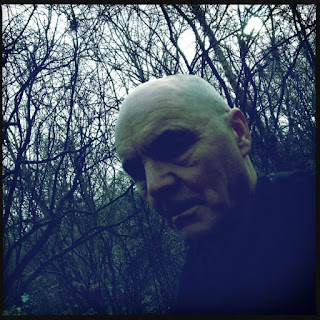 January 30 is an ominous date in any royal calendar. It was the day Charles I was beheaded in 1649. But did you know that Oliver Cromwell was also beheaded (not to mention hanged, drawn and quartered) on that date in 1660? The crucial difference being that Cromwell had already been dead and buried for two years when it happened! Norfolk author Gareth Calway’s dramatic monologue tells the story.
Cromwell, one of the 57 signatories of Charles I’s death warrant, died in 1658 as England’s only Republican Head of State and was buried with great honour and embalmed ( against his wishes) as a king. But at the Restoration, his reviled body was exhumed, disgraced and the head put on a spike on top of Westminster Hall. It remained there for 25 years until a lightning bolt removed it. It was smuggled away the next morning by an old soldier and hidden up a chimney for decades and then had an extraordinary and often gruesome afterlife before eventually being buried secretly at Sidney Sussex College, Cambridge in 1960. A plaque there commemorates the fact. So the East Anglia which gave Cromwell his first prominence remains haunted by his story and the old revolutionary head remains at the heart of an England he dominated.
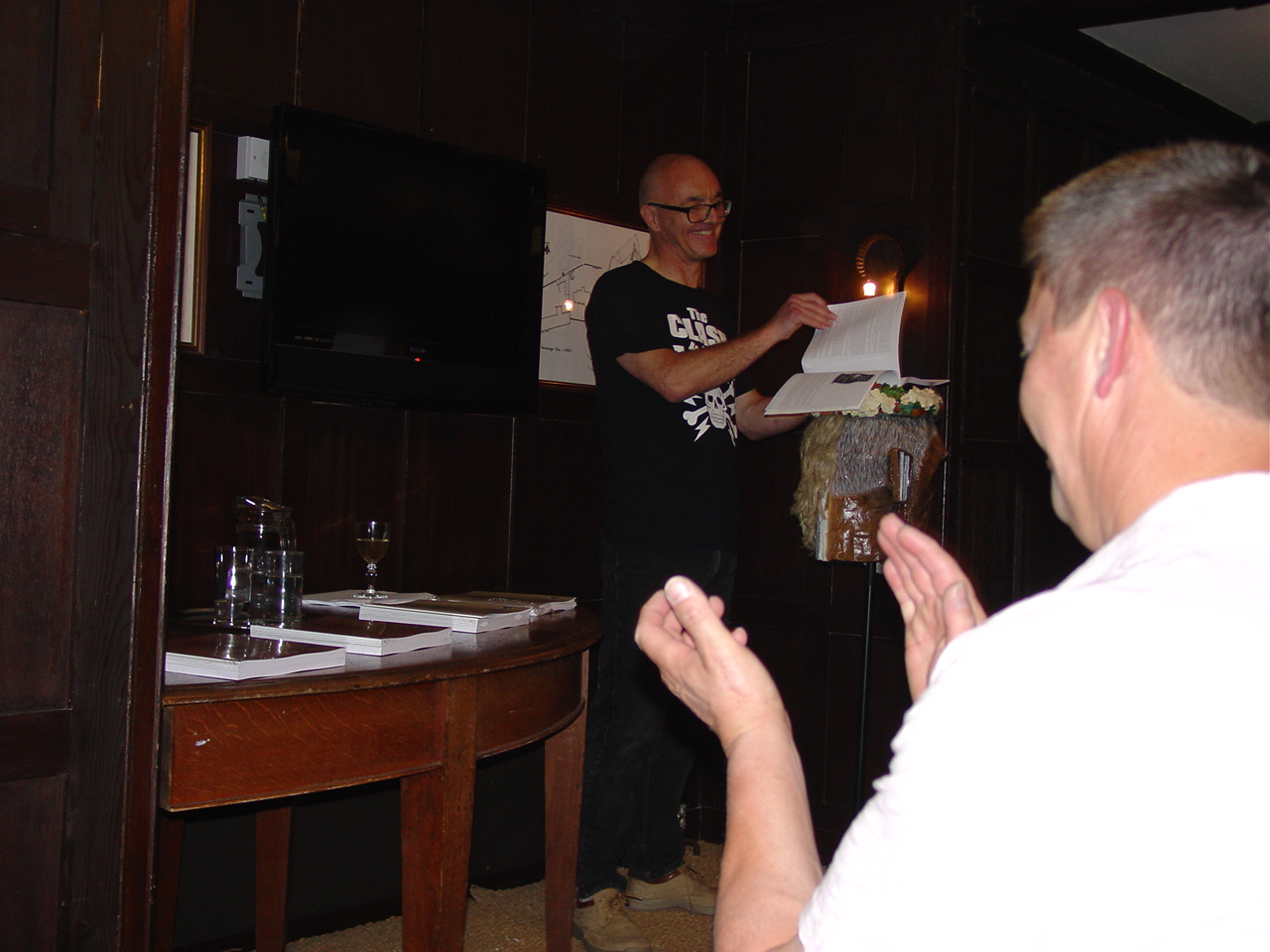
Gareth’s carefully researched dramatic monologue makes the most of the gory aspects of this true gothic story and was a sell out success when it was performed at Oliver Cromwell’s House on Sep 3 (the date of Cromwell’s decease in 1658 and of his three mightiest victories in 1649,1650 and 1651).
 Cromwell’s Talking Head will be touring as a one man show this year and you can see the performance at two East Anglian venues at the end of this month: on January 30 itself at Oliver Cromwell’s House in Ely (reserve tickets on 01353 662062, £7.50 includes tour of house and glass of Cromwell cider) at 2 pm and then at the Gin Trap Inn, Ringstead on February 1st at 8.30 pm, preceded by a first half A Punktured History of Britain. (reserve tickets on 01485 571828, £7)
Further details contact Melanie Calway on melaniecalway@gmail.com or on 01485 571828
ancyrian, cole green, sedgeford, norfolk, PE36 5LS
 http://garethcalway.blogspot.co.uk/2012/09/my-new-book-and-first-collaboration.html There is a podcast at:
http://readingroom.podbean.com/2012/07/23/room-29-cromwell%E2%80%99s-talking-head-by-gareth-calway-%E2%80%93-a-reading-room-special/
and a review at:
http://www.radiodramareviews.com/id1161.html
Cromwell's Talking Head (text/art book)
Dramatic monologue by Cromwell’s severed head with folklore/fantasy illustrations; "A triumph of narration and vocal colour" (Radio drama reviews); "Interesting and lively new take on Cromwell" (Cromwell House Museum).
On sale at Oliver Cromwell’s House, by ISBN 978 0 9573960 0 5 and on www.garethcalway.co.uk
Cromwell's Talking Head will be featured on the Afternoon Show on Radio Norfolk on Tuesday 29 after three pm.
http://www.cambridge-news.co.uk/Ely/Fun-and-games-to-mark-Charles-Is-grisly-demise-01022013.htm for an online front page in the Ely edition of the Cambridgeshire Evening News.

Cromwell, one of the 57 signatories of Charles I’s death warrant, died in 1658 as England’s only Republican Head of State and was buried with great honour and embalmed ( against his wishes) as a king. But at the Restoration, his reviled body was exhumed, disgraced and the head put on a spike on top of Westminster Hall. It remained there for 25 years until a lightning bolt removed it. It was smuggled away the next morning by an old soldier and hidden up a chimney for decades and then had an extraordinary and often gruesome afterlife before eventually being buried secretly at Sidney Sussex College, Cambridge in 1960. A plaque there commemorates the fact. So the East Anglia which gave Cromwell his first prominence remains haunted by his story and the old revolutionary head remains at the heart of an England he dominated.
Gareth’s carefully researched dramatic monologue makes the most of the gory aspects of this true gothic story and was a sell out success when it was performed at Oliver Cromwell’s House on Sep 3 (the date of Cromwell’s decease in 1658 and of his three mightiest victories in 1649,1650 and 1651).
Further details contact Melanie Calway on melaniecalway@gmail.com or on 01485 571828
ancyrian, cole green, sedgeford, norfolk, PE36 5LS

http://readingroom.podbean.com/2012/07/23/room-29-cromwell%E2%80%99s-talking-head-by-gareth-calway-%E2%80%93-a-reading-room-special/
and a review at:
http://www.radiodramareviews.com/id1161.html
Cromwell's Talking Head (text/art book)
Dramatic monologue by Cromwell’s severed head with folklore/fantasy illustrations; "A triumph of narration and vocal colour" (Radio drama reviews); "Interesting and lively new take on Cromwell" (Cromwell House Museum).
On sale at Oliver Cromwell’s House, by ISBN 978 0 9573960 0 5 and on www.garethcalway.co.uk
Cromwell's Talking Head will be featured on the Afternoon Show on Radio Norfolk on Tuesday 29 after three pm.
http://www.cambridge-news.co.uk/Ely/Fun-and-games-to-mark-Charles-Is-grisly-demise-01022013.htm for an online front page in the Ely edition of the Cambridgeshire Evening News.
Subscribe to:
Posts (Atom)