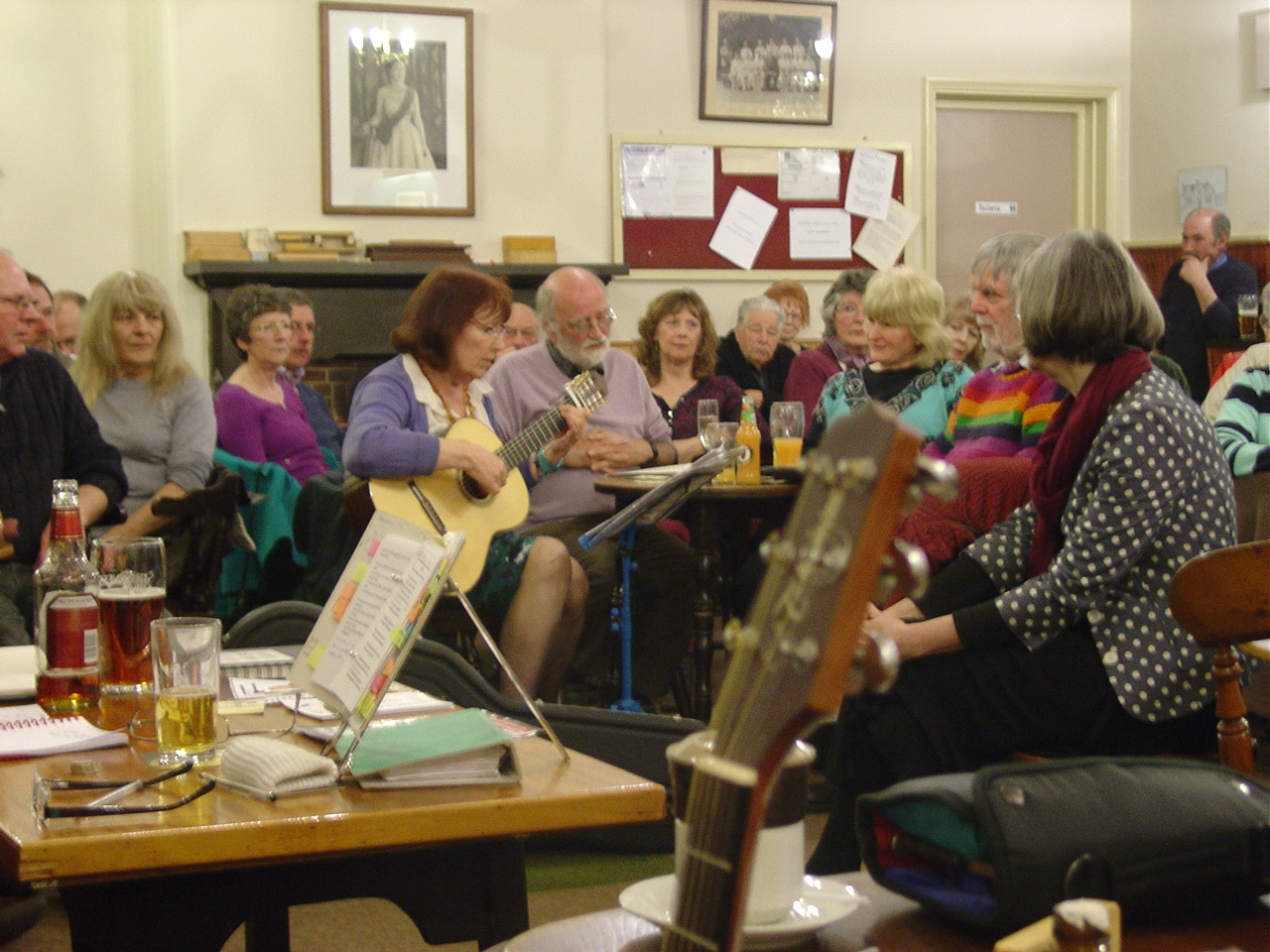
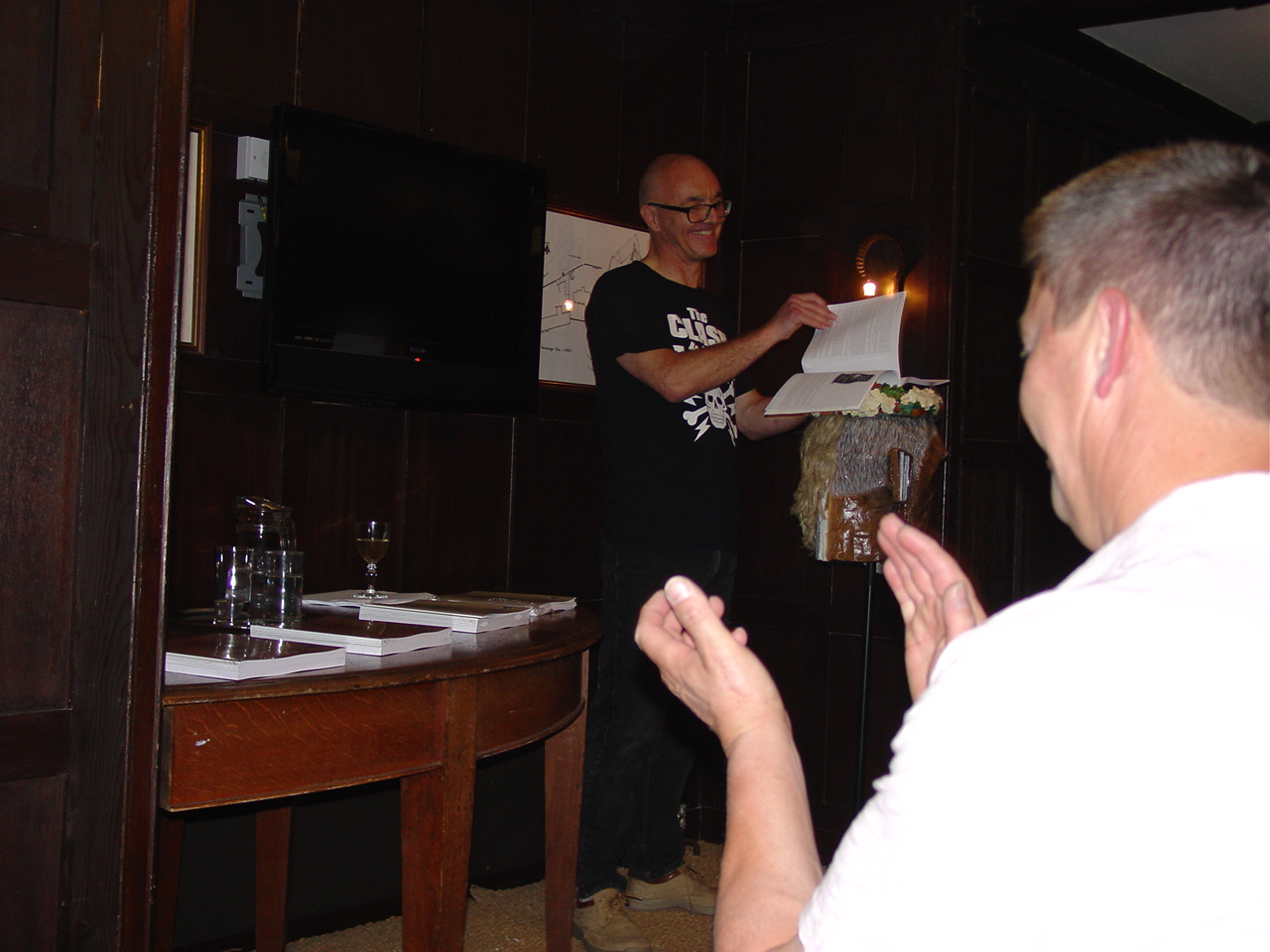
This feature draws attention to a Tudor warehouse on the South Quay in King's Lynn currently spearheading a drive to develop the Great Ouse waterfront. See also my earlier post 'Marriott's Warehouse' (first published in the Lynn News) and also on this blog. Don't miss the lecture series!
Marriott’s Warehouse– A History Of King’s Lynn In One Building
King’s Lynn has an unrivalled series of historic warehouses reflecting its status as a leading English port with a rich maritime heritage. Yet while historic York has no less than three heritage officers, guess how many Lynn, the Hanseatic capital of England has? Yes that’s right. None
The historical value of Lynn was not lost on the makers of the film Revolution, in which it represented New York circa 1776. But it often seems to have been lost on town planners.
Until now.
Lynn’s waterfront of Hanseatic buildings along the canalised Great Ouse, - waterfronts which in cities like Norwich or Bristol would have been celebrated as a vibrant cultural and heritage centres decades ago - is having a renaissance. And Marriott’s Warehouse on the old South Quay is leading it.
It is not the first renaissance to come to the port. It was during the Renaissance (in about 1450) that the land on which Marriott’s Warehouse stands was first reclaimed from the Great Ouse– it was just a landing stage then.
Though named after John and Thomas Marriott, Victorian business men with various properties on the South Quay, including a lease on part of the Hanse House, Marriott’s Warehouse was built during an upturn in the Tudor economy in the 1570s and ’80s, facing St Margaret’s Church.
It was this upturn that prompted Lynn developer Thomas Clayborne, a dealer in salt, corn and wine and the premier Lynn businessman of the time, that he needed a new warehouse for his merchandise.
The whole town was known then as ‘The Warehouse on the Wash.’ Wool, corn, salt, coal, wine, timber, fish filled the ships and Fenland lighters that sailed in and out of the great port of the Ouse, with access to the counties via the Great Ouse river system. Lynn’s merchants rebuilt their warehouses and mansions along the riverside streets and lanes in brick between 1580 and 1620 from the wealth generated by this trade.
But the foundations of this wealth were laid a Tudor generation earlier by the man who put the ‘King’ into King’s Lynn. Henry VIII
He wrested ‘Bishop’s Lynn’ from the control of the Bishop of Norwich in 1537; granted King’s Lynn permission to hold two weekly markets on Tuesdays and Saturdays, the two Tudor market places around which still define the look of this town; established the February Mart, which ran for nearly 500 years and founded King’s Lynn Grammar School, now KES, in 1510. His portrait still dominates its Great Hall.
And his royal hand is certainly visible in the frontage of Marriott’s Warehouse. The upper half is that famous Tudor brick; the lower is carboniferous limestone blocks, prime (and very expensive) building material in a Norfolk always short on natural building stone.
Only the Church could afford to buy and cart it in. Which they did to build the thriving mediaeval friaries of Whitefriars, Greyfriars and Lynn Priory, (where the Lynn visionary Margery Kempe dictated her famous Book). Until Henry knocked them down.
Henry’s Dissolution of the Monasteries brought demolished Church stone onto the market as part of the Tudor building boom. You can still see how some of the stones used in Marriott’s frontage in about 1570 have been shaped by their previous building use. They can also be found in other Lynn warehouses by the waterside like Clifton House.
The timbers in the ground floor/ceiling were felled in 1498/9 so were probably taken from dismantled friary buildings too. Other beams felled in 1569/70 and 1583/4 show that the building was almost certainly raised or built up in the 1580s when trade was booming.
Stand on the ground floor of Marriott’s today and you looking at an oak joist that was a sapling during the Black Death – the death rate in Norfolk was 50%, one of the worst hit areas. But don’t get your feet wet- you would be standing in the river itself back then! The shoreline was much nearer St Margaret’s Church than now.
The oak for that sapling was felled around the time Henry father, Henry VII, was arranging for Richard III to be buried under what is now a Leicester city car park.
Another ground floor joist - clearly re-used - may be a survivor from a building destroyed in the Great Fire of Lynn in 1414, in which Lynnites believed the prayers of Margery Kempe saved St Margaret’s from destruction
Before the quay was raised in modern times against the continuing risk of floods, the water actually lapped against the warehouse at high tide. In the floods of 1613, flood water stretched all the way from King’s Lynn to Terrington St Clement and 1000 people were drowned along with their livestock.
Even today, sandbags are piled inside the doorways of Lynn’s heritage shore as far as King St (called Stockfish St until renamed in 1809) and beyond. The impressive and unspoiled riverside buildings of this historic street follow the curve of what was once the strand of the mediaeval river - since removed by reclaimed and built-up land.
The Ouse remained Lynn’s lifeblood for centuries. Only the railways could rob Lynn of its position as a major English port, taking away much of its river and coastal traffic in the mid-19th century.
A hint of the good times returned after the burgeoning of trade between the UK and the EU in the 1970s as the balance tipped back from the Atlantic ports of Bristol and Liverpool. And the Russian voices that fill the night air of a modern Lynn evening are a reminder of the Hanseatic links that once defined the port.
In 1999/2000 Marriott’s Warehouse was restored as a visitor centre with a trust dedicated to environmental issues but the ending of Council grant made a rethink necessary - the emphasis is now on Lynn's exceptional historic built environment - particularly merchant houses and warehouses.
And now, as Trustees and Friends of Marriott’s Warehouse work together to bring these riches more into public view as part of a general development of the south quay, we enter a new and hopeful time for heritage in Lynn.
Warehouse Wisdom
A series of keynote autumn lectures will give an academic underpinning to the Trust’s popular history of Lynn.
Dr Simon Thurley tackles ‘Building in England’ on 3rd October and weekly Thursday night lectures by John Selby, Phil Haslam, Bryan Howling, Robin Stevenson, Professor Sandy Heslop and Susan Maddock will follow on Norfolk’s brick buildings; managing sustainable seas; the River Great Ouse in Lynn’s history; ‘rock and roll’ (about ballast); West Norfolk church-building and Streets and Records of Mediaeval Lynn.
A less formal companion series, Pleasant Sunday Afternoons (which began with Dr Richards’ fascinating talk on the German Hanse in Lynn 1271-1757 on Sunday 22) given by Bryan Howling, Dr Clive Bond, Robin Stevenson, Professor Fred Cooke, Fr Peter Rollings and Anne Whiting will explore salt production in Eastern England; the Origins of King’s Lynn; the building stones and geology of Marriott’s Warehouse; the Wash rivers from Roman times until present; Pilgrimage and the Port of Lynn; Mediaeval Castle Rising and Norman stone houses.
All talks will take place in the upper floor auditorium of the refurbished Marriott’s Warehouse. Trust Chairman Dr Paul Richards says “I am grateful to the distinguished speakers who have agreed to contribute to the re-launch of the educational activities of the Trust. The Trust’s charitable objectives are educational and it wants to increase understanding of its mission to the wider public. It is hoped the exciting new lecture programme will go some way to achieve this.”
For all Trust enquiries tel 07582 037301 .
© Gareth Calway 2013. Gareth’s stand up poetry show ‘From Creation to Cromer’ plays Elsing Village Hall on Oct 26; his ‘Beat Music It Was 50 Years Ago Today’ (Spoken word celebration of Beatlemania with guitar by John William) comes to Great Massingham Social Club and live Folkspot radio broadcast on Nov 10. His play Tom and Harry (about Norfolk-born Anne Boleyn) comes to Marriott’s Warehouse on Nov 28.
A bard on the wire, a voice in the wilderness, a home page for exiles trying to get home. Everybody is an exile. Maybe artists just realise it. "Like a bird on the wire, like a drunk in a midnight choir, I have tried, in my way, to be free."
Pages
- The Meanings of Christmas (EDP feature)
- Doin' Different
- Blog
- Perspectives on Literary and Linguistic Theory Part 2 Linguistic Theory
- Boudicca Britain's Dreaming
- Perspectives in Literary and Linguistic Theory Part 1. Critical Theory.
- Poem of the Month 2016-2020
- Tom and Harry
- Margery Kempe
- Doin’ different. (my 8th poetry collection) Poppyland Press 2015
- Exile in his Own Country (my 7th poetry collection) Bluechrome, 2006
- The Merchant of Bristol (my 4th poetry collection)...
- Britain's Dreaming (my 3rd poetry collection) - Fr...
- Boudicca
- Poem of the Month 2007-2015
- A Job To Remember
- The Merchant of Lynn's Tale
- A Robin Hood Lesson
September 25, 2013
Historic gem set for bright future (my EDP feature published 24 September 2013)
July 28, 2013
Sedgeford Historical Archeological Research Project 2013 (Lynn News)
Lynn News article link
The sketch is a conjectural reconstruction by Dr John Jolley (pictured, digging in the Lynn News article) of the industrial-scale oven (unearthed remnant pictured) that served Saxon Sedgeford.
The Sedgeford Historical Archaeological Research Project (SHARP) has just packed up its tents and marquees at the end of its eighteenth season. It has come a long way from that chance meeting off the Amalfi coast in 1996 between founder-director Dr Neil Faulkner, then conducting a tour of Roman archaeological sites, and renowned anthropologist Sedgeford Estate owner Bernard Campbell, whose ploughs frequently unearthed bones. Dr Faulkner’s 18th Annual Open Day talk ‘Who were the Anglo-Saxons?’ dismissed the view, established by the Venerable Bede in the 8th century and still learned by many of us at school twelve centuries later - that waves of axe-bearing Angles, Saxons and Jutes ‘invaded’ post-Roman Britain and established a barbarian bridgehead from which eventually all southern Britain became Angle-land.
On the contrary, these early ‘Saxons’ were a relatively democratic band of comrades-in-arms often actually joined by local Britons looking for leadership and protection in the ‘dark’ times after Roman withdrawal. It was no picnic crossing the North Sea in a small boat to start again on a north-facing coastal hill above the River Heacham. These vigorous egalitarian immigrants gave hope and leadership to a society that had fallen apart and where much of the toil had been done by slaves.
The modern-day village of Sedgeford, built on a gentle south-facing hill, has 600 inhabitants and lies within an area of outstanding natural beauty. In Saxon times, Sedgeford by contrast lay south of the river. SHARP’s original focus was a riverside graveyard mysteriously abandoned in Norman times but preserved in old mother’s threats to naughty children ‘you’ll be sent to the boneyard with the dead folk.’ This ‘Boneyard’ yielded Saxon burial and cremation – and a Viking woman buried with a horse – and a Late Saxon murder scene: a large healthy male with fatal wounds still etched into the skeleton by a Viking marauder, now an exhibit, as well as a crouch-burial dating from the Bronze Age.
Current excavations are of the ‘living space’ atop the hill. Though north-facing, this Sedgeford was sheltered from the prevailing wind and in the days of wattle and daub walls and thatched roofs –pole marks of these in the wattle are still visible – shelter may have weighed with locals as much as Conservation Area status does today. The find of the season is an industrial-scale oven (pictured) - with a Mid-Saxon handprint preserved in the hardened clay - set outside the village because of the fire-danger sparks and flames posed to thatched roofs. The rich Saxon soil it rests in puts ours to shame.
Diggers-for-a-day are so enthused by Debra Riches’ inductions they stay for week and come back annually, sifting through the shells of oysters eaten by our six foot plus forebears boated upriver to market as far as the Saxon harbour at Fring. If only the bread Saxon Sedgeford ate hadn’t contained so much grit, which wore out their teeth and plagued them with abscesses and septicaemia, we might envy their health and lifestyle .
Diggers range from archaeology scholars and students to enthusiastic amateurs of all ages and are a lively mixture of Norfolk (one man cycles in from King’s Lynn) national and international. Two locals whose future has been found in the Sedgeford trenches are Max Ogden from Snettisham, enthused by the dig aged 12, later graduate in Archaeology at Nottingham University, and Milly Foster of Sherbourne, a 16 year old SHARP digger just graduated in Archaeology at Reading. Postgraduate Alice Wolff from California explained the huge distance travelled as due to the international prestige of the site and the fact that East Anglia has so much more history than America under its quiet fields.
The past digging of 49 test pits in the gardens of Sedgeford villages themselves produced unexpected finds and included the community. Loss of revenue due to crop disturbance on the Sedgeford Estate is made good in a proportional donation made by SHARP to the church.
Once inducted, all diggers – like their namesakes in the English Civil War - have an equal say in how the project is run and over its finds. Dr Faulkner’s forthcoming book ‘Digging, Sedgeford; a people’s archaeology’ will be author-credited to ‘The SHARP team.’ If the school history many of us studied was found in Bede and a Sutton Hoo barrow in 1938 (not a great time for embracing our German heritage) , the future of school history may well come out of a trench in Sedgeford.
Director of SHARP since 2007 Mr Gary Rossin summed up, “The project’s founding objective was to research and explore human settlement and land usage within the parish of Sedgeford. The main focus of its eighteen years has been the Mid-Late Saxon period. There are important pieces of the jigsaw yet unfound, not to mention the picture on the box! In 2014, we’ll be revisiting glimpses of a Roman farmstead, a mediaeval manor, moving backwards and forwards from our continuing Saxon focus. And, on the centenary of World War 1, we will also revisit our research at the nearby aerodrome
For further information see www.sharp.co.uk (which includes a regularly updated webblog)
July 15, 2013
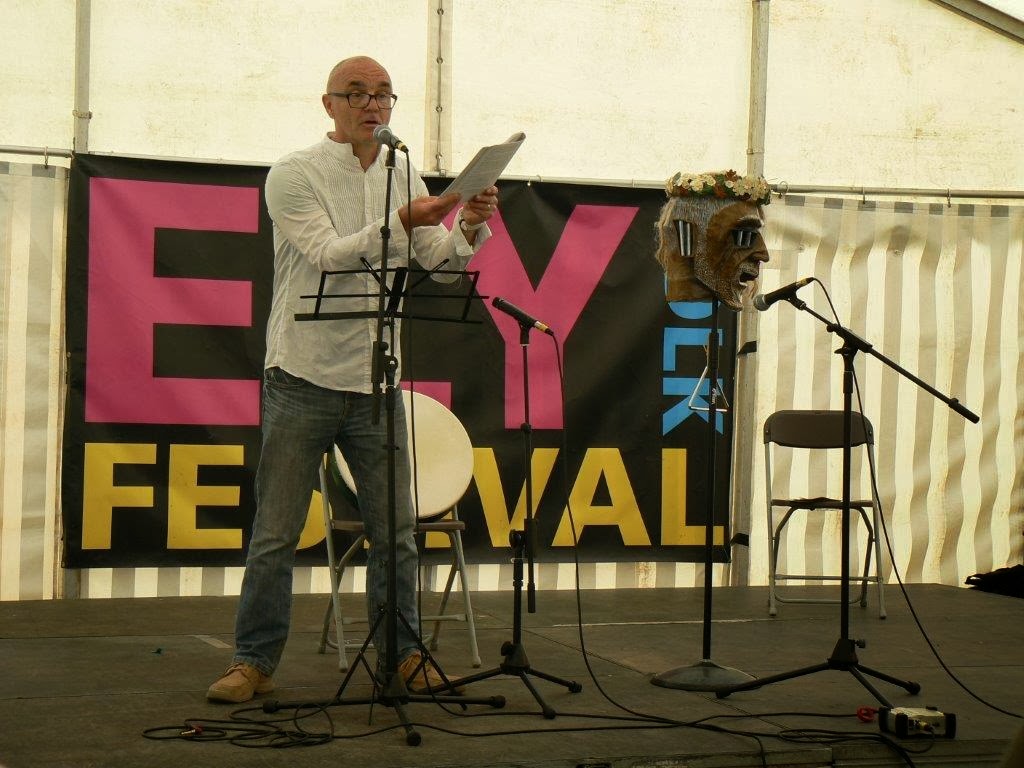
Been There, Done That, Got My Name On The T Shirt: Cromwell's Talking Head at Ely Folk Festival
'Cromwell's Talking Head' is a lively rehearsed reading of 30 minutes. It was the first ever spoken word hosted by Ely Folk Festival in July 2013, where it went down like a real ale in a hot marquee. It has an ongoing residency at Oliver Cromwell's House in Ely, bookings at Marriott's Warehouse Upstairs in King's Lynn and the Cromwell Museum in Huntingdon and tours pubs, clubs and storytelling venues.
Cromwell's Talking Head is in the horrible history genre and aimed at the naughty kid in all of us. But it's all true - Cromwell the king-killer really was dug up from his 'royal' grave at the Restoration, hung, drawn, quartered and his head stuck on a traitor's pole for 25 years. After centuries of adventures in freaks shows and dodgy museums, bits nicked by trophy hunters, and carrying a legendary curse, the head was authenticated by cranial detectives and in 1960 secretly buried at his old college in Cambridge University. Secretly in case drunken royalist students dig him up again! In the monologue, the head tells the ghastly story and the story of the Civil War to a young grave robber who has dug up more than he bargained for. It's funny, informative and not that comfortable for royal ears. You’ll laugh your head off!
'A triumph of narration and verbal colouring' (Radio Drama Reviews.)
To hear the Siren FM radio production, go to iTunes - https://itunes.apple.com/gb/podcast/the-reading-room/id399470470
SEE ALSO: http://garethcalway.blogspot.co.uk/2014/01/press-release-jan-15-2014-cromwells.html Cromwell's Talking Head winter tour 2014
At Ely 2013, I enjoyed the support of a youngster in the crowd named Ethan reminding me to hit the triangle at the head of each chapter and got lots of lovely feedback. Cromwell rides again!
CROMWELL'S TALKING HEAD ELY FOLK FESTIVAL
PRESS RELEASE JULY 2013
14 July is a great date for Republicans in France. But the French don’t have the monopoly on setting up republics and chopping off the heads of tyrannical kings. Our very own Oliver Cromwell might appreciate his story being told on Bastille Day at this year’s Ely Folk Festival, twenty minutes walk from his old stomping ground and national memorial at Oliver Cromwell’s House, and in the shadow of Ely Cathedral.
The great patriot – “we are English, that’s one good fact” - might point out that he headed up the English Revolution a ‘big hundred’ century before Robespierre and Bonaparte led the French. The humble gentleman farmer Cromwell, first as soldier and then as statesman, combines the positive qualities of both these French leaders. The English Empire he established in the 1650s held a position in the world higher than any other between Agincourt and Trafalgar – 400 years. English (round)heads were held high.
Until the Stuart Restoration in 1660. At this point, Cromwell’s body, preserved and buried (against his wish) in royal state in the tomb of soldier-king Henry VII, was dug up by vengeful royalists, hanged at Tyburn, drawn, quartered, beheaded, and its tooth-smashed, ear-torn head spiked on the roof of Westminster Hall: the punishment meted out by Charles II for beheading his father Charles I in 1649. Cromwell’s head remained on its spike for 25 years, surveying the Great Fire of London and enduring a quarter of a century of English weather, until finally removed by a thunderbolt .
Fire and smoke damage ensued as it was hidden up a chimney by an old soldier (one of the redcoats he and Sir Thomas Fairfax had formed during the Civil War into the victorious New Model Army) and then spent centuries in freak shows and dodgy museums, bits being broken off as souvenirs. The Curse of Cromwell’s Head was said to follow anyone who held it in his possession and gory tales bear witness to this so-called curse.
But the real story is gothic enough. As is the curse. Cromwell is not a great favourite with the royalist view of history and whenever kings were popular, Cromwell’s head was best kept secret. But when the English grew restless again under unpopular and self-indulgent monarchs - such as James II and even for periods of Victoria’s reign – this relic of our only republic became a focus for demands that Cromwell’s progressive politics be honoured.
The relic was validated ‘beyond all reasonable doubt’ as Cromwell’s actual head and buried in his old college at Sidney Sussex, Cambridge in 1960. A nearby plaque commemorates the fact but the actual whereabouts are kept secret for fear royalist students might dig it up again. And what a story the head could tell if it talked!
Well now it is. Gareth’s carefully researched dramatic monologue imagines the conversation when a grave robber exhumes the head at midnight. After two sell out performances at the House last year, it will be staged at this year’s festival in Marquee 3 between 2 pm and 2.50 pm on July 14.
July 05, 2013
5 July 1819
.

The Lynn News published this history feature here as a 'news' item on Susan Nobes' 194th anniversary. The Ballad of Susan Nobes, a ghost ballad where Susan haunts a boy on holiday in Sedgeford and tells her story, is soon to be published in SHARP's 2014 report.
June 30, 2013
The Ballad of Freeborn John

The Ballad of Freeborn John
The bloodiest war in our history
And one in four of us died
For a castled king on a stagnant throne
And a revolutionary tide.
‘I spilt my blood so I need a voice!’
Cries Freeborn John at Putney,
‘Who dies for England is England’s king,
We are no grandee’s army.
‘The poorest man in England has
The right to live as the greatest,
Our All in all is God the king
In every soul and breast.’
The bloodiest war in our history
And one in four of us died
For a castled king on a stagnant throne
And a revolutionary tide.
We’re the voice of the Freeborn Englishman
That was raised at Magna Carta,
The deathless flag of the Good Old Cause, the Bold
Dissenting Leveller.
I rose with Tyler, Straw and Ball
When peasants shook the kingdom,
I was sold down that river of blood by a king
Who hawked the soul of England.
We need no manor house and land
To fix our permanent interest,
We fight for England, our rights and ourselves:
No mercenary business.
The bloodiest war in our history
And one in four of us died
For a castled king on a stagnant throne
And a revolutionary tide.
I will strike with the Tolpuddle Martyrs,
I will die at Peterloo,
March to bloody hell at the Westgate Hotel
To win this England for you,
Die a million deaths in two world wars
Though the portion’s not so many
As died for Charles, that Man of Blood,
And in our redcoat Army.
A new model England truly advanced,
Through the royal ranks of sin
In a cavalry charge to a Future Now
Where God not man is king.*
The bloodiest war in our history
And one in four of us died
For a castled king on a stagnant throne
And a revolutionary tide.
*the epitaph on Cromwell’s tomb
During the English Civil Wars - in June 1647, at Putney, with the king under arrest - a proto-democratic assembly of elected New Model Army representatives debated a new constitution for England. The vision of ordinary men and what they had fought for received articulate expression and a level of consideration far beyond the intellectual level of the Stuart court or of the aristocratic 'Parliament.' 'Freeborn John' Lilburne was one of the key voices but there are many others like John Ball through history. The debates, often regarded as the cradle of modern democracy, were cut short by the 'Man of Blood' (Charles I) escaping and a second war beginning. Incredible that this Civil War, fought on principle rather than for tribal loyalties or pay, cost one in four English lives proportionally higher than World War I and II combined. The poem was first composed on St George's Day 2013, and the intention is to include it as a new folk song in my Cromwell's Talking Head show as a musical collaboration.
The chorus emphasises the two world views of the antagonists. Charles I was set up to fight the civil war in sieges from castles but it was decided by cavalry charges in pitched battles - the verb of dynamic progress against the noun of mediaeval reaction.
June 13, 2013
Marriott's Warehouse, King's Lynn
The text of my Lynn News article, published in the Lynn News on 07/06/2013 12:00
(pic and online link: http://www.lynnnews.co.uk/news/business-news/new-era-at-green-quay-s-marriott-s-warehouse-1-5170771)
Local historian, author and True’s Yard trustee Dr Paul Richards has launched an exciting new era for Lynn’s Marriott’s Warehouse.
Speaking to an audience of 36 potential “friends” in the spacious third-floor meeting room overlooking the river that once placed Lynn in the charmed circle of the 14th century Hanseatic League, Dr Richards, chairman of the Marriott’s Warehouse Trust, enthused about the rich heritage of Lynn in general and its warehouses in particular.
This is a phoenix moment for the beautiful old building, which along with conference room, now houses a newly appointed exhibition space on its first floor and a thriving ground floor restaurant.
Despite having arguably the best location in the town in terms of its Tudor heritage and a waterside that other ports – like Bristol or Norwich– have turned into vibrant cultural centres, the previous Green Quay cafe, and exhibition centre had to close on September 30 last year due to the economic downturn and a poor summer.
At that time, six people unfortunately lost their jobs. The re-launch has brought in a business partner to run the restaurant –it was buzzing with business and atmosphere two floors below as Mr Richards spoke. It has secured agreement for the name of the building to revert to its original and to integrate Marriott’s Warehouse into a general development of the South Quay as a tourist attraction.
The development includes six pontoons for pleasure boaters and an indoor market and bar with cafe at nearby Hanse House.
Dr Richards said: “Marriott’s Warehouse Trust’s mission will be to use this historic building to interpret and exemplify the history of the working port of Lynn over the centuries through the main themes of River, Trade, Buildings and People.
“This will be achieved through the establishment of a permanent exhibition on the first floor called The Warehouse on the Wash using many artistic media to demonstrate to the public how Lynn grew in trade, what the wealth of the port was based on as well as the natural setting of The Wash and the characters involved along the way.
“The other floors of the building will also contain exhibition space, with the top floor being used as a conference and meeting room by the Trust, and the ground floor licensed as a restaurant.”
Dr Richards added: “Recruiting new friends to the old building is seen by the Trustees as a vital way to keep the community involvement with Marriott’s Warehouse as well as help with fundraising and creating a core audience for the series of lectures and events planned for later in 2013.”
A six-week series of evening lectures from the end of September will include Simon Thurley, chief executive of English Heritage.
“Pleasant Sunday Afternoon” talks from September 22 will explore the broader themes in the long history of King’s Lynn, reviving an activity first popular in the town in 1890.
For further information about the new venture, contact: friends@marriottswarehousetrust.co.uk
(pic and online link: http://www.lynnnews.co.uk/news/business-news/new-era-at-green-quay-s-marriott-s-warehouse-1-5170771)
Local historian, author and True’s Yard trustee Dr Paul Richards has launched an exciting new era for Lynn’s Marriott’s Warehouse.
Speaking to an audience of 36 potential “friends” in the spacious third-floor meeting room overlooking the river that once placed Lynn in the charmed circle of the 14th century Hanseatic League, Dr Richards, chairman of the Marriott’s Warehouse Trust, enthused about the rich heritage of Lynn in general and its warehouses in particular.
This is a phoenix moment for the beautiful old building, which along with conference room, now houses a newly appointed exhibition space on its first floor and a thriving ground floor restaurant.
Despite having arguably the best location in the town in terms of its Tudor heritage and a waterside that other ports – like Bristol or Norwich– have turned into vibrant cultural centres, the previous Green Quay cafe, and exhibition centre had to close on September 30 last year due to the economic downturn and a poor summer.
At that time, six people unfortunately lost their jobs. The re-launch has brought in a business partner to run the restaurant –it was buzzing with business and atmosphere two floors below as Mr Richards spoke. It has secured agreement for the name of the building to revert to its original and to integrate Marriott’s Warehouse into a general development of the South Quay as a tourist attraction.
The development includes six pontoons for pleasure boaters and an indoor market and bar with cafe at nearby Hanse House.
Dr Richards said: “Marriott’s Warehouse Trust’s mission will be to use this historic building to interpret and exemplify the history of the working port of Lynn over the centuries through the main themes of River, Trade, Buildings and People.
“This will be achieved through the establishment of a permanent exhibition on the first floor called The Warehouse on the Wash using many artistic media to demonstrate to the public how Lynn grew in trade, what the wealth of the port was based on as well as the natural setting of The Wash and the characters involved along the way.
“The other floors of the building will also contain exhibition space, with the top floor being used as a conference and meeting room by the Trust, and the ground floor licensed as a restaurant.”
Dr Richards added: “Recruiting new friends to the old building is seen by the Trustees as a vital way to keep the community involvement with Marriott’s Warehouse as well as help with fundraising and creating a core audience for the series of lectures and events planned for later in 2013.”
A six-week series of evening lectures from the end of September will include Simon Thurley, chief executive of English Heritage.
“Pleasant Sunday Afternoon” talks from September 22 will explore the broader themes in the long history of King’s Lynn, reviving an activity first popular in the town in 1890.
For further information about the new venture, contact: friends@marriottswarehousetrust.co.uk
May 17, 2013
David Beckham
from The Beautiful Game
4. Something for The Weekend
Football is sex. When Beckham rammed that YEEEEEES
Down the crowd’s throat (with Campbell about to mount
Him behind) having opened his account
With England, and swivelled his hips like a lech
Because he’d scored with a country, no less,
The earth was moving for us all (our doubts
Stripped off, the World’s Cups in our grasp like founts
Of milk and honey) and joined our nakedness.
Sex at its very best, for what is sex
But love, or God, without the permanence,
A crude attempt at ending loneliness?
And what is football but a lonely crowd
Trying to score, a fallen Man, united,
Icarus over the moon and standing proud.
Thanks, David.
4. Something for The Weekend
Football is sex. When Beckham rammed that YEEEEEES
Down the crowd’s throat (with Campbell about to mount
Him behind) having opened his account
With England, and swivelled his hips like a lech
Because he’d scored with a country, no less,
The earth was moving for us all (our doubts
Stripped off, the World’s Cups in our grasp like founts
Of milk and honey) and joined our nakedness.
Sex at its very best, for what is sex
But love, or God, without the permanence,
A crude attempt at ending loneliness?
And what is football but a lonely crowd
Trying to score, a fallen Man, united,
Icarus over the moon and standing proud.
Thanks, David.
May 08, 2013
Who's Afraid of the Wolf?

The latest article to appear under my pioneer hep cat big howling folk correspondent byline in the Lynn News (that's me pictured surprised in situ by Alan Timms along with several of my Sony Mavica studies exclusive to this website) now available with further pics here
April 18, 2013
In Memoriam
In Memoriam.
This is from 'I Got On At Hallelujah Lamppost' written in the early '80s and published in Anglo Welsh Review in 1985 (my first professional publication.) Lately I've been performing it in the very different but always deeply appreciative settings of Norfolk folk: The Wolf - the Wolferton Folk Club, Norfolk - Tuesday 18 April and Folkspot Internet Radio the following Sunday. It's the sort of thing our daughter studied at University for her Thatcher's Britain course. Hang on, that wasn't history, that was our life! I did undercover work as a bus conductor (the Muse knew that - I thought I was paying the rent) to research this sequence of vignettes of the Eastern valley of Gwent: a kind of compressed verse novel encapsulating a modern industrial world. Until they got rid of the bus conductors... and then the steelworkers...and then the miners: they haven't got rid of poets - yet - so here it is. It's became much more prophetic in time with the old elegaic heavy metal community replaced by the cash-jingling 'MORE of lots of MORE to lose, mortuary bound' shiny new culture, as long as you had a job to pay for it. Wherever you stand in that debate - and families have been riven anew about it on Facebook all week - this is what happened in 'Thatcher's Britain' and this is what died to create it.
3. Fire & Brimstone
This valley had iron
In its guts,
Steeled itself to change
Moving with the trains,
Dug into its coal
For a port for the ores of Spain.
It had shod the Great Bear
Of the Steppes with skates
Made In Blaenafon
Had united the States
Across the wild west
With Monmouthshire iron.
And when King Coal called
For a Copper Grail
For his stainless steel Table,
Tongues of fire could purge
The iron in the soul
At Pontypool inferno.
4.
Conductor
The conductor stubs out
Nostalgia and fag
For the rush down valley,
While through his worn bag
Go all the colours of the river,
The green and the silver and the discoloured copper,
Changing
Forever.
5.
Afon Garde
Afon raging with the rain.
The cut steelworks sinks in the sodden clay.
Steel-faced pickets slam a portcullis
And draw up the bridge of their riverbank scrapyard:
The workers
United
Will never be defeated.
Red-soiled, livid, steaming, green,
Fed with liquid fire and gases,
Afon, desperate, blindly burrows
Like a dragon for the sea.
And all the Sunday School kids
Are Monday-morning singing....
The Word
Is on the dole
He'd rather give us the past tense of coalfield.
Emmanuel
Is on the dole
He's gone down the drain with all the rotten leaves.
Panteg steelworks at twelve o'clock,
Busmen chasing overtime, pickets - jobs,
Eyes calm as anthracite,
Clouds lined with lead
The workers
United
Will never be defeated.
6.
New Towns For Old
In Tal-y-waun
The girls are like leather, the beauty ingrained,
In 15, at 50, it remains, on the wane
Like the ghost of Coal always in the unworked vein
And what is already has, and what has will again
In Tal-y-waun.
In the the New Town
In the the New Town
In the the New Town
In the the New Town
The old canal is polished up, the gardens laid down,
And pushchair trolley women bus aroundaroundaround
And brakes and valves and services - autopias - abound.
Parked in his mother's arms high above the ground,
The brand new Son of Cymru gives a multistorey frown ,
MORE of lots of MORE to lose, mortuary-bound,
And after six, just trodden chips-
Not a soul to be found.
This is from 'I Got On At Hallelujah Lamppost' written in the early '80s and published in Anglo Welsh Review in 1985 (my first professional publication.) Lately I've been performing it in the very different but always deeply appreciative settings of Norfolk folk: The Wolf - the Wolferton Folk Club, Norfolk - Tuesday 18 April and Folkspot Internet Radio the following Sunday. It's the sort of thing our daughter studied at University for her Thatcher's Britain course. Hang on, that wasn't history, that was our life! I did undercover work as a bus conductor (the Muse knew that - I thought I was paying the rent) to research this sequence of vignettes of the Eastern valley of Gwent: a kind of compressed verse novel encapsulating a modern industrial world. Until they got rid of the bus conductors... and then the steelworkers...and then the miners: they haven't got rid of poets - yet - so here it is. It's became much more prophetic in time with the old elegaic heavy metal community replaced by the cash-jingling 'MORE of lots of MORE to lose, mortuary bound' shiny new culture, as long as you had a job to pay for it. Wherever you stand in that debate - and families have been riven anew about it on Facebook all week - this is what happened in 'Thatcher's Britain' and this is what died to create it.
3. Fire & Brimstone
This valley had iron
In its guts,
Steeled itself to change
Moving with the trains,
Dug into its coal
For a port for the ores of Spain.
It had shod the Great Bear
Of the Steppes with skates
Made In Blaenafon
Had united the States
Across the wild west
With Monmouthshire iron.
And when King Coal called
For a Copper Grail
For his stainless steel Table,
Tongues of fire could purge
The iron in the soul
At Pontypool inferno.
4.
Conductor
The conductor stubs out
Nostalgia and fag
For the rush down valley,
While through his worn bag
Go all the colours of the river,
The green and the silver and the discoloured copper,
Changing
Forever.
5.
Afon Garde
Afon raging with the rain.
The cut steelworks sinks in the sodden clay.
Steel-faced pickets slam a portcullis
And draw up the bridge of their riverbank scrapyard:
The workers
United
Will never be defeated.
Red-soiled, livid, steaming, green,
Fed with liquid fire and gases,
Afon, desperate, blindly burrows
Like a dragon for the sea.
And all the Sunday School kids
Are Monday-morning singing....
The Word
Is on the dole
He'd rather give us the past tense of coalfield.
Emmanuel
Is on the dole
He's gone down the drain with all the rotten leaves.
Panteg steelworks at twelve o'clock,
Busmen chasing overtime, pickets - jobs,
Eyes calm as anthracite,
Clouds lined with lead
The workers
United
Will never be defeated.
6.
New Towns For Old
In Tal-y-waun
The girls are like leather, the beauty ingrained,
In 15, at 50, it remains, on the wane
Like the ghost of Coal always in the unworked vein
And what is already has, and what has will again
In Tal-y-waun.
In the the New Town
In the the New Town
In the the New Town
In the the New Town
The old canal is polished up, the gardens laid down,
And pushchair trolley women bus aroundaroundaround
And brakes and valves and services - autopias - abound.
Parked in his mother's arms high above the ground,
The brand new Son of Cymru gives a multistorey frown ,
MORE of lots of MORE to lose, mortuary-bound,
And after six, just trodden chips-
Not a soul to be found.
April 15, 2013
Happy Birthday To Folkspot
http://www.lynnnews.co.uk/lifestyle/lifestyle-and-leisure-news/great-massingham-it-s-happy-birthday-to-folkspot-radio-1-4992392


The pictures are of Oliver's Army making our debut online, on air and onstage (never do things by halves) at Folkspot a week after the anniversary (on or about my 57th birthday) of Folkspot radio reported under my very own new byeline in the Lynn News. This is the article that made me a folk correspondent for my local community newspaper. And Oliver's Army are the band that heralded the beginning of my career as lyricist, lead poet, occasional vocalist - singing Green Shirt by Elvis Costello - backing vocalist and drummer in a folk-punk-prog band.
A big week! (We shouldn't have eaten that Pepper before we went out, though, judging by the first photo.)
That gig did for Margaret Thatcher anyway. She died the next day...
March 16, 2013
Gin Trap Folk
Go to Gin Trap Folk link - under Bard on the Wire pane opposite - for a write up of a typical Gin Trap Acoustic Evening in the digital edition the Lynn News 'Weekend Live'
Photos here by landlord Steve Knowles who also sings a capella in Italian and English at the evenings (including that heart-rending one from the The Godfather, Speak softly, love) Is there nothing the man can't do?


Photos here by landlord Steve Knowles who also sings a capella in Italian and English at the evenings (including that heart-rending one from the The Godfather, Speak softly, love) Is there nothing the man can't do?
March 06, 2013
Coming Home in Droitwich/ ‘Poetry Masterclass’ at Droitwich Spa High School

I called this ‘Last Tango In Droitwich’ in my diary because, after a teaching career that I finally gave up to be a full time writer and performer, I’m always telling myself it’s the last one. Just like the last five or six school visits I’ve done. I've had more comebacks than Frank Sinatra.
But this was, quite simply, the most enjoyable I’ve ever done. So maybe I really should stop now, at the top!
The day was four one hour sessions – with a twenty minute break after two hours - in the (excellent) library. The two middle hours were with Year 12. The outer two hours were with two top set English GCSE groups. The brief was to explain to Sixth Formers the link between poetic form and meaning – why write an ode or a villanelle or a sonnet for instance (or free verse for that matter, that’s a form too) ? ie form is a labour (of love) what does it give you? - and to encourage (extremely bright) Year 11s to sign up for English Literature in the Sixth Form.
My first decision was not to ‘teach’ – they get excellent teaching all day from people who know them and the courses much better than I - but to talk as a practitioner. Fortunately, my first book of poems Coming Home – published in 1991 when I had a shock of hair (and that biog pic is more and more of a shock these days) - is a compendium of poetic forms employed for a definite and evolving purpose. Coming Homee aims, ambitiously, to tells the story of evolution, historical development and then spiritual aspiration through a range of increasingly ‘conscious’ forms, including ‘free’ and modernist and minimalist ones. The final section is the Persian ghazal, a combination of intense freedom - lyrical, soaring emotion - with the tightest metre and rhyme imaginable. It is said to be the source of the Italian sonnet, which westernises some of its exotic Eastern/timeless features. On the way to this section, I explore a ‘formless’ form for gas, a villanelle for stone, terza rima for metal, free verse for vegetation, a rap for worm, a Petrarchan sonnet for human, a ballad for mediaeval, a dramatic monologue for Victorian etc. Re-encountering the book as I planned the ‘masterclass’ I found myself both grateful for the coherent compendium of verse forms and rather impressed by my young self’s ardour, and (as Ted Hughes wrote of them) the poems’ ‘tenacity, wholesomeness and strength.’ All of this came from the inspiration: a vision of ‘why we are here’ that accepted evolution but saw no reason to doubt a greater spiritual purpose in it.
My students for the day were awake to all this. By chance, there was a fly chart from a previous lesson announcing that three quarters of Americans don’t believe in Evolution. We wondered if ‘Creationism’ could be quite that widespread even in the Bible Belt of the USA but nevertheless the sophistication with which Year 11 students approached the philosophy in my introductory ‘Invocation’ where evolution is set within a framework of human potential for the divine was staggering. We hear a lot about how ‘kids today’ don’t read enough, are lost in special effects cinema and text speak etc etc. Well, these weren’t. The way they debated whether there was anything inherently masculine in the all flash and no substance persona I used to ‘become’ Halley’s Comet was confident, articulate and masterly. I have never been so sorry to see a class go. I think by the end of the day we might have split the atom and also sketched out the poetic music for a mould-breaking spoken word Sergeant Pepper.
The Sixth Form applied themselves to the link between form and meaning with increasing insight and it was clear to both the teacher Mr Izod (or Fat Bloke as he permitted me to call him when I said was it all right to call him ‘David’) and myself that all they needed to do was trust their instincts for how form created meaning and then merely have the confidence to articulate this in the critical language their teachers have taught them. I was sorry not to get on to the Chorus of Greek Philosophers I had planned in which the whole group could have taken part but I did enjoy the way a boy and a girl performed the ‘male’ and ‘female’ voices of my Song of the Wedding Rings. They said there was no danger of a personal romance and marriage emerging from their dialogue but poetry is a kind of spell so you never know. That said, I originally wrote that poem for a wedding service – which another married couple also used – and both marriages ended in divorce so maybe not. More immediately, the students started to see what all the precision engineering that goes into crafting words into terza rima gives a poet that merely – and much more easily - writing lines of dialogue doesn’t. The fact that the sections allocated to ‘He’ and ‘She’ rhymed internally but (unlike Romeo and Juliet) never with each other was noticed and understood. The fact that a poet has to cut out all the dross verbiage and really concentrate the meaning into that tight –jewel-like– form. The fact that there is forward progression (unlike a villanelle) but that progress is slow, as in the grinding away of ego towards real marriage etc etc. All very like working with gold.
As was the whole day, in fact. Thank you Droitwich. My Last Tango. Until the next one?
See also: http://garethcalway.blogspot.co.uk/p/poem-of-month.html Stone
February 26, 2013
February 12, 2013
Kasturi mriga
Yes, the image is of the musk deer (a deer of the Himalayas) as you might expect. But if you put 'kasturi mriga' into a google search engine - DON'T FORGET TO ADD THE 'A' AT THE END OF KASTURI MRIGA OTHERWISE YOU GO TO ANOTHER SITE - you might get all sorts of surprise images in addition to this expected one. I did, including several of myself in poet mode, not to mention my wife having a 35 year reunion dinner with her old history teacher, a curry house in Norwich and several other mysteries!
I am assuming, perhaps wrongly, that my blog labels are responsible for these as I use the kasturi mriga in several of my blog-posted ghazals (an Indian love lyric originating in Persia.) The third couplet from 'My Valentine' ghazal (see my previous post, Your Valentine?) is one such:
My Valentine is a priestess who trails her heaven scent
To hell and back round a navel the musk-deer endlessly roves.
The extract quoted below is where it is coming from.
" There is a beautiful story of a Kasturi-mriga* which brings out the nature of all spiritual Sadhana. Once, while roaming about and frolicking among hills and dales, the Kasturi-mriga was suddenly aware of an exquisitely beautiful scent, the like of which it had never known. The scent stirred the inner depths of its soul so profoundly that it determined to find its source. So keen was its longing that notwithstanding the severity of cold or the intensity of scorching heat, by day as well as by night, it carried on its desperate search for the source of the sweet scent. It knew no fear or hesitation but undaunted went on its elusive search until, at last, happening to lose its foothold on a cliff, it had a precipitous fall resulting in a fatal injury. While breathing its last the deer found that the scent which had ravished its heart and inspired all these efforts came from its own navel. This last moment of the deer’s life was its happiest, and there was on its face inexpressible peace. "
from Meher Baba's spiritual discourse The Deeper Aspects of Sadhana
Whenever I read this fable of the quest of love, in which the little self 'dies', it seems to jog a memory of something deeply true (and exquisitely beautiful) and there have been nods of audience recognition as I've been performing that couplet and its source story this week. Whether it's just a story or whether the endangered musk deer really do chase their own inner heavenliness all over their natural habitat, I don't know. But I'm sure human beings do.
I am assuming, perhaps wrongly, that my blog labels are responsible for these as I use the kasturi mriga in several of my blog-posted ghazals (an Indian love lyric originating in Persia.) The third couplet from 'My Valentine' ghazal (see my previous post, Your Valentine?) is one such:
My Valentine is a priestess who trails her heaven scent
To hell and back round a navel the musk-deer endlessly roves.
The extract quoted below is where it is coming from.
" There is a beautiful story of a Kasturi-mriga* which brings out the nature of all spiritual Sadhana. Once, while roaming about and frolicking among hills and dales, the Kasturi-mriga was suddenly aware of an exquisitely beautiful scent, the like of which it had never known. The scent stirred the inner depths of its soul so profoundly that it determined to find its source. So keen was its longing that notwithstanding the severity of cold or the intensity of scorching heat, by day as well as by night, it carried on its desperate search for the source of the sweet scent. It knew no fear or hesitation but undaunted went on its elusive search until, at last, happening to lose its foothold on a cliff, it had a precipitous fall resulting in a fatal injury. While breathing its last the deer found that the scent which had ravished its heart and inspired all these efforts came from its own navel. This last moment of the deer’s life was its happiest, and there was on its face inexpressible peace. "
from Meher Baba's spiritual discourse The Deeper Aspects of Sadhana
Whenever I read this fable of the quest of love, in which the little self 'dies', it seems to jog a memory of something deeply true (and exquisitely beautiful) and there have been nods of audience recognition as I've been performing that couplet and its source story this week. Whether it's just a story or whether the endangered musk deer really do chase their own inner heavenliness all over their natural habitat, I don't know. But I'm sure human beings do.
February 08, 2013
Your Valentine?
Now available via the purchase page of this website priced £2.50 plus postage: a very tasteful 150 mm square art card under a plastic cover with envelope using my televised Persian ghazal 'My Valentine is a picture, her painted eye like a rose.' The eye occupies the entire front cover and the ghazal/love lyric is on the reverse. The poem got to the semi finals of the National Ghazal Competition as screened by Hindi Picture for Channel 4. Ghazals are accompanied by heartfelt music and sung in an Indian style, full of longing, but very beautiful. Just the job for a Valentine? I performed it as spoken word at Wolferton Folk Club last night, deep in the royal woods and with deer's eyes shining in the headlights on the way home.
My Valentine is a picture, her painted eye like a rose,
Her body held in a soft flame of stillness, freed in a pose.
My Valentine is a dancer, unfastened hair like a tide,
Her fingers fly out of time's rut: and pluck my heart as it blows.
My Valentine is a priestess, who trails her heaven scent
To hell and back round a navel the musk-deer* endlessly roves.
My Valentine is a goddess, her neck is softer than sky:
She turns to me like a planet, and everything else explodes.
O heart, this quest is your own end, you're lost and that's why you win,
You’re stripped of even your held breath and kiss what God alone knows.
*The Kasturi-mriga, a deer of the Himalayas whose navel yields musk.
FACING PAGE
with love.....
END NOTES
Room at the Gin productions: combining words, music, theatre and visual arts in a greater whole.
Tel: 01485 571828 (orders welcome) www.garethcalway.co.uk
Persian ghazal (lyric) © Gareth Calway 2013
Macro shot of eye by Barbara Humphries, used with permission.
Though the sophisticated scoff at those who drink the dregs
They will lose their faith when they arrive at the tavern door.
Hafez
February 02, 2013
Room at the Gin
A Punktured History of Britain From Creation to Cromwell kicked off the Room at the Gin cross-arts adventure for 2013 at the Gin Trap Inn, Ringstead, last night. A fusion of poetry, music and storytelling was heartily enjoyed by a full house of 19, spanning three generations aged 8 to 60+, drawn from all over North and West Norfolk, laughing in all the right places and joining in the choruses with gusto. Gareth told our island story from an alternative viewpoint - one where Boudicca, queen of Norfolk, with statues in London and Cardiff, might have a statue in Norfolk (instead of museums telling her story from the Roman point of view) and Oliver Cromwell a statue in every major city rather than an 'executed' head hidden away in Sidney Sussex College, Cambridge in case drunken royalists exhume and mutilate his remains again as at the Restoration. Peter Butterworth performed three new folk songs, featuring stirring music he has composed to accompany Gareth's historical ballads about Cromwell, King Arthur and Ann Boleyn. (The duo performed Cromwell's Talking Head earlier in the week at Oliver Cromwell's House in Ely.) The enjoyment of performers and audience alike was boosted by the unusually resonant acoustics of the back restaurant which perfectly suited the art of voice, drum and guitar on offer. Cindy and Steve gave a warm welcome as always and were pleased at the resounding success the event.
Gareth wrote and performed in the first 'Room at the Gin' event last December which used the stable to explore the roots of Christmas.
In each case, the idea is to select a room at the Gin Trap Inn that suits the material being staged. The next 'Room at the Gin' event, scheduled for the spring - a fusion of theatre, poetry and music - will explore how King Henry got rid of another Norfolk queen, Ann Boleyn, who is said to still haunt Blickling Hall every May 19.
http://www.lynnnews.co.uk/lifestyle/lifestyle-and-leisure-news/ringstead-one-man-show-gives-a-gory-taste-of-history-1-4695460
January 25, 2013
A Punktured History of Britain from Creation to Cromwell
Crowded House are singing
Julius Caesar
And the Roman Empire
Couldn't conquer the blue sky...
Far away and long ago, the land was divided and leaderless.
A great king, a dragon head, was needed
To unite the people and drive out the invaders...
As the leaves of summer break in spring
From forest, field and tree
So let the spirit’s freedom burst
From the walls of this Priory...
I am wild to hold, though I seem so tame,
More fair than mortals can say
And I sold my heart for a worldly crown
And I'll take your breath away...
Ann Boleyn, King Arthur, Boudicca, The Peasants Revolt, not in that order. All this and much else besides a week today at the Gin Trap. And that's just the first half before Cromwell. Don't miss this punky sleigh ride through British history!
I'm posting this on Burns Night Day and with Murray hopefully saltiring Britain towards an Aussie Open final. There's nothing Little England ('let's ditch Scotland, let's ditch Europe, let's disappear up our Offa's dyke') about the Britain I celebrate here.
Julius Caesar
And the Roman Empire
Couldn't conquer the blue sky...
Far away and long ago, the land was divided and leaderless.
A great king, a dragon head, was needed
To unite the people and drive out the invaders...
As the leaves of summer break in spring
From forest, field and tree
So let the spirit’s freedom burst
From the walls of this Priory...
I am wild to hold, though I seem so tame,
More fair than mortals can say
And I sold my heart for a worldly crown
And I'll take your breath away...
Ann Boleyn, King Arthur, Boudicca, The Peasants Revolt, not in that order. All this and much else besides a week today at the Gin Trap. And that's just the first half before Cromwell. Don't miss this punky sleigh ride through British history!
I'm posting this on Burns Night Day and with Murray hopefully saltiring Britain towards an Aussie Open final. There's nothing Little England ('let's ditch Scotland, let's ditch Europe, let's disappear up our Offa's dyke') about the Britain I celebrate here.
January 15, 2013
PRESS RELEASE- CROMWELL’S TALKING HEAD (January 14 )
January 30 is an ominous date in any royal calendar. It was the day Charles I was beheaded in 1649. But did you know that Oliver Cromwell was also beheaded (not to mention hanged, drawn and quartered) on that date in 1660? The crucial difference being that Cromwell had already been dead and buried for two years when it happened! Norfolk author Gareth Calway’s dramatic monologue tells the story.
Cromwell, one of the 57 signatories of Charles I’s death warrant, died in 1658 as England’s only Republican Head of State and was buried with great honour and embalmed ( against his wishes) as a king. But at the Restoration, his reviled body was exhumed, disgraced and the head put on a spike on top of Westminster Hall. It remained there for 25 years until a lightning bolt removed it. It was smuggled away the next morning by an old soldier and hidden up a chimney for decades and then had an extraordinary and often gruesome afterlife before eventually being buried secretly at Sidney Sussex College, Cambridge in 1960. A plaque there commemorates the fact. So the East Anglia which gave Cromwell his first prominence remains haunted by his story and the old revolutionary head remains at the heart of an England he dominated.
Gareth’s carefully researched dramatic monologue makes the most of the gory aspects of this true gothic story and was a sell out success when it was performed at Oliver Cromwell’s House on Sep 3 (the date of Cromwell’s decease in 1658 and of his three mightiest victories in 1649,1650 and 1651).
Cromwell’s Talking Head will be touring as a one man show this year and you can see the performance at two East Anglian venues at the end of this month: on January 30 itself at Oliver Cromwell’s House in Ely (reserve tickets on 01353 662062, £7.50 includes tour of house and glass of Cromwell cider) at 2 pm and then at the Gin Trap Inn, Ringstead on February 1st at 8.30 pm, preceded by a first half A Punktured History of Britain. (reserve tickets on 01485 571828, £7)
Further details contact Melanie Calway on melaniecalway@gmail.com or on 01485 571828
ancyrian, cole green, sedgeford, norfolk, PE36 5LS
http://garethcalway.blogspot.co.uk/2012/09/my-new-book-and-first-collaboration.html There is a podcast at:
http://readingroom.podbean.com/2012/07/23/room-29-cromwell%E2%80%99s-talking-head-by-gareth-calway-%E2%80%93-a-reading-room-special/
and a review at:
http://www.radiodramareviews.com/id1161.html
Cromwell's Talking Head (text/art book)
Dramatic monologue by Cromwell’s severed head with folklore/fantasy illustrations; "A triumph of narration and vocal colour" (Radio drama reviews); "Interesting and lively new take on Cromwell" (Cromwell House Museum).
On sale at Oliver Cromwell’s House, by ISBN 978 0 9573960 0 5 and on www.garethcalway.co.uk
Cromwell's Talking Head will be featured on the Afternoon Show on Radio Norfolk on Tuesday 29 after three pm.
http://www.cambridge-news.co.uk/Ely/Fun-and-games-to-mark-Charles-Is-grisly-demise-01022013.htm for an online front page in the Ely edition of the Cambridgeshire Evening News.
January 30 is an ominous date in any royal calendar. It was the day Charles I was beheaded in 1649. But did you know that Oliver Cromwell was also beheaded (not to mention hanged, drawn and quartered) on that date in 1660? The crucial difference being that Cromwell had already been dead and buried for two years when it happened! Norfolk author Gareth Calway’s dramatic monologue tells the story.
Cromwell, one of the 57 signatories of Charles I’s death warrant, died in 1658 as England’s only Republican Head of State and was buried with great honour and embalmed ( against his wishes) as a king. But at the Restoration, his reviled body was exhumed, disgraced and the head put on a spike on top of Westminster Hall. It remained there for 25 years until a lightning bolt removed it. It was smuggled away the next morning by an old soldier and hidden up a chimney for decades and then had an extraordinary and often gruesome afterlife before eventually being buried secretly at Sidney Sussex College, Cambridge in 1960. A plaque there commemorates the fact. So the East Anglia which gave Cromwell his first prominence remains haunted by his story and the old revolutionary head remains at the heart of an England he dominated.
Gareth’s carefully researched dramatic monologue makes the most of the gory aspects of this true gothic story and was a sell out success when it was performed at Oliver Cromwell’s House on Sep 3 (the date of Cromwell’s decease in 1658 and of his three mightiest victories in 1649,1650 and 1651).
Cromwell’s Talking Head will be touring as a one man show this year and you can see the performance at two East Anglian venues at the end of this month: on January 30 itself at Oliver Cromwell’s House in Ely (reserve tickets on 01353 662062, £7.50 includes tour of house and glass of Cromwell cider) at 2 pm and then at the Gin Trap Inn, Ringstead on February 1st at 8.30 pm, preceded by a first half A Punktured History of Britain. (reserve tickets on 01485 571828, £7)
Further details contact Melanie Calway on melaniecalway@gmail.com or on 01485 571828
ancyrian, cole green, sedgeford, norfolk, PE36 5LS
http://garethcalway.blogspot.co.uk/2012/09/my-new-book-and-first-collaboration.html There is a podcast at:
http://readingroom.podbean.com/2012/07/23/room-29-cromwell%E2%80%99s-talking-head-by-gareth-calway-%E2%80%93-a-reading-room-special/
and a review at:
http://www.radiodramareviews.com/id1161.html
Cromwell's Talking Head (text/art book)
Dramatic monologue by Cromwell’s severed head with folklore/fantasy illustrations; "A triumph of narration and vocal colour" (Radio drama reviews); "Interesting and lively new take on Cromwell" (Cromwell House Museum).
On sale at Oliver Cromwell’s House, by ISBN 978 0 9573960 0 5 and on www.garethcalway.co.uk
Cromwell's Talking Head will be featured on the Afternoon Show on Radio Norfolk on Tuesday 29 after three pm.
http://www.cambridge-news.co.uk/Ely/Fun-and-games-to-mark-Charles-Is-grisly-demise-01022013.htm for an online front page in the Ely edition of the Cambridgeshire Evening News.
January 06, 2013
Broadcast on Folkspot Radio
The script of an hour-long music and spoken word collaboration performed live on Folkspot radio on January 6 2013 (at Great Massingham) surveying British history and arts projects scheduled for the year ahead - text written (with a little help from Neil Young and The Beatles) and performed by yours truly. The music (except where indicated) was written and performed by Mark Fawcett.
'Well I dreamed I saw the knights in armour coming
Saying something about a queen.
There were peasants singing and drummers drumming
And the archer split the tree.
There was a fanfare blowing to the sun
That was floating on the breeze...' (Neil Young)
Far away and long ago, the land was divided and leaderless. Barbarians invaded from north, east and south. A great king, a dragon head, was needed to unite the people and drive out the invaders. Such a king would prove himself by drawing out from a weathered rock a wondrous sword. Many years passed and many strong men failed. At last, a boy succeeded. His name was Arthur. He established a great fastness called Camelot and trained a band of mounted warriors called The Knights of the Round Table. Together, they drove out the barbarians:
At the end of the world,
Death-cries in long-axed waves on the wind,
The howling of sea-wolves
Breaking from thick throats like heart’s hope
At the end of the world,
The cry of a thousand farmboys dead...
Surrendering ground for thundering hooves to sunder the Saxon.
Space to die in
Or my name’s not Arthur...
Our heels print the end of that world in a line
In the westering turf that gives back and holds and gives back and holds and gives back and
holds and holds and pens it
Lladd, for the explosive, mounted lightning charge of the British
Driven against a last ditch in their own land
There, like a squealing boar for slaughter.
A hard British line in the soft wet turf
These pirate pig-English could not read/
Though shoved around later
By strokes of non-combatant Latin/
And monks who couldn’t fight/.
Celtic hoof-prints that would not admit/
Corbenic deconsecrated/
The Grail put to hard use in kitchens/
Grail-maiden wastes fertilised/
In fierce field-brothels of endless yielding/
Gwenhwyfar plucked as a concubine/
Her white phantom beauty/
Laid like a ghost on a bloodstained bed/
And called by a C word that isn’t Cymru/
Breeding an Angle country/
Whose monk-curse is less than the air/
Saesneg is written on / the snorting ash/
Civitas burns to./ Instead of which/
(drums)
Thanks to our play of thundering hooves/
Thundering hooves in defence of these islands/
The land remains Britain for fifty years/
And Logres forever!
(German) And tomorrow belongs to me. (wielding axe) Tiw’s day, Woden’s day, Thor’s day, Freya’s day.
© Gareth Calway 2011
Hello Jennifer in Calfornia, Howard in Andalucia, Emma and Tony in Brighton and Kevin in the Cafe Abersychano. And all the others who dig us. I said ‘the time of King Arthur’ and so far I’ve stayed in a sixth century in which there may well have been a British cavalry general – possibly even called Arthur – who kept the invaders at bay for 50 years. There is archaeological evidence for this. But after that Arthur passes into Welsh legend via a dreadful summer without sunshine caused by a meteor striking the world or an underwater volcano - popularly remembered as the start of the Dark Ages - and in due course into Norman and mediaeval romance.
12C Welsh Monk
God sends a bolt from the heavens, fire and brimstone from under the earth. In 536, a summer without sunshine all over the world. In 539, Arthur and his dark son Mordred, the evil one, murder each other at the icy battle of Camlaan. Morrigan Macha Bodbh, Celtic triple goddess of birth, marriage and death – Mordred’s mother, Arthur’s sister – ships him beyond the sunset to the mystical isle of Avalon. From Avalon, Arthur watches as his realm of Logres, his faithful Lancelot and his queen Guinevere are all consumed by a love too hungry for this world ...and for six of the seven heavens.
Sixth Heaven (ghazal, with Indian music)
Lancelot (sings and speaks alternate couplets)
Your face that burns upon my Eye in searing fiery gale:
More clear than any seen on earth or heavenward trail.
Sir Lancelot has failed at last, by love’s Cup undone.
His thought and self are shrivelled lifting Guinevere’s veil.
I see your face in everything, but cannot leap the gulf
Between belief in what I see and being what I fail.
She feels his wreck in her, a bliss that pierces his heart
And bleeds from hers like wounds of Passion’s holiest nail.
The agony of longing long, the ecstasy of pain
In love-struck hearts the Sun uplifts through bars of a gaol!
The Sun is Everything and nothing isn’t the Sun:
A black hole all-consumed in one whole - yet shadows prevail.
In sainted flames of love, with nothing else it can see
It burns away in grief, this Eye that can’t have the Grail.
O Lancelot, her Absent Heart is All to you now.
She’s in the Seventh Sun, where Lovers leap and visions...fail.
© Gareth Calway 2012
from the Ballad of Margery Kempe
Speaking of visions, we have a famous one in West Norfolk. Margery Kempe was a burgess’s wife in Bishop’s Lynn in the late 14C, early 15C (the reigns of Richard II and Henry IV Part 1 – Black Death, Peasants Revolt.) Lynn was a great seaport then second only to London on the east coast and part of the Hanseatic union and Margery’s father was mayor and sheriff several times. But after twenty years of breeding fourteen children with her slightly hopeless husband, John, she started dressing in the white robes of a holy woman and going off on dangerous pilgrimages to Rome and the Holy Land, weeping loudly about Jesus’ suffering to the annoyance of many churchmen who tried unsuccessfully to control her. She later dictated a book about her experiences – the Book of Margery Kempe - which is said to be the first autobiography in English. She is credited with saving St Margaret’s, her beloved parish church, from the Great Fire of Lynn in 1421 by prayer – and various practical suggestions to God about how to put it out (sending a snowstorm.) Her book describes the visions she had all her adult life, including the holy ghost as a noisy dove bellowing in her right ear which she requested God change into a merry robin. We’re hoping to stage our show - the Book Launch of Margery Kempe – at St Margaret’s itself later this year. Here she tells her story:
God tunes the bellows in my ear
Into a robin’s song
And sails my soul to holy lands
Through world and priestly storm.
Each babe in arms this creature sees
Is Christ the child to me
And every handsome man in Rome
His manhood deity.
Though York’s Archbishop damn my tears
As Lollard-work or Devil’s
The anchoress of Norwich says
‘They do the work of angels.
‘The Devil has no power where
Contrition and compassion
Weep humbly from a homely heart
In agonies of passion.’
But, Mother, does this roaring passion,
This bottomless weeping well,
This tongue of hot consuming flame
Fly out from heaven or hell?
For long ago I sinned a sin
That’s never been confessed,
(Except to God) a Lollard sin
Or else a sin of flesh
And though unworldly now I seem
And lost in visions quite
I brewed, had fourteen babes, before
I dressed in virgin white.
And cut a dash through Bishop’s Lynn
Proud daughter of its Mayor,
My cloaks with modish tippets slashed,
And gold pipes in my hair
Till hearing heaven’s Song of Songs
I shunned the gutter’s ooze
‘And though you rule me, husband dear,
A single life I choose.’
‘But Margery, does this roaring passion,
This bottomless weeping well,
This tongue of hot consuming flame
Fly out from heaven or hell?’
John, every pilgrim step I trudged
From wedlock’s grave mundane
And churchman’s plot, was heaven-winged
By doves that sang God’s name...
© Gareth Calway 2012
Speaking of churchmen’s plots, Binham Priory – where we staged a show last summer – has a history worthy of Peyton Place. , Priors going truant, or being put in irons, revolting peasants burning the rolls, haunted walls and of course the whole drama of the Dissolution of the Monasteries. Here’s our Dylanesque take on it all.
Dissolution Row: The Ballad of Binham Priory
Call their names from the rubble: Alexander de Langley,
Mad as a scholar – ‘here’.
William de Somerton, William Dyxwell,
Priors and bad boys - ‘here.’
A mad monk in solitary’s dungeon-chains,
Tortured to brake his devil;
Alchemy funded by holy sales,
Sieges, arrests and trouble;
Monks eating bran and drinking rain
Till King John raised the siege;
A wanderlust prior, administ-truant,
Deposed and then reprieved.
As the leaves of summer break in spring
From forest, field and tree
So let the spirit’s freedom burst
From the walls of this Priory.
The peasants were revolting here
In 1381
When Master Lister led the charge
And derring does were done.
‘Enough!’ he cried, ‘of fattened bishops
Fed on Priory rolls,
Enough of tenants, rents and lords
And serfdom’s heavy loads.’
‘I’ll join that fight!’ said Binham John Lister
To his name-sake of Felmingham
George whose Norfolk Peasant Spring
Brought mayhem into Binham.
‘As the leaves of summer break in spring
From forest, field and tree
So let the spirit’s freedom burst
From the walls of this Priory!’
In Norwich, the Bishop Dispenser caught wind
Of the peasants’ merry fire,
And the Fightin’ Bishop’s fist of stone
Killed it with his ire.
‘Lister of Felmingham, for sins against
Your betters and your King,
I’ll have your guts for my Bishop’s garter
And the serfs can kiss my ring.’
‘You can have my neck and guts’ said Lister
But my soul flies straight to heaven
When Adam delved and Eve span, ‘lord’,
What rents were recked in Eden?
‘As the leaves of summer break in spring
From forest, field and tree
So let the spirit’s freedom burst
From the walls of this Priory.’
The old order stood another six generations,
A flint face carved in art
Then Lister’s spirit came back to haunt
The Priory’s stony heart:
He laughed as King Henry’s Inspectors Called,
‘Found fault’ with the Priory rolls,
‘Down with these rood screens, saints and crowns
And idol Gods on poles;
‘Whitewash these saints from the walls of the nave,
A clear new page for the Word,
Your bishops’ bank is ruined now
There are no serfs to herd!
‘As the leaves of summer break in spring
From forest, field and tree
So let the spirit’s freedom burst
From the walls of this Priory.’
This high Notre Dame of Norfolk shrunk
To a nave-sized Parish Church,
Abandoned wings sold off for stone
To men scarce more than serfs
But when Paston quarried the haunted pile
To build a house in the grounds,
A wall killed a workman and none to this day
Will build in Priory bounds.
Three miles to the West, Roman relics and smoke
Rise again from Celtic Earth
Like the re-appeared saints whose rooted gaze
Reclaim the walls of this church.
As the leaves of summer break in spring
From forest, field and tree
So let the spirit’s freedom burst
From the walls of this Priory.
Let the holy rain of autumn fall
From the solitary tree
And the grass grow wild and the four winds blow
Through the grounds of this Priory.
© Gareth Calway 2012
The great legs of Henry VIII loom large over the Dissolution and he’s also the subject of another show of ours: Tom and Harry, which features the Norfolk-landed woman they had in common, Ann Boleyn. Tom is Sir Thomas Wyatt who was Ann’s first love later replaced by Henry VIII. Wyatt was put in the Tower for committing what was in effect retrospective adultery with Ann and from the Tower he watched her beheaded. Here I imagine the thoughts that went through that head the last morning of her life.
ANN Why would Henry kill six adulterers to destroy me when one would do? That was the Seymours, annihilating the competition. Jane Seymour – by refusing him hers - had his lips; her faction his ears. The court flew from my weakness. I refused to smile on Henry’s affairs. Jane showed ‘gentleness’ in this, I ‘cursedness’. Bad move. They say Henry never spared a man his fury or a woman his lust. And that his hand pulled the strings of the English Reformation. But I know his hand. It lures, ignores, manipulates, leads, abandons. It’s his other hand you’ve got to watch, the one stroking a pregnant belly. The world he imagined he made real: plots everywhere, the strong to his side, or his bed, the weak to the scaffold. The only defence is to counter-attack first, like Thomas Cromwell. We were too slow. I watched my brother hanged, drawn and quartered, spilling the guts he’d shown before. This morning, I will ‘be beheaded or burned at the king’s pleasure.’ All the pleasure I once gave Henry’s body has won me this mercy: a blade instead of the flames. The king never had my heart, he says, and he will have my clever head on its stiff Protestant neck for it, while Norfolk my accuser blooms like a rose in June, all the offices, grants and honours in the world vouchsafed by that one failsafe: royal favour. Tom, you had my fickle heart once and kissed my neck like you meant it, praising its yielding softness. (hands on neck) Pray for that softness now.
The Ghost of Anne Boleyn
I stole to the door of Blickling Hall
On the nineteenth night of May
And met the ghost of Anne Boleyn
Shining bright as day.
Six headless horses drew her coach
A headless coachman drove,
‘Give them their head!’ she laughed, then turned
On me her look of love.
‘Oh lordly, learnéd, manly face
Where force and beauty meet
Oh sport, debate and war with me:
Renaissance man complete.
I sought you once, who later flew,
I stalked you in your chamber
With night gown slipping from my arms
Before my lips spelled danger.
How like you this? I whispered then
And kissed you wild and free
As blood-red roses, soft and sweet,
Before the King took me.
I lost my head for the rose of the world
And the rose withered on the thorn,
A hunted hind whose fickle heart
Died for the loudest horn.’ –
Her white hands stole around my neck,
I screamed with stolen breath
‘O save me from this dreadful witch
And a fate much worse than Death!’
Her Lutheran brow as bright as the moon
A smile like the blossom of May
Her hair raven-black but her lovely head
Twisted the other way.
Her neck of worm-picked bones was ringed
With a bloody royal band
Engraved ‘I am Caesar’s’ in diamonds chaste,
And King’s gold on her hand.
‘I am wild to hold, though I seem so tame,
More fair than mortals can say
And I sold my heart for a worldly crown
And I’ll take your breath away.’
‘I am not your True Thomas!’ I cried in dread.
And her witch face turned away
‘Ah! You’ve named the angel who guards my grave
I can no longer stay.
I lost my head for the rose of the world
And the rose withered on the thorn
A hunted hind whose fickle heart
Spiked the largest horn.
© Gareth Calway 2012
And here’s the old villain himself, a man who made history in his own giant image if anyone ever can.
Henry VIII You’re looking at the biggest in England, whatever she said to her ladies of the bedchamber. The first thing I learned was never trust a courtier. Back-watching ministers like Sir Henry Wyatt feathering his own nest. I grew up over-protected, watchful, wary. But they’re all wary of me now. What Dad grabbed at Bosworth wasn’t the glorious England of Henry V. It was a farmyard stuck in the Middle Ages: deserted, backward, inward, a dunghill on France’s doorstep still recovering from the Black Death about 100 years slower than the rest of Europe. Edward III ruled five million people. Richard II, twenty five years of Black Death later, half that. Now, after twenty five years of me, everything’s soaring: population, rents, prices, land speculation, commerce, enclosures, evictions. Consumables at 231%. Uprooted peasants flooding the towns and wages falling. But my Tudors: the landowners, commercial farmers, property investors, the nobility, the gentry, the merchants, the land-grabbers making it yield: all rich and getting richer. We’ll be conquering Europe again soon like the knights of old. Meanwhile, my Renaissance men – handsome soldier- scholars strutting Italy and France - sing Italian sonnets to my Tudor rose and their hearts out to ladies they can’t have! Hands off, Master Wyatt, she’s mine! (laughs) What did the Irishman say? The foundation stone of the Protestant Church are the balls of King Henry VIII’ ? If that’s true I’m a Dutchman. Erasmus was writing his Greek and Latin New Testaments at Cambridge when I was a young king dancing Spanish steps on the graves of my father’s councillors. The Renaissance had come to Little England, closely followed by Luther’s Reformation, not mine. Ann’s circle brought Lutherism to my court but it wasn’t her Bible I married her for. Luther said priests should give up their concubines and marry: their balls, not mine.
© Gareth Calway 2012
The Ruined Hall (Fye Bridge House, Norwich, in the Romantic Era)
Strange that an Encyclopaedic Age
Leaves Fye Bridge House un-reckoned on its page.
But wait! A lace-cuffed bard with limpid eye
Is haunted by a spirit thrilling by.
“She walks in beauty, like the night
In ages past when full moon shone
Upon the helmet of the questing knight
As if it were his lady pale and wan.
She haunts the former greatness of the Hall,
The heavenly night-flights of a higher age,
Her skin is white as death, her spectral
Figure rises from the poet’s page.
She seeks that Ruined Hall and sings
An elegy for days before a floor
Plucked window’s eye and clipped the wings
Of church-like spaces walked before.
She plays a dulcimer and on her lips
The milk of Paradise is glowing still
And rosy-red the wine... or blood, she sips
With eager thirst beyond a mortal’s fill.
Her cup is charged again, again, and ever:
Her road to wisdom’s Palace is excess;
Her rose lips wailing for her demon lover
And dark eyes staring in her naked breasts!’
The poet sings his verse with heaving breast
And swoons upon the vision he evokes
And heaves his fainting heart into his mouth
And on her milk of Paradise he...chokes.
‘A restless spirit! Wild! Unbounded! Free!
A waking beauty past all human measure;
She falls upon my thorns of life. I bleed!
Her gates of Eden open at my ple-….”
Alas! A pounding at the door, the vision flies!
The Vicar calls on business, and the poem ...dies!
© Gareth Calway 2006
A...men.
She Loves You. (chorus, sung in fifths)
Spectre: I’ve always loved that plucky bastard. Ever since we were boys miming his three cool cat choir, great clunking guitar solos and Cavernous drum from Mam’s laundry slats. Raw whoops of joy in four-part harmony. Anything that you want. Ushering in a decade that lost the plot but found the music.
- The French aren’t sure about The Beatles. What do you think of them?
Beatle: Oh, we like the Beatles.
- How can you bear teenagers imitating you by wearing Beatle wigs?
Beatle: They’re not imitating us because we don’t wear Beatle wigs…
Spectre: I cried when the Dave Clark Five toppled them along with the Christmas decorations in 1963 and Mam said it was All Over. When the Fabs were Christmas Number One again in 1964 she said it again. She said it again when they were Christmas Number One in 1965. I thought for an awful moment that when she said it again at Christmas 1966, a Christmas without a Beatles Christmas single after a year without a Beatles British tour, that she was right. When the YEAHverly brothers were back at Christmas Number One again in 1967, she stopped saying it. For Christmas 1969, she bought me my first, their last Christmas Number One album. She called it Happy Road. I was twelve then and, unlike Father Christmas, they hadn’t let me down. They were still here, holding hands that wash dishes, hands that cup faces, hands flung at diamonds, hands ringed with dreams, shake-it-up baby faces, sweet little teens. Filling Nowhereland with the soundtrack of luv.
“John, there is a Stamp Out The Beatles movement under way in Detroit. What you going to do about it?”
Beatle: “We have a plan to stamp out Detroit.”
There is also an Adopt the Beatles movement in the British royal family.
The Queen (in a Christmas Day party hat): Where are you playing next?
Beatle: Slough.
The Queen: Oh that’s near us.
It is looking down its hooter at John. ...
The Queen: “And which one are you?”
Beatle: “I’m the one with the big dick!
Spectre: ‘Those in the cheap seats, clap your hands. The rest of you just rattle your jewellery.’
The Queen: “Oh haw haw haw!”
Spectre: Oedipus Sex. Conquering the planet. Saving the city. And getting the girl.
Beatle: She loves you (both) Yea Yeah Yeah
© Gareth Calway 2012
That’s from It Was Fifty Years Ago Today, our Beatles show. Frightening to think that exactly 50 years ago, Love Me Do was at No. 17 in the charts and Beatlemania was about to seize the world. We’d like to end with a more distant history associated with that great water that surrounds us in Norfolk: the North Sea. We started with King Arthur: here’s the story seen from the point of view of the villains in that piece, the Angles who have given their name to East Anglia and to Angle-land. What was it like to for a young Angle to cross that dreadful ocean and then face the British?
Angle
The fire’s flames flee from dark’s dagger drawn,
trees’ twigs tremble my blood runs cold,
death-dread from deeps from hills, from hollows, through night-silence numbs my axe-aching arms…
Now darky-feet drumming sheep-feet, horse-feet,
wolf-howl, bear-roar, rain-start and rain-stop;
today’s crop of slaves stir by my lord’s boat,
the half-clearing crowds with ghosts from bad dreams;
no light now but starlight fierce as gods’ faces
to kindle my blood or make sure my sight:
a witch of a watch slumped in snake-fern
and no song of heroes to cheer my chilled cheeks.
When I boast man’s beard I’ll bear with my kin
the boat-gorging wave-road’s spite-spitting storms
and go from this fell ground back to the faderland...
© Gareth Calway 1991
Finally, a millennium after those doughty English, the unsung heroes who kept England fed at a key time in its growth: the cod fishers of the Iceland fleet, many drawn from Norfolk. Not only did they have to face the boat-gorging wave-road and a summer anchored six miles off Iceland, they were heavily taxed on their return and the price of their cargo kept artificially low. As English as cod and chips before the chips and natural recruits for the Royal Navy, this is our tribute to those old salts.
The Ballad of the Cod Fishers
A tribute to an unsung group of men (and their families) who delivered artificially cheap nourishment to England at a time of booming population and unprecedented economic growth from the Elizabethan period ot the Industrial Revolution. Survivors were natural recruits to the Royal Navy. The Oliver here is Cromwell. The Mayor is Thomas Toft (Mayor of Norwich 1654)
The Mayor he sits in Norwich town
Eating his snow-white cod
‘This fair meat of the northern wastes
Is English as our God.
We need a fleet to bring it home
To feed our growing nation
Of salts who sail close to the wind
And closer to starvation.’
The frozen price of Iceland cod
Is Norwich Market cheap
But the rising tax on catch and salt
Makes tar and fishwife weep.
Oh these chippy men of Nelson’s breed
Who braved the northern seas
They paid the highest price of all
And the meanest price received.
The Iceland fleet sails north in March,
Great ships of forty men,
The doughtiest hearts in England’s shores
From Eastern shire and fen.
Such crews as drive the men of war
To English Victory
Cured by these waves, the saltest men
Who ever put to sea.
Fierce winds and tides have blocked for weeks
Their course through Pentland Firth,
The nearest place to death and hell
On all God’s Christian earth.
Oh these chippy men of Nelson’s breed
Who braved the northern seas
They paid the highest price of all
And the meanest price received.
And the Danish King sits like a storm
That broods upon a shore:
‘Six miles off Iceland you must toss
Nor trade nor fish there more!’
‘No time, sea-lads, for those native cures
And cods hung out to dry,
Our summer catch is steeped in salt
To keep it from the fly
And salt is taxed at rising rates
By Oliver’s excise
And ten score cod per loaded ship
His officers will prise.’
Oh these chippy men of Nelson’s breed
Who braved the northern seas
They paid the highest price of all
And the meanest price received.
Widows and traders who keep afloat
These ventures seal their loan
With a premium more than twice the mean
For so many come not home.
O long the Jack Tar’s journey home
And deep the briny ocean
And toothsome was the bone-white cod
That fed a hungry nation.
And long the Norwich fishwives stand
With wood combs in their hair
In August at the river’s edge
When fish nor men appear.
Oh these chippy men of Nelson’s breed
Who braved the northern seas
They paid the highest price of all
And the meanest price received.
Gareth Calway 2012
Broadcast text(except where indicated) copyright Gareth Calway 2013
'Well I dreamed I saw the knights in armour coming
Saying something about a queen.
There were peasants singing and drummers drumming
And the archer split the tree.
There was a fanfare blowing to the sun
That was floating on the breeze...' (Neil Young)
Far away and long ago, the land was divided and leaderless. Barbarians invaded from north, east and south. A great king, a dragon head, was needed to unite the people and drive out the invaders. Such a king would prove himself by drawing out from a weathered rock a wondrous sword. Many years passed and many strong men failed. At last, a boy succeeded. His name was Arthur. He established a great fastness called Camelot and trained a band of mounted warriors called The Knights of the Round Table. Together, they drove out the barbarians:
At the end of the world,
Death-cries in long-axed waves on the wind,
The howling of sea-wolves
Breaking from thick throats like heart’s hope
At the end of the world,
The cry of a thousand farmboys dead...
Surrendering ground for thundering hooves to sunder the Saxon.
Space to die in
Or my name’s not Arthur...
Our heels print the end of that world in a line
In the westering turf that gives back and holds and gives back and holds and gives back and
holds and holds and pens it
Lladd, for the explosive, mounted lightning charge of the British
Driven against a last ditch in their own land
There, like a squealing boar for slaughter.
A hard British line in the soft wet turf
These pirate pig-English could not read/
Though shoved around later
By strokes of non-combatant Latin/
And monks who couldn’t fight/.
Celtic hoof-prints that would not admit/
Corbenic deconsecrated/
The Grail put to hard use in kitchens/
Grail-maiden wastes fertilised/
In fierce field-brothels of endless yielding/
Gwenhwyfar plucked as a concubine/
Her white phantom beauty/
Laid like a ghost on a bloodstained bed/
And called by a C word that isn’t Cymru/
Breeding an Angle country/
Whose monk-curse is less than the air/
Saesneg is written on / the snorting ash/
Civitas burns to./ Instead of which/
(drums)
Thanks to our play of thundering hooves/
Thundering hooves in defence of these islands/
The land remains Britain for fifty years/
And Logres forever!
(German) And tomorrow belongs to me. (wielding axe) Tiw’s day, Woden’s day, Thor’s day, Freya’s day.
© Gareth Calway 2011
Hello Jennifer in Calfornia, Howard in Andalucia, Emma and Tony in Brighton and Kevin in the Cafe Abersychano. And all the others who dig us. I said ‘the time of King Arthur’ and so far I’ve stayed in a sixth century in which there may well have been a British cavalry general – possibly even called Arthur – who kept the invaders at bay for 50 years. There is archaeological evidence for this. But after that Arthur passes into Welsh legend via a dreadful summer without sunshine caused by a meteor striking the world or an underwater volcano - popularly remembered as the start of the Dark Ages - and in due course into Norman and mediaeval romance.
12C Welsh Monk
God sends a bolt from the heavens, fire and brimstone from under the earth. In 536, a summer without sunshine all over the world. In 539, Arthur and his dark son Mordred, the evil one, murder each other at the icy battle of Camlaan. Morrigan Macha Bodbh, Celtic triple goddess of birth, marriage and death – Mordred’s mother, Arthur’s sister – ships him beyond the sunset to the mystical isle of Avalon. From Avalon, Arthur watches as his realm of Logres, his faithful Lancelot and his queen Guinevere are all consumed by a love too hungry for this world ...and for six of the seven heavens.
Sixth Heaven (ghazal, with Indian music)
Lancelot (sings and speaks alternate couplets)
Your face that burns upon my Eye in searing fiery gale:
More clear than any seen on earth or heavenward trail.
Sir Lancelot has failed at last, by love’s Cup undone.
His thought and self are shrivelled lifting Guinevere’s veil.
I see your face in everything, but cannot leap the gulf
Between belief in what I see and being what I fail.
She feels his wreck in her, a bliss that pierces his heart
And bleeds from hers like wounds of Passion’s holiest nail.
The agony of longing long, the ecstasy of pain
In love-struck hearts the Sun uplifts through bars of a gaol!
The Sun is Everything and nothing isn’t the Sun:
A black hole all-consumed in one whole - yet shadows prevail.
In sainted flames of love, with nothing else it can see
It burns away in grief, this Eye that can’t have the Grail.
O Lancelot, her Absent Heart is All to you now.
She’s in the Seventh Sun, where Lovers leap and visions...fail.
© Gareth Calway 2012
from the Ballad of Margery Kempe
Speaking of visions, we have a famous one in West Norfolk. Margery Kempe was a burgess’s wife in Bishop’s Lynn in the late 14C, early 15C (the reigns of Richard II and Henry IV Part 1 – Black Death, Peasants Revolt.) Lynn was a great seaport then second only to London on the east coast and part of the Hanseatic union and Margery’s father was mayor and sheriff several times. But after twenty years of breeding fourteen children with her slightly hopeless husband, John, she started dressing in the white robes of a holy woman and going off on dangerous pilgrimages to Rome and the Holy Land, weeping loudly about Jesus’ suffering to the annoyance of many churchmen who tried unsuccessfully to control her. She later dictated a book about her experiences – the Book of Margery Kempe - which is said to be the first autobiography in English. She is credited with saving St Margaret’s, her beloved parish church, from the Great Fire of Lynn in 1421 by prayer – and various practical suggestions to God about how to put it out (sending a snowstorm.) Her book describes the visions she had all her adult life, including the holy ghost as a noisy dove bellowing in her right ear which she requested God change into a merry robin. We’re hoping to stage our show - the Book Launch of Margery Kempe – at St Margaret’s itself later this year. Here she tells her story:
God tunes the bellows in my ear
Into a robin’s song
And sails my soul to holy lands
Through world and priestly storm.
Each babe in arms this creature sees
Is Christ the child to me
And every handsome man in Rome
His manhood deity.
Though York’s Archbishop damn my tears
As Lollard-work or Devil’s
The anchoress of Norwich says
‘They do the work of angels.
‘The Devil has no power where
Contrition and compassion
Weep humbly from a homely heart
In agonies of passion.’
But, Mother, does this roaring passion,
This bottomless weeping well,
This tongue of hot consuming flame
Fly out from heaven or hell?
For long ago I sinned a sin
That’s never been confessed,
(Except to God) a Lollard sin
Or else a sin of flesh
And though unworldly now I seem
And lost in visions quite
I brewed, had fourteen babes, before
I dressed in virgin white.
And cut a dash through Bishop’s Lynn
Proud daughter of its Mayor,
My cloaks with modish tippets slashed,
And gold pipes in my hair
Till hearing heaven’s Song of Songs
I shunned the gutter’s ooze
‘And though you rule me, husband dear,
A single life I choose.’
‘But Margery, does this roaring passion,
This bottomless weeping well,
This tongue of hot consuming flame
Fly out from heaven or hell?’
John, every pilgrim step I trudged
From wedlock’s grave mundane
And churchman’s plot, was heaven-winged
By doves that sang God’s name...
© Gareth Calway 2012
Speaking of churchmen’s plots, Binham Priory – where we staged a show last summer – has a history worthy of Peyton Place. , Priors going truant, or being put in irons, revolting peasants burning the rolls, haunted walls and of course the whole drama of the Dissolution of the Monasteries. Here’s our Dylanesque take on it all.
Dissolution Row: The Ballad of Binham Priory
Call their names from the rubble: Alexander de Langley,
Mad as a scholar – ‘here’.
William de Somerton, William Dyxwell,
Priors and bad boys - ‘here.’
A mad monk in solitary’s dungeon-chains,
Tortured to brake his devil;
Alchemy funded by holy sales,
Sieges, arrests and trouble;
Monks eating bran and drinking rain
Till King John raised the siege;
A wanderlust prior, administ-truant,
Deposed and then reprieved.
As the leaves of summer break in spring
From forest, field and tree
So let the spirit’s freedom burst
From the walls of this Priory.
The peasants were revolting here
In 1381
When Master Lister led the charge
And derring does were done.
‘Enough!’ he cried, ‘of fattened bishops
Fed on Priory rolls,
Enough of tenants, rents and lords
And serfdom’s heavy loads.’
‘I’ll join that fight!’ said Binham John Lister
To his name-sake of Felmingham
George whose Norfolk Peasant Spring
Brought mayhem into Binham.
‘As the leaves of summer break in spring
From forest, field and tree
So let the spirit’s freedom burst
From the walls of this Priory!’
In Norwich, the Bishop Dispenser caught wind
Of the peasants’ merry fire,
And the Fightin’ Bishop’s fist of stone
Killed it with his ire.
‘Lister of Felmingham, for sins against
Your betters and your King,
I’ll have your guts for my Bishop’s garter
And the serfs can kiss my ring.’
‘You can have my neck and guts’ said Lister
But my soul flies straight to heaven
When Adam delved and Eve span, ‘lord’,
What rents were recked in Eden?
‘As the leaves of summer break in spring
From forest, field and tree
So let the spirit’s freedom burst
From the walls of this Priory.’
The old order stood another six generations,
A flint face carved in art
Then Lister’s spirit came back to haunt
The Priory’s stony heart:
He laughed as King Henry’s Inspectors Called,
‘Found fault’ with the Priory rolls,
‘Down with these rood screens, saints and crowns
And idol Gods on poles;
‘Whitewash these saints from the walls of the nave,
A clear new page for the Word,
Your bishops’ bank is ruined now
There are no serfs to herd!
‘As the leaves of summer break in spring
From forest, field and tree
So let the spirit’s freedom burst
From the walls of this Priory.’
This high Notre Dame of Norfolk shrunk
To a nave-sized Parish Church,
Abandoned wings sold off for stone
To men scarce more than serfs
But when Paston quarried the haunted pile
To build a house in the grounds,
A wall killed a workman and none to this day
Will build in Priory bounds.
Three miles to the West, Roman relics and smoke
Rise again from Celtic Earth
Like the re-appeared saints whose rooted gaze
Reclaim the walls of this church.
As the leaves of summer break in spring
From forest, field and tree
So let the spirit’s freedom burst
From the walls of this Priory.
Let the holy rain of autumn fall
From the solitary tree
And the grass grow wild and the four winds blow
Through the grounds of this Priory.
© Gareth Calway 2012
The great legs of Henry VIII loom large over the Dissolution and he’s also the subject of another show of ours: Tom and Harry, which features the Norfolk-landed woman they had in common, Ann Boleyn. Tom is Sir Thomas Wyatt who was Ann’s first love later replaced by Henry VIII. Wyatt was put in the Tower for committing what was in effect retrospective adultery with Ann and from the Tower he watched her beheaded. Here I imagine the thoughts that went through that head the last morning of her life.
ANN Why would Henry kill six adulterers to destroy me when one would do? That was the Seymours, annihilating the competition. Jane Seymour – by refusing him hers - had his lips; her faction his ears. The court flew from my weakness. I refused to smile on Henry’s affairs. Jane showed ‘gentleness’ in this, I ‘cursedness’. Bad move. They say Henry never spared a man his fury or a woman his lust. And that his hand pulled the strings of the English Reformation. But I know his hand. It lures, ignores, manipulates, leads, abandons. It’s his other hand you’ve got to watch, the one stroking a pregnant belly. The world he imagined he made real: plots everywhere, the strong to his side, or his bed, the weak to the scaffold. The only defence is to counter-attack first, like Thomas Cromwell. We were too slow. I watched my brother hanged, drawn and quartered, spilling the guts he’d shown before. This morning, I will ‘be beheaded or burned at the king’s pleasure.’ All the pleasure I once gave Henry’s body has won me this mercy: a blade instead of the flames. The king never had my heart, he says, and he will have my clever head on its stiff Protestant neck for it, while Norfolk my accuser blooms like a rose in June, all the offices, grants and honours in the world vouchsafed by that one failsafe: royal favour. Tom, you had my fickle heart once and kissed my neck like you meant it, praising its yielding softness. (hands on neck) Pray for that softness now.
The Ghost of Anne Boleyn
I stole to the door of Blickling Hall
On the nineteenth night of May
And met the ghost of Anne Boleyn
Shining bright as day.
Six headless horses drew her coach
A headless coachman drove,
‘Give them their head!’ she laughed, then turned
On me her look of love.
‘Oh lordly, learnéd, manly face
Where force and beauty meet
Oh sport, debate and war with me:
Renaissance man complete.
I sought you once, who later flew,
I stalked you in your chamber
With night gown slipping from my arms
Before my lips spelled danger.
How like you this? I whispered then
And kissed you wild and free
As blood-red roses, soft and sweet,
Before the King took me.
I lost my head for the rose of the world
And the rose withered on the thorn,
A hunted hind whose fickle heart
Died for the loudest horn.’ –
Her white hands stole around my neck,
I screamed with stolen breath
‘O save me from this dreadful witch
And a fate much worse than Death!’
Her Lutheran brow as bright as the moon
A smile like the blossom of May
Her hair raven-black but her lovely head
Twisted the other way.
Her neck of worm-picked bones was ringed
With a bloody royal band
Engraved ‘I am Caesar’s’ in diamonds chaste,
And King’s gold on her hand.
‘I am wild to hold, though I seem so tame,
More fair than mortals can say
And I sold my heart for a worldly crown
And I’ll take your breath away.’
‘I am not your True Thomas!’ I cried in dread.
And her witch face turned away
‘Ah! You’ve named the angel who guards my grave
I can no longer stay.
I lost my head for the rose of the world
And the rose withered on the thorn
A hunted hind whose fickle heart
Spiked the largest horn.
© Gareth Calway 2012
And here’s the old villain himself, a man who made history in his own giant image if anyone ever can.
Henry VIII You’re looking at the biggest in England, whatever she said to her ladies of the bedchamber. The first thing I learned was never trust a courtier. Back-watching ministers like Sir Henry Wyatt feathering his own nest. I grew up over-protected, watchful, wary. But they’re all wary of me now. What Dad grabbed at Bosworth wasn’t the glorious England of Henry V. It was a farmyard stuck in the Middle Ages: deserted, backward, inward, a dunghill on France’s doorstep still recovering from the Black Death about 100 years slower than the rest of Europe. Edward III ruled five million people. Richard II, twenty five years of Black Death later, half that. Now, after twenty five years of me, everything’s soaring: population, rents, prices, land speculation, commerce, enclosures, evictions. Consumables at 231%. Uprooted peasants flooding the towns and wages falling. But my Tudors: the landowners, commercial farmers, property investors, the nobility, the gentry, the merchants, the land-grabbers making it yield: all rich and getting richer. We’ll be conquering Europe again soon like the knights of old. Meanwhile, my Renaissance men – handsome soldier- scholars strutting Italy and France - sing Italian sonnets to my Tudor rose and their hearts out to ladies they can’t have! Hands off, Master Wyatt, she’s mine! (laughs) What did the Irishman say? The foundation stone of the Protestant Church are the balls of King Henry VIII’ ? If that’s true I’m a Dutchman. Erasmus was writing his Greek and Latin New Testaments at Cambridge when I was a young king dancing Spanish steps on the graves of my father’s councillors. The Renaissance had come to Little England, closely followed by Luther’s Reformation, not mine. Ann’s circle brought Lutherism to my court but it wasn’t her Bible I married her for. Luther said priests should give up their concubines and marry: their balls, not mine.
© Gareth Calway 2012
The Ruined Hall (Fye Bridge House, Norwich, in the Romantic Era)
Strange that an Encyclopaedic Age
Leaves Fye Bridge House un-reckoned on its page.
But wait! A lace-cuffed bard with limpid eye
Is haunted by a spirit thrilling by.
“She walks in beauty, like the night
In ages past when full moon shone
Upon the helmet of the questing knight
As if it were his lady pale and wan.
She haunts the former greatness of the Hall,
The heavenly night-flights of a higher age,
Her skin is white as death, her spectral
Figure rises from the poet’s page.
She seeks that Ruined Hall and sings
An elegy for days before a floor
Plucked window’s eye and clipped the wings
Of church-like spaces walked before.
She plays a dulcimer and on her lips
The milk of Paradise is glowing still
And rosy-red the wine... or blood, she sips
With eager thirst beyond a mortal’s fill.
Her cup is charged again, again, and ever:
Her road to wisdom’s Palace is excess;
Her rose lips wailing for her demon lover
And dark eyes staring in her naked breasts!’
The poet sings his verse with heaving breast
And swoons upon the vision he evokes
And heaves his fainting heart into his mouth
And on her milk of Paradise he...chokes.
‘A restless spirit! Wild! Unbounded! Free!
A waking beauty past all human measure;
She falls upon my thorns of life. I bleed!
Her gates of Eden open at my ple-….”
Alas! A pounding at the door, the vision flies!
The Vicar calls on business, and the poem ...dies!
© Gareth Calway 2006
A...men.
She Loves You. (chorus, sung in fifths)
Spectre: I’ve always loved that plucky bastard. Ever since we were boys miming his three cool cat choir, great clunking guitar solos and Cavernous drum from Mam’s laundry slats. Raw whoops of joy in four-part harmony. Anything that you want. Ushering in a decade that lost the plot but found the music.
- The French aren’t sure about The Beatles. What do you think of them?
Beatle: Oh, we like the Beatles.
- How can you bear teenagers imitating you by wearing Beatle wigs?
Beatle: They’re not imitating us because we don’t wear Beatle wigs…
Spectre: I cried when the Dave Clark Five toppled them along with the Christmas decorations in 1963 and Mam said it was All Over. When the Fabs were Christmas Number One again in 1964 she said it again. She said it again when they were Christmas Number One in 1965. I thought for an awful moment that when she said it again at Christmas 1966, a Christmas without a Beatles Christmas single after a year without a Beatles British tour, that she was right. When the YEAHverly brothers were back at Christmas Number One again in 1967, she stopped saying it. For Christmas 1969, she bought me my first, their last Christmas Number One album. She called it Happy Road. I was twelve then and, unlike Father Christmas, they hadn’t let me down. They were still here, holding hands that wash dishes, hands that cup faces, hands flung at diamonds, hands ringed with dreams, shake-it-up baby faces, sweet little teens. Filling Nowhereland with the soundtrack of luv.
“John, there is a Stamp Out The Beatles movement under way in Detroit. What you going to do about it?”
Beatle: “We have a plan to stamp out Detroit.”
There is also an Adopt the Beatles movement in the British royal family.
The Queen (in a Christmas Day party hat): Where are you playing next?
Beatle: Slough.
The Queen: Oh that’s near us.
It is looking down its hooter at John. ...
The Queen: “And which one are you?”
Beatle: “I’m the one with the big dick!
Spectre: ‘Those in the cheap seats, clap your hands. The rest of you just rattle your jewellery.’
The Queen: “Oh haw haw haw!”
Spectre: Oedipus Sex. Conquering the planet. Saving the city. And getting the girl.
Beatle: She loves you (both) Yea Yeah Yeah
© Gareth Calway 2012
That’s from It Was Fifty Years Ago Today, our Beatles show. Frightening to think that exactly 50 years ago, Love Me Do was at No. 17 in the charts and Beatlemania was about to seize the world. We’d like to end with a more distant history associated with that great water that surrounds us in Norfolk: the North Sea. We started with King Arthur: here’s the story seen from the point of view of the villains in that piece, the Angles who have given their name to East Anglia and to Angle-land. What was it like to for a young Angle to cross that dreadful ocean and then face the British?
Angle
The fire’s flames flee from dark’s dagger drawn,
trees’ twigs tremble my blood runs cold,
death-dread from deeps from hills, from hollows, through night-silence numbs my axe-aching arms…
Now darky-feet drumming sheep-feet, horse-feet,
wolf-howl, bear-roar, rain-start and rain-stop;
today’s crop of slaves stir by my lord’s boat,
the half-clearing crowds with ghosts from bad dreams;
no light now but starlight fierce as gods’ faces
to kindle my blood or make sure my sight:
a witch of a watch slumped in snake-fern
and no song of heroes to cheer my chilled cheeks.
When I boast man’s beard I’ll bear with my kin
the boat-gorging wave-road’s spite-spitting storms
and go from this fell ground back to the faderland...
© Gareth Calway 1991
Finally, a millennium after those doughty English, the unsung heroes who kept England fed at a key time in its growth: the cod fishers of the Iceland fleet, many drawn from Norfolk. Not only did they have to face the boat-gorging wave-road and a summer anchored six miles off Iceland, they were heavily taxed on their return and the price of their cargo kept artificially low. As English as cod and chips before the chips and natural recruits for the Royal Navy, this is our tribute to those old salts.
The Ballad of the Cod Fishers
A tribute to an unsung group of men (and their families) who delivered artificially cheap nourishment to England at a time of booming population and unprecedented economic growth from the Elizabethan period ot the Industrial Revolution. Survivors were natural recruits to the Royal Navy. The Oliver here is Cromwell. The Mayor is Thomas Toft (Mayor of Norwich 1654)
The Mayor he sits in Norwich town
Eating his snow-white cod
‘This fair meat of the northern wastes
Is English as our God.
We need a fleet to bring it home
To feed our growing nation
Of salts who sail close to the wind
And closer to starvation.’
The frozen price of Iceland cod
Is Norwich Market cheap
But the rising tax on catch and salt
Makes tar and fishwife weep.
Oh these chippy men of Nelson’s breed
Who braved the northern seas
They paid the highest price of all
And the meanest price received.
The Iceland fleet sails north in March,
Great ships of forty men,
The doughtiest hearts in England’s shores
From Eastern shire and fen.
Such crews as drive the men of war
To English Victory
Cured by these waves, the saltest men
Who ever put to sea.
Fierce winds and tides have blocked for weeks
Their course through Pentland Firth,
The nearest place to death and hell
On all God’s Christian earth.
Oh these chippy men of Nelson’s breed
Who braved the northern seas
They paid the highest price of all
And the meanest price received.
And the Danish King sits like a storm
That broods upon a shore:
‘Six miles off Iceland you must toss
Nor trade nor fish there more!’
‘No time, sea-lads, for those native cures
And cods hung out to dry,
Our summer catch is steeped in salt
To keep it from the fly
And salt is taxed at rising rates
By Oliver’s excise
And ten score cod per loaded ship
His officers will prise.’
Oh these chippy men of Nelson’s breed
Who braved the northern seas
They paid the highest price of all
And the meanest price received.
Widows and traders who keep afloat
These ventures seal their loan
With a premium more than twice the mean
For so many come not home.
O long the Jack Tar’s journey home
And deep the briny ocean
And toothsome was the bone-white cod
That fed a hungry nation.
And long the Norwich fishwives stand
With wood combs in their hair
In August at the river’s edge
When fish nor men appear.
Oh these chippy men of Nelson’s breed
Who braved the northern seas
They paid the highest price of all
And the meanest price received.
Gareth Calway 2012
Broadcast text(except where indicated) copyright Gareth Calway 2013
November 18, 2012
Bound For Jamaica Press Release
West Norfolk ex-teacher Gareth Calway’s first children’s novel is published this November. Bound for Jamaica is part of the new Collins Education Read On series whose aim is to encourage reluctant readers to get excited about written fact and fiction. Bound For Jamaica is both, combining an exciting story about a young African boy’s kidnap and transportation into slavery with a real history of the Atlantic slave trade in supporting non-fiction chapters. Gareth first got interested in challenging received views of history while a student of English and American Studies at UEA in the 1970s and married an Ely woman (and fellow UEA graduate) in 1979. They moved to Sedgeford in 1986: their daughter was born at QEH at the end of that year. Gareth taught English and History at KES from 1986-1994 and later at Smithdon High School, Hunstanton, until retiring to write full time in 2007. During his teaching career he had written and published seven volumes of poetry and a comic schooldays novel River Deep Mountain High which has also sold well.
“The main thrust of Bound For Jamaica is to tell the truth about a period of British history we understandably shrink from owning. While a teacher, and as a parent of a daughter motivated by a strong social conscience, I noticed that our history curriculums and stories tend to examine endlessly how we licked Hitler ( yes we did and I’m as proud of it as anyone but...) and avoid how we behaved during the 100 years when we led the slave trade. I wanted to emphasise that while Bristol for example earned 40% of its great wealth in the 18C from the slave trade, there were also heroically moral battles fought against it by Bristol people like Hannah More and John Wesley as well as by English-based Africans like Olaudah Equiano. Also, (what I never realised) the research revealed that it was Africans who were selling other Africans into slavery in the first place, however appallingly racist and inhuman the treatment of slaves once they were on white ships and plantations. And (despite the way the word is often used as synonymous with slavery) under our Empire (as opposed to the unregulated horror of colonial exploitation by individual entrepreneurs buying and selling human beings as cargo) the trade was made illegal and the British Navy actually spent 50 years blockading the slave coast to stop other countries continuing a slave trade that by 1800 had sold 12 million into slavery. Finally, I also derived some satisfaction from the fact that men and women from places like Heacham, Norwich and Lynn were signing anti-slavery petitions as early as the 1770s.
* The CRE was engaged in a completely new initiative at the time - it was part of their work to promote teaching and learning on the Transatlantic Slavery Trade in the school curriculum. My contact was Sharon Walker who read every draft of the present book and continued to advise and encourage me for the 5 years of its composition.
Subscribe to:
Posts (Atom)